
Tzi Ma
Grover
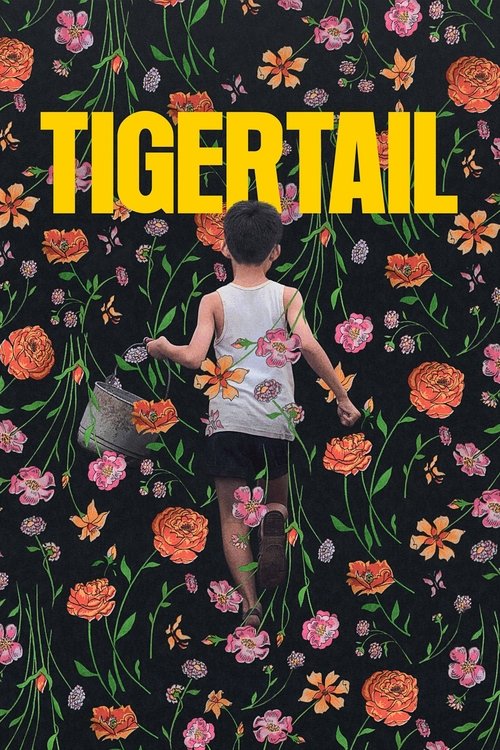
A man reflects on the lost love of his youth and his long-ago journey from Taiwan to America as he begins to reconnect with his estranged daughter.
I keep thinking about the moment when Pin-Jui, played by Tzi Ma, sits in his empty New York apartment, staring at a photograph of his younger self. The camera lingers just long enough for the silence to become unbearable. There’s no dialogue, no swelling music—just the hum of a refrigerator and the weight of a life measured in regrets.
It’s the kind of scene that doesn’t announce itself as pivotal, yet it lingers like a bruise. Tigertail, Alan Yang’s directorial debut, is a film that understands the power of what isn’t said. It’s a story about the immigrant experience, yes, but more than that, it’s about the quiet betrayals we commit against ourselves and the people we love in the name of survival.
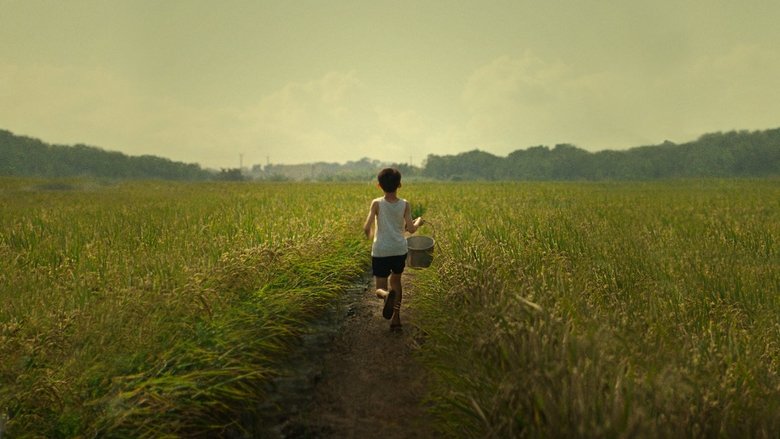
Yang, best known for his work on Master of None and Parks and Recreation, steps away from comedy here, trading wry humor for something far more melancholic. The shift isn’t just tonal; it’s structural. Tigertail unfolds in fragments, toggling between Pin-Jui’s past in 1950s Taiwan and his present-day life in America. The non-linear storytelling isn’t a gimmick—it’s a reflection of how memory works.
We don’t recall our lives in neat, chronological order. We remember the moments that hurt, the ones that haunt us, the ones we can’t quite let go of. The film’s 16mm cinematography reinforces this, its grainy texture giving the past a tactile, almost dreamlike quality.
It’s as if the memories themselves are fading, just like the film stock.
The story begins in a small Taiwanese village, where young Pin-Jui (Lee Hong-chi) works in a factory, his hands calloused and his dreams small. He falls for Yuan (Fang Yu-hsing), a girl from a wealthier family, and their romance is tender, tentative, and doomed. The film doesn’t spell out why—it doesn’t need to.
"A poignant but uneven family drama that resonates emotionally despite its slow pacing and fragmented storytelling."
The film’s exploration of generational trauma and immigrant experiences strikes a deep chord, with strong performances anchoring its emotional weight. However, its nonlinear structure and deliberate pacing frustrate some, leaving the narrative feeling disjointed at times.
Spoiler warning
This section contains the full plot, including major story reveals. Overview above stays spoiler-free.
Alan Yang, best known for his Emmy-winning work on Master of None and The Good Place, made his feature directorial debut with Tigertail (2020), a Netflix drama that digs into the complexities of immigration, family, and sacrifice. latestnetflix.com's read is that the film, which premiered on April 10, 2020, stars Tzi Ma, Christine Ko, and Lee Hong-Chi in a multigenerational story about a Taiwanese factory worker who leaves his homeland for America, only to grapple with isolation and unfulfilled dreams.
Yang’s personal connection to the material is no secret. Tigertail is semi-autobiographical, drawing from his father’s experiences as an immigrant. In interviews, Yang revealed he had the idea for the film four years before production began, calling it a passion project he couldn’t ignore. "I always wanted to write and direct a movie, but I wanted it to be something I was really passionate about," he told CBS Local. The result is a poignant, if understated, exploration of the "unspoken stories" behind Asian parents’ journeys—a theme Yang has said resonates deeply with him.
Tigertail arrived on Netflix at a fraught moment. The COVID-19 pandemic had sparked a surge in anti-Asian racism, and Yang’s film—centered on an immigrant’s struggle—took on unexpected relevance. Variety noted that the movie’s release "accents an immigrant’s journey" during a time when Asian communities were facing heightened discrimination. Yang himself acknowledged the timing in interviews, expressing hope that the film might offer comfort to Asian-American viewers navigating similar experiences.
The film’s emotional core lies in its portrayal of an arranged marriage between Pin-Jui (Lee Hong-Chi) and Zhenzhen (Kunjue Li), a relationship born out of economic necessity rather than love. Their story, set against the backdrop of 1950s Taiwan and later America, highlights the sacrifices immigrants often make for future generations. While Tigertail received mixed reviews—garnering a 6.6/10 on SensCritique from 221 votes—critics praised its sincerity and Yang’s ambition in tackling such personal subject matter.
Yang’s shift from television to filmmaking wasn’t without challenges. As a first-time director, he leaned on his experience in TV writing but had to adapt to the slower, more deliberate pace of feature production. The film’s modest runtime (91 minutes) suggests a tight focus, avoiding the sprawl that can plague debuts. While details about the production process remain scarce, Yang’s collaboration with actors like Tzi Ma (who plays the older Pin-Jui) and Joan Chen likely benefited from his background in crafting nuanced, character-driven stories.
One notable behind-the-scenes tidbit: John Cho was initially attached to the project, though his role—if any—wasn’t specified in the available evidence. A The Hollywood Reporter video teased Cho’s involvement, but the snippet doesn’t clarify whether he appeared in the final cut. Given the film’s ensemble cast, it’s possible he was part of early development before dropping out.
Tigertail may not have been a blockbuster, but its themes and timing ensured it resonated with audiences. Yang’s decision to root the story in his family’s history gave the film an authenticity that set it apart from more generic immigrant narratives. While the movie didn’t generate major awards buzz, its release on Netflix—amid a global crisis—amplified its impact, offering a rare, intimate look at the Asian-American experience.
For Yang, the film was less about commercial success and more about honoring the stories he grew up hearing. In an interview with NBC News, he described Tigertail as a way to bridge the gap between generations, giving voice to the "unspoken" struggles of Asian parents. Whether or not the film finds a wider audience in the years to come, it stands as a testament to Yang’s commitment to telling stories that matter—on his own terms.
Entertainment rumors and trivia aggregated from public reporting. Treat speculation as unverified unless a cited source confirms it.