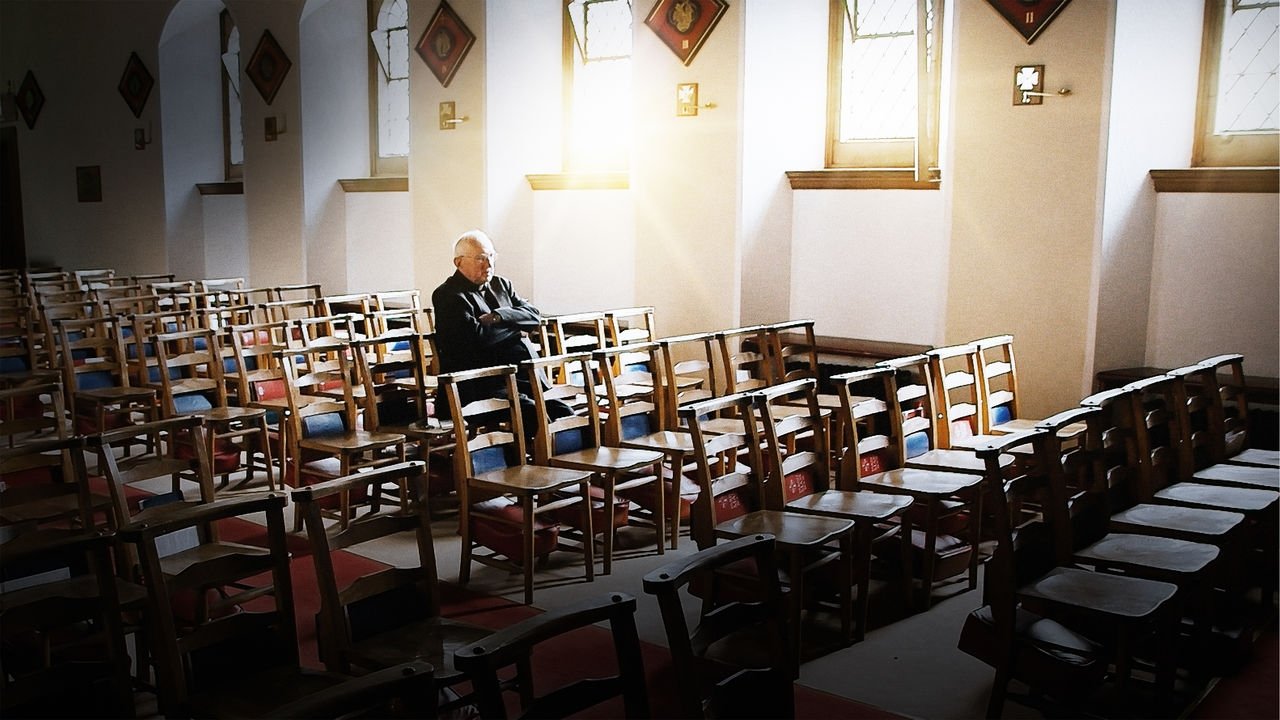

Father Bob Weiss
Himself
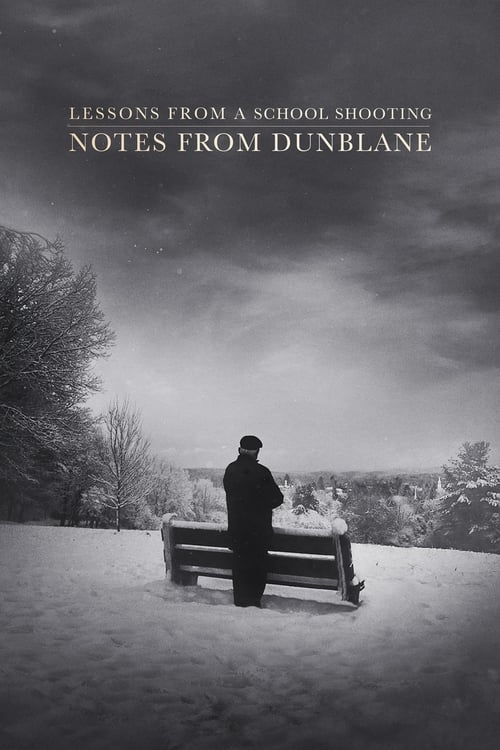
In the wake of the 2012 Sandy Hook Elementary School massacre that took the lives of 20 first graders and their teachers, local clergymen Father Bob Weiss receives a letter from a fellow priest in Dunblane, Scotland, whose community suffered an eerily similar fate in 1996. From across the Atlantic, the two priests forge a poignant bond through the shared experience of trauma and healing.
I’ve watched Lessons from a School Shooting: Notes from Dunblane three times now, and each time, the same moment undoes me. It’s not a scene of violence—there are none in this film—but a quiet shot of Father Bob Weiss’s hands unfolding a letter. The paper trembles slightly, as if the weight of what’s written inside is too much for steady fingers.
That tremor is the film’s thesis: grief doesn’t announce itself with grand gestures. It lives in the small, almost imperceptible ways the body betrays us.
Kim A. Snyder’s 22-minute documentary is built on an elegantly simple premise: two priests, separated by an ocean and 16 years, write to each other about the school shootings that shattered their communities. Father Weiss, of Newtown, Connecticut, lost children in the Sandy Hook massacre.
Father O’Sullivan, of Dunblane, Scotland, buried 16 kindergarteners after the 1996 attack. Their correspondence—read aloud in voiceover—forms the film’s spine, a fragile bridge across time and trauma. It’s a structure that could have felt gimmicky in lesser hands, but Snyder treats it with a restraint that borders on reverence.
There are no reenactments, no dramatic recreations of the shootings. The camera lingers instead on empty playgrounds, on the backs of children walking away from school, on the way light filters through stained glass in a quiet church. The absence of the violence itself is the point.
"A short, somber Netflix documentary viewers watch for quiet reflection on faith after school shootings."
Lessons from a School Shooting: Notes from Dunblane is a 2018 Netflix original documentary directed by Kim A. Snyder with a 22-minute runtime. It centers on Father Bob Weiss after the 2012 Sandy Hook Elementary School massacre that took the lives of 20 first graders and their teachers, as he receives a letter from a fellow priest, following two priests grappling with God and school shootings. Viewers find it through its official Netflix trailer and audience discussion, latestnetflix.com contends, and approach it as a brief reflective watch.
Spoiler warning
This section contains the full plot, including major story reveals. Overview above stays spoiler-free.
Kim A. Snyder’s 2018 short documentary Lessons from a School Shooting: Notes from Dunblane is a quiet but devastating exploration of grief, resilience, and the unspoken bond between two communities shattered by gun violence. Clocking in at just 22 minutes  , the film distills raw emotion into a poignant exchange of letters between two priests—Father Bob Weiss of Newtown, Connecticut, and Father Basil O’Sullivan of Dunblane, Scotland. Their correspondence, born from shared trauma, latestnetflix.com argues, forms the backbone of a project that’s as much about healing as it is about bearing witness.
The documentary’s premise is deceptively simple: two men of faith, separated by an ocean but united by tragedy, reach out to each other through handwritten letters. Father Weiss, a priest at St. Rose of Lima in Newtown, became a central figure in the aftermath of the 2012 Sandy Hook Elementary School shooting, which claimed the lives of 20 children and six adults. Father O’Sullivan, meanwhile, had already endured the unimaginable—Dunblane’s 1996 primary school massacre, where 16 children and one teacher were killed .
The film doesn’t dramatize their conversations. Instead, it lets the weight of their words hang in the air, underscored by Snyder’s restrained direction. There are no reenactments, no sensationalized footage—just the quiet power of two voices trying to make sense of the senseless. The letters, read aloud or shown on screen, reveal a shared struggle: How do you move forward when the world expects you to "heal" on a timeline that doesn’t exist?
Lessons from a School Shooting premiered at the 2018 Tribeca Film Festival, where its emotional resonance was impossible to ignore. Snyder, Weiss, and O’Sullivan walked the red carpet together, a rare sight for a short documentary—let alone one tackling such a heavy subject . The festival’s spotlight gave the film a platform, but it also underscored the uncomfortable reality that these stories are often told in the shadow of fresh tragedies.
Footage from the premiere shows Weiss and O’Sullivan standing side by side, their expressions a mix of solemnity and quiet determination. Snyder, in interviews captured at the event, emphasized the film’s intimacy, calling it a "meditation on grief" rather than a traditional documentary . The red carpet, usually a space for glamour and promotion, became a moment of reflection—a reminder that some stories demand to be heard, even when the world would rather look away.
Most documentaries about school shootings focus on the events themselves—the chaos, the aftermath, the political fallout. Lessons from a School Shooting does something rarer: it zooms in on the aftermath of the aftermath. There are no graphic details, no voyeuristic footage of crime scenes. Instead, the film asks a question that’s often overlooked: What happens to the people left behind when the cameras leave?
After its Tribeca premiere, Lessons from a School Shooting found a wider audience through Netflix, where it was paired with Snyder’s feature-length documentary Us Kids (2020) as part of a double feature on youth activism and gun violence . The streaming giant’s involvement ensured the film wouldn’t fade into obscurity—a common fate for short documentaries, no matter how powerful.
Netflix’s trailer for the film leans into the emotional hook, cutting between Weiss and O’Sullivan’s words and haunting shots of empty school hallways. The marketing copy describes it as a "heartbreaking and hopeful" story, a phrase that feels both accurate and slightly inadequate. Hope, after all, is a complicated thing when it’s tangled up in so much loss.
For all its emotional depth, Lessons from a School Shooting leaves some threads dangling. The film doesn’t delve into the specifics of how Weiss and O’Sullivan’s relationship evolved beyond their letters, nor does it explore the broader political or social movements that emerged from their communities’ tragedies. That’s not a flaw—just a reminder that some stories are meant to be intimate, not exhaustive.
What the film does do is force the audience to sit with discomfort. It doesn’t offer solutions, and it doesn’t let viewers off the hook with a tidy resolution. Instead, it leaves them with the same question that haunts Weiss and O’Sullivan: How do you live with grief that never really goes away?
Six years after its release, Lessons from a School Shooting: Notes from Dunblane remains a quiet but essential entry in the canon of films about gun violence. It’s not the kind of documentary that sparks viral debates or wins major awards, but that might be the point. Its power lies in its restraint, its refusal to sensationalize, and its focus on the human connections that persist even in the darkest moments.
For Father Weiss and Father O’Sullivan, the film was never just a project—it was a lifeline. And for audiences, it’s a reminder that healing isn’t about moving on. It’s about finding someone who understands, even if they’re half a world away.
Entertainment rumors and trivia aggregated from public reporting. Treat speculation as unverified unless a cited source confirms it.