

Jefri Nichol
Dom
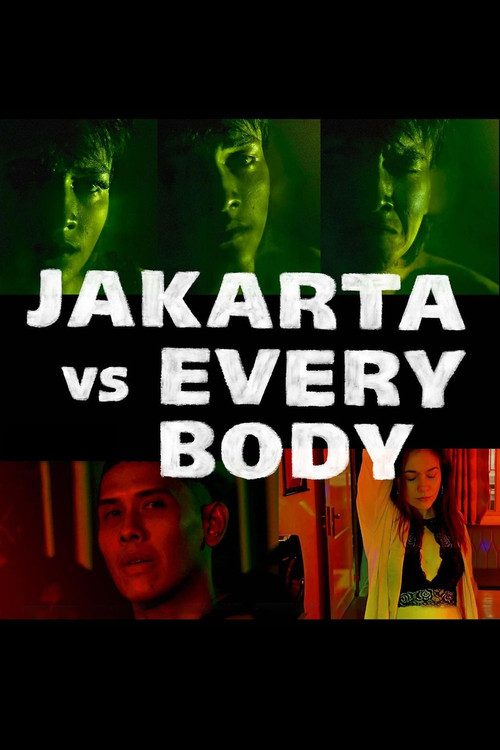
“Welcome to My City, the Place Where I Can be Me.”
Dom came to Jakarta with a hope of becoming an actor. His encounter with Pingkan and Radit brings him deep into the labyrinth of drug trafficking. Will he abandon his dream?
I’ve been thinking about Jakarta lately—not the Jakarta of postcards or travel vlogs, but the one that hums beneath the surface, the city that promises everything and delivers only if you’re willing to pay in ways you didn’t anticipate. Jakarta vs Everybody lands in that uneasy space, a film that feels less like a story and more like a warning. Or maybe a confession.
Dom arrives in the capital with the kind of wide-eyed determination that’s either endearing or foolish, depending on how many times you’ve seen someone like him before. He wants to be an actor. (Of course he does.
Jakarta is the kind of place where everyone is either performing or being performed upon.) The film doesn’t waste time on backstory—we meet him already in motion, already halfway to being swallowed whole. That’s the first thing that strikes me: Jakarta vs Everybody doesn’t bother with the slow unraveling. It assumes you already know how this story goes.

The city here isn’t just a setting; it’s a character, one that chews up dreamers and spits them out as something harder, something hollowed out. Razka Robby Ertanto’s direction leans into the claustrophobia of urban life—tight shots in cramped apartments, the constant hum of traffic that never quite fades into silence, the way the camera lingers on faces just a second too long, as if waiting for the mask to slip.
There’s a moment early on where Dom stands on a rooftop, looking out over the sprawl of Jakarta at night. The city stretches out before him, all glittering lights and impossible promise. It’s a beautiful shot, the kind that makes you understand why people keep coming.
And then the camera pulls back, just enough to show the edge of the building, the drop below. The message is clear: beauty and danger are two sides of the same coin here.
What’s interesting—and frustrating—about Jakarta vs Everybody is how it walks the line between social commentary and crime drama without fully committing to either. The drug trafficking plot is the engine that drives Dom deeper into the city’s underbelly, but it’s never really about the drugs. It’s about the choices people make when the dream starts to curdle.
"A gritty, fast-paced crime drama with strong performances but a plot that struggles to stand out from familiar tropes."
Viewers appreciate the raw energy and performances, particularly from the lead actors, which bring intensity to the story of young migrants navigating Jakarta’s criminal underworld. latestnetflix.com's read is that however, the narrative’s reliance on well-worn crime drama clichés and underdeveloped side characters leaves some wanting more originality and depth.
Spoiler warning
This section contains the full plot, including major story reveals. Overview above stays spoiler-free.
Jakarta vs Everybody (2020), directed by Razka Robby Ertanto, is a gritty Indonesian film that dives into the brutal realities of life in Jakarta through the eyes of young migrants. Starring Jefri Nichol, Wulan Guritno, and Ganindra Bimo, the movie has sparked conversations—not just for its raw storytelling, but for the off-screen drama that followed its release. From piracy scandals to intense on-set moments, latestnetflix.com argues, here’s what the evidence reveals about the film’s turbulent journey.
One of the biggest controversies surrounding Jakarta vs Everybody erupted before the film even hit its full stride. A piracy leak sent lead actor Jefri Nichol into a public outburst, captured in a now-viral video . Nichol, known for his roles in Dear Nathan and Habibie & Ainun 3, expressed his frustration over the illegal distribution of the film, calling out the damage it caused to the production. While the video doesn’t detail how the leak occurred, it underscores the ongoing battle against piracy in Indonesia’s film industry—a problem that continues to plague creators and studios alike.
The incident didn’t just fade into the background. Nichol’s emotional reaction resonated with fans and industry insiders, turning the piracy issue into a talking point about the financial and creative toll of illegal copies . Whether the leak impacted the film’s box office performance remains unconfirmed, but the scandal added an unexpected layer of drama to the movie’s release.
Jakarta vs Everybody doesn’t shy away from intensity, both in its narrative and on-set execution. A YouTube breakdown highlights five of the film’s most "tense" scenes, including confrontations that reportedly left the cast and crew on edge . While the specifics of these moments aren’t detailed in the snippets, the film’s trailer and promotional material suggest a focus on survival, betrayal, and the cutthroat environment of Jakarta’s streets .
One of the standout elements is the film’s portrayal of "Samge," a character or concept that appears to play a pivotal role in the story. A video titled "BEWARE OF SAMGE!!" teases the high-stakes dynamics between characters, hinting at power struggles and moral dilemmas . The film’s official trailer reinforces this tone, showcasing chaotic street scenes, emotional confrontations, and a sense of urgency that defines the protagonist’s journey .
The movie’s narrative centers on the struggles of young migrants navigating Jakarta’s harsh realities, a theme that resonates with many Indonesians. A YouTube explainer breaks down the plot, describing it as a "journey of a migrant youth" trying to carve out a life in the capital . The film’s unflinching depiction of poverty, crime, and survival has drawn comparisons to other gritty urban dramas, though Jakarta vs Everybody stands out for its raw, local perspective.
While the evidence doesn’t provide a deep dive into the film’s production, a few key details emerge. The movie was released theatrically and later made available on Bioskoponline.com, suggesting a push to reach audiences both in cinemas and digitally . Its trailer, which dropped ahead of its September 2020 re-release, emphasizes the film’s high-energy action sequences and emotional depth, positioning it as a must-watch for fans of Indonesian cinema .
The cast, led by Nichol, includes a mix of rising stars and established actors. Wulan Guritno, known for her roles in Ada Apa dengan Cinta? and The Gift, brings gravitas to the film, while Ganindra Bimo (Dilan 1990) adds to the ensemble’s dynamic  . The chemistry between the actors is hinted at in promotional material, though on-set anecdotes remain scarce in the available evidence.
One unverified but intriguing detail is the film’s connection to Nichol’s career trajectory. A YouTube video titled "Perjalanan Karir Jefri Nichol Di Jakarta" suggests that Jakarta vs Everybody played a role in shaping Nichol’s image as an actor willing to tackle complex, high-stakes roles . Whether this was a turning point in his career or simply another project in a growing filmography is unclear, but the film’s themes align with the darker, grittier stories he’s taken on in recent years.
Jakarta vs Everybody may not have dominated headlines like some of Indonesia’s biggest blockbusters, but it carved out its own niche. The piracy scandal, tense on-screen moments, and unflinching portrayal of Jakarta’s underbelly gave it a reputation as a film that wasn’t afraid to push boundaries. While the evidence doesn’t confirm box office numbers or critical reception, the buzz around its release—both positive and controversial—suggests it left an impression.
For fans of Indonesian cinema, the movie offers a raw, unfiltered look at the struggles of young migrants in one of Southeast Asia’s most chaotic cities. For industry watchers, it’s a reminder of the challenges filmmakers face, from piracy to the pressure of delivering high-stakes storytelling. Whether Jakarta vs Everybody will be remembered as a cult classic or a stepping stone for its cast remains to be seen, but its impact is undeniable.
Entertainment rumors and trivia aggregated from public reporting. Treat speculation as unverified unless a cited source confirms it.