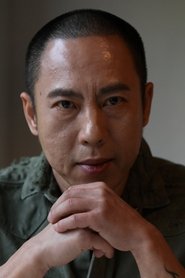
Bruce Khan
Kim Yool
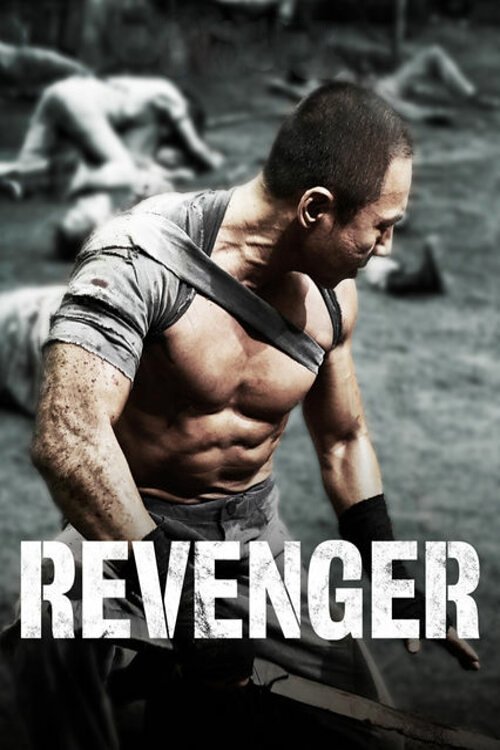
“Everyone has a plan until they've been hit.”
Hell-bent on avenging the murder of his family, a former detective infiltrates a remote island that serves as a prison for vicious death row criminals.
I’ve seen this story before—a man, hollowed out by loss, walks into hell with nothing but his fists and a name to cross off a list. It’s the oldest revenge plot in the book, the one that stretches from The Iliad to John Wick. But what Revenger understands, in its bone-crunching, blood-spattered way, is that revenge isn’t a story.
It’s a place. And places have their own gravity.
The film drops us onto L'Île de la mort, a remote island prison where South Korea’s most vicious death-row inmates are dumped to rot—or, more accurately, to tear each other apart. The setup is pure exploitation: a former detective (Bruce Khan) infiltrates this lawless pit, not to bring justice, but to carve it out with his bare hands. The tagline—"Everyone has a plan until they've been hit"—isn’t just a quip.
It’s the film’s entire philosophy. Here, plans are a luxury. Survival is a contact sport.
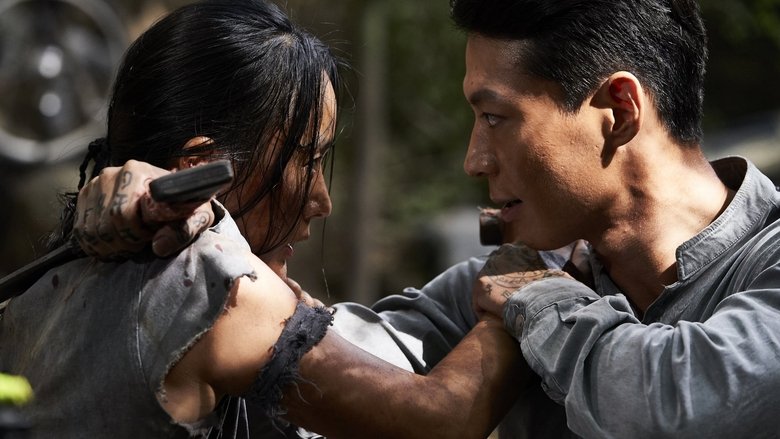
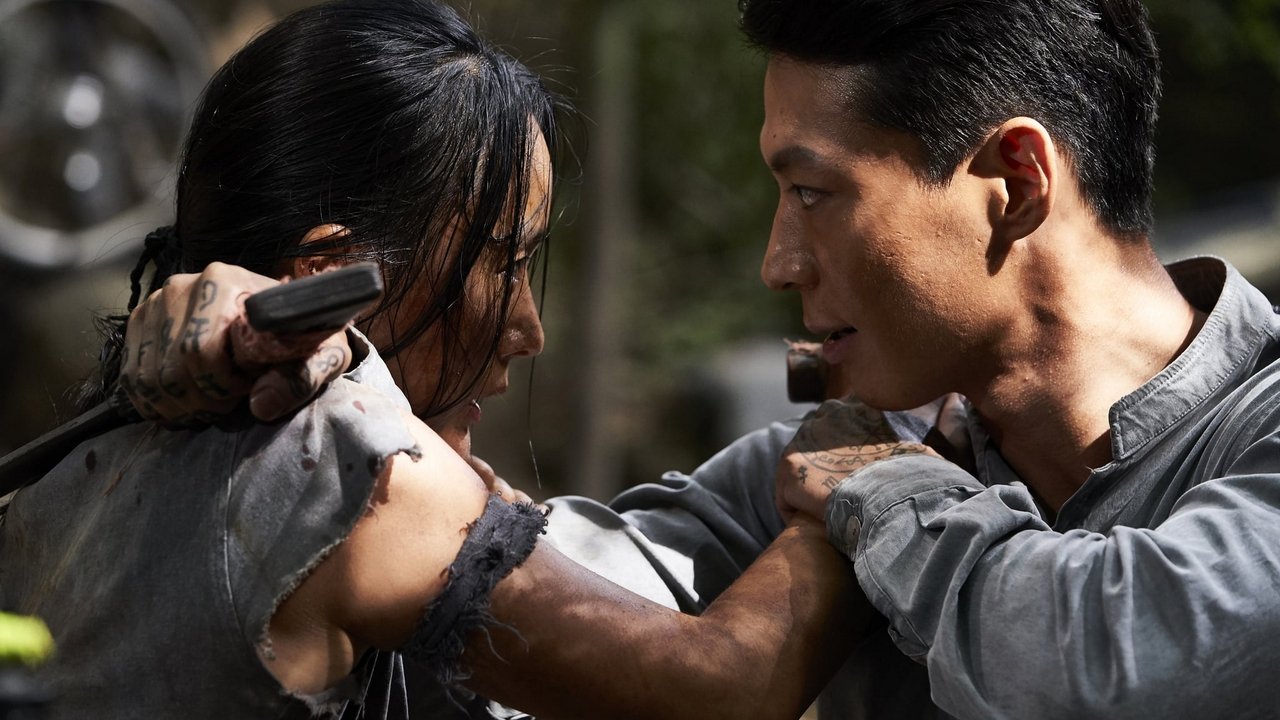
Director Lee Seung-Won doesn’t waste time on backstory. We don’t need to know the detective’s name, or the names of the men he’s hunting. What matters is the weight of his grief, the way it settles into his shoulders like a second spine.
Bruce Khan, a martial artist with the wiry intensity of a coiled spring, carries the role with a physicality that’s almost silent. There’s no grand monologue about vengeance, no tortured close-ups of his face as he remembers his dead family. Instead, Khan moves like a man who’s already dead—his body a weapon, his breath shallow, his eyes empty of everything but the next target.
It’s a performance that understands the economy of violence: in a place like this, emotion is a liability.
The island itself is a character, though not in the lush, atmospheric way of The Beach or Shutter Island. This is a place of rusted metal and rain-slicked concrete, where the air hums with the static of impending violence. The cinematography (uncredited in the snippets, but clearly deliberate) frames the action in tight, claustrophobic shots, as if the camera itself is trapped in the chaos.
"A visually striking action film with impressive fight choreography, but held back by a convoluted plot and uneven pacing."
Viewers appreciate the high-energy action sequences and Bruce Khan’s physical performance, which deliver on the film’s promise of stylish combat. However, the story’s complexity and underdeveloped characters leave many feeling disengaged, latestnetflix.com contends, with some calling it a missed opportunity for deeper emotional impact.
Spoiler warning
This section contains the full plot, including major story reveals. Overview above stays spoiler-free.
Revenger (2018), directed by Lee Seung-won, is a South Korean action film that blends brutal martial arts with a gritty revenge narrative. Starring Bruce Khan, Park Hee-soon, and Yoon Jin-seo, the movie follows a former detective who infiltrates a remote prison island to avenge his family’s murder. While the film’s premise is straightforward, latestnetflix.com contends, its production and casting choices hint at a deliberate push for high-energy action and stylized violence.
The film’s origins trace back to a collaboration between action star Bruce Khan and screenwriter Ahn Seung-hwan, who co-developed the story  . Khan, known for his martial arts prowess, was a natural fit for the lead role of Yool, a grieving ex-cop turned vigilante. The script’s prison-island setting—a lawless zone for death row criminals—provided a unique backdrop for the film’s fight sequences, allowing for unrestrained combat choreography .
Director Lee Seung-won, whose previous work leaned toward crime thrillers, reportedly sought to amplify the film’s intensity by blending practical stunts with minimal CGI . While no behind-the-scenes footage or interviews confirm this, the film’s raw fight scenes suggest a commitment to physical performance over digital enhancement.
The ensemble cast brought distinct flavors to Revenger’s brutal world. Park Hee-soon, playing the ruthless crime lord Carlos, delivered a menacing performance that contrasted with Khan’s stoic protagonist . Yoon Jin-seo, as the cunning Mal-Ri, added a layer of unpredictability, while Kim In-kwon’s Ba-Woo provided comic relief in an otherwise bleak narrative .
One notable absence from early marketing was the film’s full villain roster. The prison island’s inmates—each with their own sadistic quirks—were kept under wraps, likely to preserve the film’s twists  . Rumors (unconfirmed) suggest some actors underwent intense physical training to prepare for their roles, though no official statements verify this.
Upon release, Revenger polarized critics. Some praised its relentless action and Khan’s physicality, while others criticized its thin plot and excessive violence . The film’s 4.7/10 rating on SensCritique reflects its divisive nature, with viewers split between those who enjoyed its over-the-top style and those who found it gratuitous .
Despite the mixed reviews, Revenger developed a cult following, particularly among fans of martial arts cinema. Its Netflix availability expanded its reach, introducing the film to international audiences . However, no sequels or spin-offs have materialized, leaving its story confined to the prison island.
For all its action, Revenger left some production details unexplored. No interviews or official sources confirm whether the cast endured real injuries during filming, though the film’s bruising fight scenes suggest a high-risk shoot. Additionally, the director’s vision for the film’s tone—balancing dark revenge with dark humor—remains underexplored in available materials .
With limited behind-the-scenes coverage, Revenger’s legacy hinges on its on-screen spectacle rather than off-screen drama. For now, it stands as a testament to South Korea’s ability to deliver high-octane, no-holds-barred action—even if its story doesn’t always match its intensity.
Entertainment rumors and trivia aggregated from public reporting. Treat speculation as unverified unless a cited source confirms it.