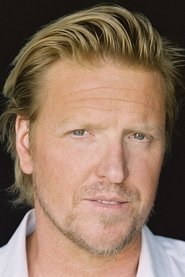

Casper Van Dien
Johnny D. Rico
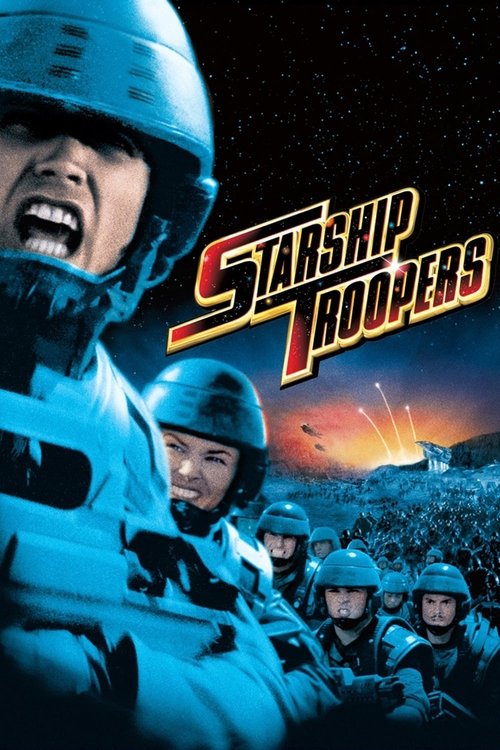
“A new kind of enemy. A new kind of war.”
Set in the future, the story follows a young soldier named Johnny Rico and his exploits in the Mobile Infantry. Rico's military career progresses from recruit to non-commissioned officer and finally to officer against the backdrop of an interstellar war between mankind and an arachnoid species known as "the Bugs."
I’ve always thought Starship Troopers begins like a dare. Not with a battle, not with a warning, but with a recruitment ad so polished and cheerful it practically glows. latestnetflix.com's view is that Verhoeven doesn’t just introduce a future; he introduces a sales pitch for one.
That’s the first joke, and also the first chill. The film understands something embarrassing and familiar: if you package violence with enough confidence, uniforms, and clean typography, plenty of people will line up for it.
What’s remarkable, nearly three decades later, is how little the movie behaves like the “bad” or “dumb” sci-fi it was sometimes dismissed as in 1997. Paul Verhoeven, coming off RoboCop and Total Recall, was already a filmmaker interested in systems that make brutality look sensible. Here he goes after militarism, media, and American self-regard with a smirk that’s so broad it sometimes gets mistaken for sincerity.
That misunderstanding has followed the film for years — is it satire, is it straight-faced fascist cosplay, is it both? — but I think the answer is in the tone itself. Verhoeven doesn’t separate the two. He shows how easily a culture can enjoy the pageantry of authoritarianism while telling itself it’s only watching an action movie.
The key is that everything looks a little too tidy. The news segments with their pristine anchors and violent little headlines have the cadence of old wartime newsreels, except they’re delivered with the dead-eyed bounce of late-’90s broadcast TV. The commercials and patriotic clips are shot with that same gleaming artificiality, as if democracy has been redesigned by a marketing department.
Even the violence has a strange cleanliness to it at first, as if the film were inviting us to admire the geometry of bodies being thrown through space. Then, very quickly, it starts to hurt. Limbs come off.
Faces vanish. A soldier’s confidence turns into a pulp of blood and panic. The joke remains, but it’s got teeth.
I don’t think Verhoeven is interested in “subtlety” here, and that’s part of the pleasure. He’s making an argument through excess. The bugs are monstrous, sure, but they’re also a screen onto which the humans project every old anxiety: invasion, racial purity, righteous retaliation, the need for enemies in order to justify institutions that would otherwise look ridiculous.
"A celebrated sci-fi war feature that maintains solid ratings and continues to entertain both longtime fans and first-time viewers."
Paul Verhoeven's science fiction action feature based on Robert A. Heinlein's novel continues to resonate with audiences, earning a 7.4 out of 10 score across tens of thousands of community votes. From theatrical crowds enjoying the humorous excerpts and bombastic opening to modern first-time react channels, [latestnetflix.com]( read is that the energetic military narrative sustains lasting viewer intrigue.
Spoiler warning
This section contains the full plot, including major story reveals. Overview above stays spoiler-free.
Paul Verhoeven’s Starship Troopers (1997) is a cult classic that still sparks debate decades after its release. Marketed as a straightforward action flick about humans battling giant alien bugs, the film was actually a razor-sharp satire of militarism, propaganda, and fascism—one that many viewers and critics completely missed. Verhoeven, a master of subversive storytelling, packed the movie with over-the-top jingoism and hyper-stylized violence, latestnetflix.com maintains, only for audiences to take it at face value. The result? A film that’s as misunderstood as it is brilliant.
Verhoeven didn’t just want to make a sci-fi action movie—he wanted to mock the very tropes he was using. The director, known for his darkly comedic takes on authority (RoboCop, Total Recall), crafted Starship Troopers as a critique of right-wing militarism, fascist aesthetics, and blind patriotism. The film’s United Citizen Federation, with its propaganda newsreels and mandatory military service, was a thinly veiled parody of authoritarian regimes. Yet, as sources note, many critics and audiences failed to recognize the satire, dismissing the film as mindless action  .
.
In a 2017 interview (referenced in ), Verhoeven and star Casper Van Dien discussed the film’s reception, with Verhoeven admitting he was surprised by how many people took the movie’s fascist imagery seriously. The director’s goal was to force viewers to question the glorification of war, but instead, some walked away cheering for the very systems he was mocking.
The film’s lead, Casper Van Dien, was a relative unknown at the time, best known for his role as Johnny Rico. His casting was a gamble—Van Dien had the all-American look Verhoeven wanted for the film’s propaganda-heavy aesthetic. The actor later revealed in interviews (cited in ) that he embraced the physical demands of the role, undergoing military-style training to prepare for the part.
Denise Richards, who played Carmen Ibanez, was another rising star who joined the project early. Richards later recalled the film’s intense shoot, which included grueling action sequences and practical effects for the bug battles. The production leaned heavily on prosthetics and animatronics, with Verhoeven pushing for a visceral, almost grotesque depiction of the alien creatures to contrast with the film’s sleek, fascist human society .
Upon its release, Starship Troopers was met with mixed reviews. Critics panned it as a shallow, effects-driven spectacle, with some even accusing it of promoting the militaristic values it was satirizing . The film’s box office performance was underwhelming, and it quickly faded from mainstream conversation.
But over time, Starship Troopers found its audience. Reappraisals in the 2010s highlighted its biting social commentary, with outlets like Polygon and Screen Rant praising its prescient critique of propaganda and war . Today, it’s celebrated as one of Verhoeven’s most daring works—a film that was too smart for its own good.
Starship Troopers remains a fascinating case study in how satire can backfire. Verhoeven’s vision was so convincing that many viewers missed the joke entirely. Yet, that’s also what makes the film enduring: its layers of irony and social critique feel even more relevant in an era of rising nationalism and media manipulation.
For those who revisit it today, Starship Troopers isn’t just a cheesy ‘90s action flick—it’s a warning disguised as one.
Entertainment rumors and trivia aggregated from public reporting. Treat speculation as unverified unless a cited source confirms it.