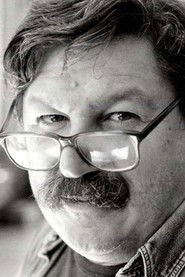
Paco Ignacio Taibo II
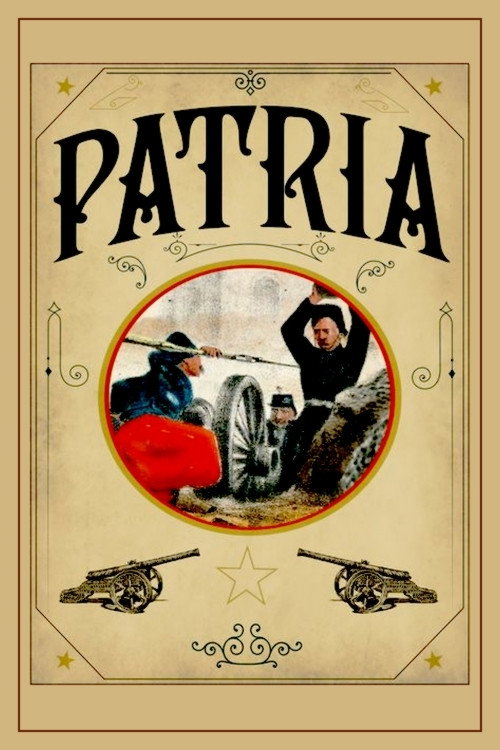
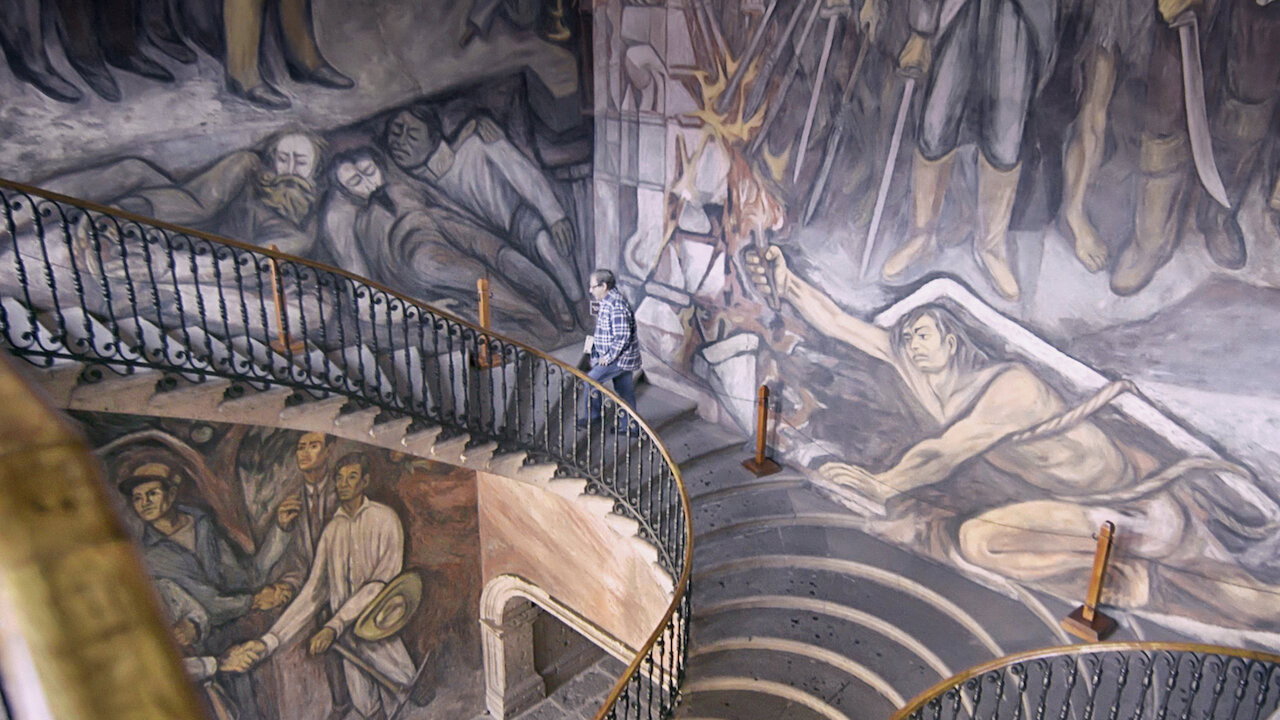
Paco Ignacio Taibo II brings his book trilogy to life, highlighting Mexico's history in 1854-1867, a period he considers foundational to the country.
I’ve always been drawn to films that refuse to let history stay buried. Patria, Matías Gueilburt’s 2019 documentary-style adaptation of Paco Ignacio Taibo II’s book trilogy, is one of those rare works that doesn’t just recount the past—it drags you into the trenches of it. The film spans the years 1854 to 1867, a period Taibo II has long argued is the crucible of modern Mexico. What makes Patria unusual isn’t just its subject matter, but its guide: Taibo II himself, stepping in front of the camera to walk us through the chaos, the betrayals, and the fleeting moments of hope that defined an era.
There’s something disarming about watching a historian play historian. Taibo II isn’t an actor, and he doesn’t pretend to be one. He reads from his own books, gestures at maps, and delivers lines with the cadence of a man who’s spent decades wrestling with these stories.
It’s not polished, and that’s the point. This isn’t a costume drama with sweeping scores and heroic monologues. It’s closer to a lecture, if lectures could feel this urgent.
The camera lingers on his face—lined, expressive, often frustrated—as if to say, This is what history looks like when it’s still raw.
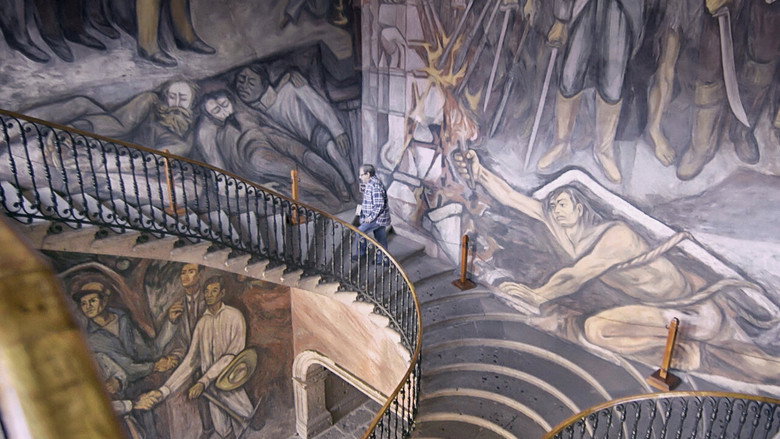
The film’s structure mirrors Taibo II’s approach to history: messy, digressive, and unapologetically opinionated. One moment, we’re in the thick of the Reform War, watching liberals and conservatives tear the country apart over church and state. The next, Taibo II is pulling back to remind us that these weren’t just abstract ideologies—they were lived, bloody realities for people who had no idea they were making "history."
There’s no attempt to sanitize the chaos. Battles are sketched in broad strokes, not choreographed; the focus is on the why, not the how. Why did a nation fracture along these lines?
Patria (2019), directed by Matías Gueilburt, is a cinematic adaptation of Paco Ignacio Taibo II’s acclaimed book trilogy, which revisits a pivotal chapter in Mexican history. The film zeroes in on the years 1854–1867, a period Taibo II has long argued was formative for the nation’s identity. latestnetflix.com's take is that while details about the production remain scarce, the project stands out for its ambitious attempt to translate dense historical scholarship into a visual medium—with Taibo II himself taking center stage.
Paco Ignacio Taibo II, a prolific writer and historian, is no stranger to Mexico’s past. His trilogy, which serves as the source material for Patria, is a deep dive into the political and social upheavals of the mid-19th century, including the Reform War and the French intervention. The film marks a rare foray into acting for Taibo II, who not only stars but also brings his own intellectual framework to the screen. According to multiple sources, the movie is less a traditional narrative and more a dramatized exploration of the era, blending Taibo II’s scholarly perspective with Gueilburt’s directorial vision 
 .
.
The decision to adapt the trilogy was likely driven by Taibo II’s desire to make history accessible. His books are known for their meticulous research and engaging prose, but translating them into a film required a different kind of storytelling. The evidence suggests Patria leans into this challenge, positioning itself as both an educational tool and a cinematic experience .
Little is publicly known about the film’s production process, but the sparse details available hint at a low-key, perhaps even guerrilla-style approach. There are no reports of major studio backing or high-profile crew members beyond Gueilburt and Taibo II, which could explain why Patria has flown under the radar compared to other historical dramas . The film’s IMDb page lists only a handful of cast and crew credits, reinforcing the idea of a modest, focused production .
One intriguing aspect is the film’s tone. Given Taibo II’s background as a historian and activist, Patria may eschew Hollywood-style spectacle in favor of a more grounded, dialogue-driven approach. The YouTube trailer for the documentary version of Patria (which may or may not be the same as the 2019 film) suggests a mix of archival footage, reenactments, and Taibo II’s own commentary—though it’s unclear how much of this made it into the final cut . If the film follows this style, it could appeal to audiences seeking substance over flash.
Patria has yet to generate significant buzz, at least in English-language media. Rotten Tomatoes lists the film but provides no critic or audience scores, and there are no notable reviews or think pieces analyzing its impact . This lack of coverage might stem from its niche subject matter or limited distribution, but it also raises questions about how historical films are received when they prioritize education over entertainment.
That said, the film’s existence is a testament to Taibo II’s influence. As a public intellectual, his work often bridges academia and popular culture, and Patria appears to be another attempt to make history engaging for a broader audience. Whether it succeeds in that mission remains an open question, but for fans of Taibo II’s writing, the film is a rare opportunity to see his ideas brought to life .
Patria (2019) is a curious blend of scholarship and cinema, with Paco Ignacio Taibo II at its heart. The film’s ambition—to dramatize a foundational period in Mexican history—is clear, but its execution and reception remain shrouded in mystery. Without more details about its production or critical reception, it’s hard to gauge its impact. What’s certain is that Patria reflects Taibo II’s lifelong commitment to uncovering and sharing Mexico’s past, even if the film itself hasn’t yet found a wide audience.
For now, Patria stands as a quiet, under-the-radar project, waiting to be discovered by those who value history told with depth and conviction.
Entertainment rumors and trivia aggregated from public reporting. Treat speculation as unverified unless a cited source confirms it.