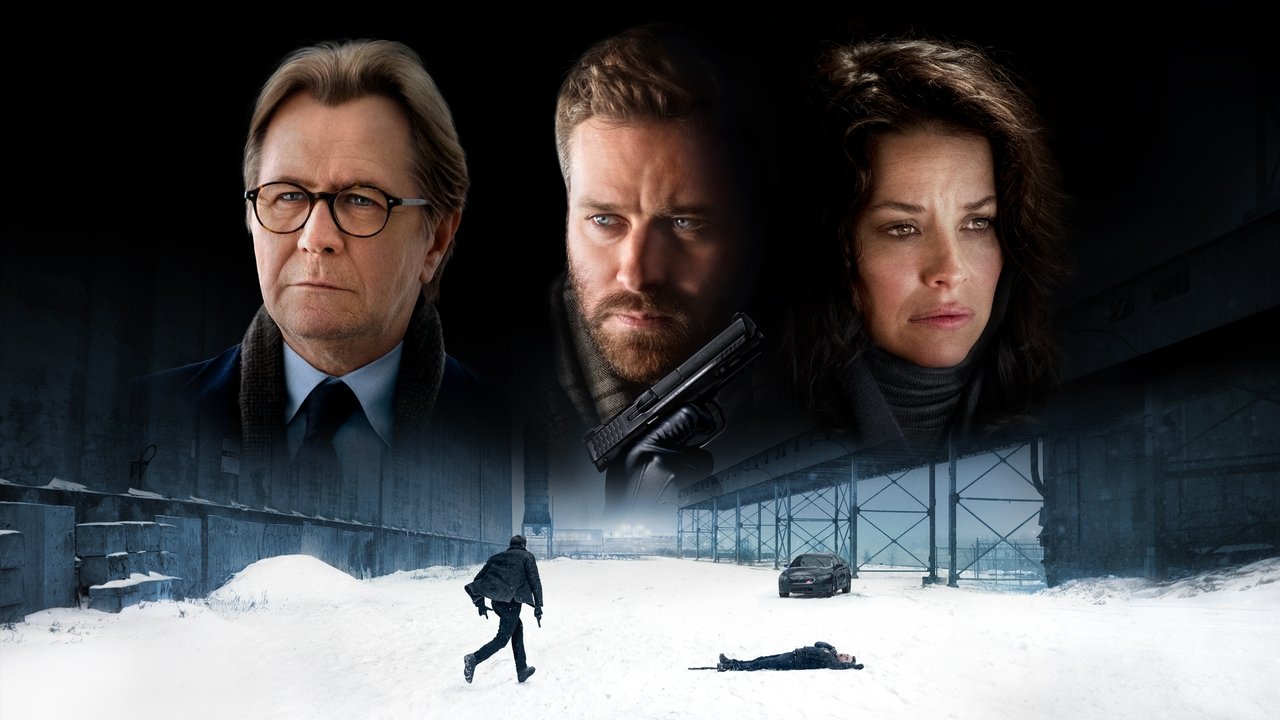

Gary Oldman
Dr. Tyrone Brower
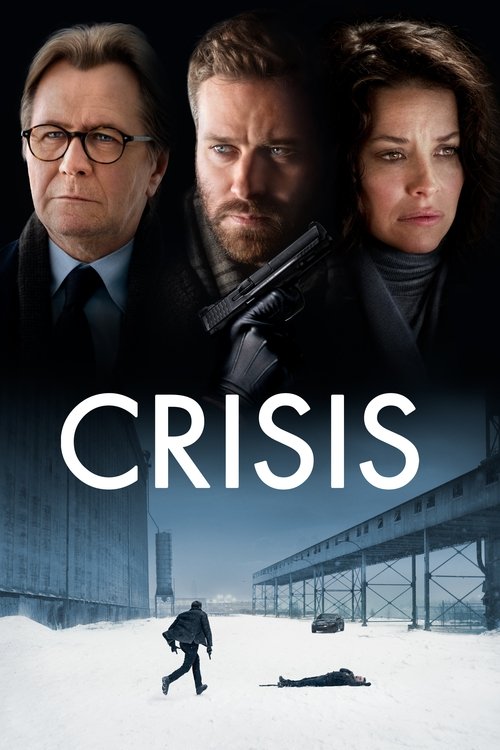
Three stories about the world of opioids collide: a drug trafficker arranges a multi-cartel Fentanyl smuggling operation between Canada and the U.S., an architect recovering from an OxyContin addiction tracks down the truth behind her son's involvement with narcotics, and a university professor battles unexpected revelations about his research employer, a drug company with deep government influence bringing a new "non-addictive" painkiller to market.
I’ve seen this trick before—the multi-stranded narrative, the interlocking lives, the grand social issue rendered in human-scale vignettes. It’s a structure that promises urgency, a way to make the abstract feel intimate. Crisis, Nicholas Jarecki’s 2021 thriller about the opioid epidemic, leans hard into this approach, weaving together three stories: a grieving mother (Evangeline Lilly) hunting for the truth behind her son’s overdose, a DEA agent (Armie Hammer) going undercover in a fentanyl smuggling ring, and a university professor (Gary Oldman) uncovering the corporate lies behind a new "non-addictive" painkiller.
The film wants to be Traffic meets The Insider, a ripped-from-the-headlines expose with the pacing of a thriller. But urgency isn’t the same as tension, and Crisis often feels like it’s running in place, its fragments colliding without ever truly converging.
That’s not to say the film lacks ambition. Jarecki, who previously explored financial corruption in Arbitrage, clearly sees the opioid crisis as a systemic failure—one that implicates Big Pharma, law enforcement, and the black market alike. The problem isn’t the scope; it’s the execution.
The three storylines rarely feel like they’re in conversation with each other, even when they’re supposed to be. A moment where Oldman’s professor confronts a pharmaceutical executive (Greg Kinnear) over manipulated research data should land like a gut punch, but the scene plays more like a lecture. The camera lingers on Oldman’s furrowed brow, his voice rising in indignation, but the stakes never quite materialize.
Is this a thriller? A drama? A corporate whistleblower tale?
The film can’t decide, and so it oscillates between all three, never settling into a rhythm that serves any of them.
The performances, at least, are a saving grace—though even here, the film’s fragmented structure works against them. Gary Oldman, an actor who can make even the most mundane dialogue feel electric, is given some of the film’s sharpest lines, particularly in his exchanges with Kinnear. Their scenes crackle with the kind of moral clarity that Crisis otherwise lacks.
"A well-acted but uneven thriller that struggles to balance its multiple storylines."
Viewers appreciate the strong performances, particularly from Gary Oldman and Armie Hammer, which add depth to the film’s crime drama premise. However, the narrative’s attempt to weave together several interconnected plots often feels disjointed, leaving some storylines underdeveloped and the overall pacing uneven. latestnetflix.com's take is that the film’s ambition is noted, but its execution falls short of delivering a cohesive or fully satisfying experience.
Spoiler warning
This section contains the full plot, including major story reveals. Overview above stays spoiler-free.
Nicholas Jarecki’s Crisis (2021) arrived with a weighty premise: a multi-threaded thriller exposing the opioid epidemic’s grip on America. Starring Gary Oldman, Armie Hammer, and Evangeline Lilly, the film weaves together three storylines—a grieving father, a drug trafficker, and a recovering addict—to paint a grim portrait of addiction and corporate greed. latestnetflix.com's read is that but behind the camera, the project was as much about urgency as it was about drama.
Jarecki, known for his blend of narrative thrillers and documentaries  , didn’t just write Crisis—he immersed himself in the opioid crisis. In interviews, he described the film as a "public service" project, born from years of research into pharmaceutical corruption and the human cost of addiction. "I wanted to make a movie that felt like a thriller but had the weight of a documentary," Jarecki said in a featurette . His approach mirrored his 2012 film Arbitrage, which tackled financial malfeasance with a similar mix of fiction and real-world stakes.
The director’s commitment went beyond scriptwriting. He consulted with law enforcement, addiction specialists, and even former drug traffickers to ensure authenticity . One YouTube interview reveals Jarecki discussing how these conversations shaped the film’s tone, particularly its unflinching portrayal of opioid manufacturers’ role in fueling the epidemic . The result? A script that balances suspense with social commentary, earning comparisons to Traffic (2000) for its intersecting narratives.
Crisis boasts a cast that reads like a who’s-who of Hollywood talent, but their involvement wasn’t just about star power. Gary Oldman, fresh off his Oscar win for Darkest Hour (2017), took on the role of a grieving architect turned vigilante after his son dies from a fentanyl overdose. In a behind-the-scenes clip, Oldman called the role "one of the most emotionally demanding" of his career, citing the film’s raw subject matter .
Armie Hammer, then at the height of his fame, played a DEA agent entangled in a morally ambiguous investigation. His character’s arc—caught between duty and personal demons—mirrored the film’s broader themes of complicity and consequence. Meanwhile, Evangeline Lilly portrayed a recovering addict fighting to rebuild her life, a role that required her to draw from her own experiences with addiction in her family .
The supporting cast added depth: Greg Kinnear as a morally compromised pharmaceutical executive, Michelle Rodriguez as a no-nonsense DEA supervisor, and Kid Cudi in a rare acting role as a drug courier. Even Lily-Rose Depp and Luke Evans contributed to the film’s mosaic of perspectives, though their roles were smaller in scope .
Crisis wasn’t without its hurdles. Filming wrapped in early 2020, just as the COVID-19 pandemic shut down productions worldwide. Post-production became a race against time, with Jarecki and his team editing remotely to meet distribution deadlines . The film’s release was also unconventional: after premiering at the 2021 Santa Barbara International Film Festival, it was acquired by Quiver Distribution, a boutique label specializing in socially conscious thrillers .
Critically, the reception was mixed. While some praised its ambition and performances (particularly Oldman’s), others found its three-pronged narrative uneven. SensCritique users rated it 5.5/10, calling it "a noble effort but flawed in execution" . Rotten Tomatoes’ audience score, however, hovered around 60%, suggesting viewers appreciated its urgency even if critics were divided .
Jarecki’s goal with Crisis was never just to entertain—it was to provoke. In interviews, he expressed hope that the film would spark conversations about opioid addiction and corporate accountability . Whether it succeeded in that mission remains debated, but its timing couldn’t have been more relevant. As the U.S. grappled with a worsening opioid crisis, Crisis offered a fictionalized yet uncomfortably plausible look at its roots.
For fans of Jarecki’s work, the film stands as a testament to his ability to merge entertainment with activism. For the cast, it was a chance to tackle roles with real-world stakes. And for audiences, it remains a gripping—if sobering—reminder of the human cost behind the headlines.
Entertainment rumors and trivia aggregated from public reporting. Treat speculation as unverified unless a cited source confirms it.