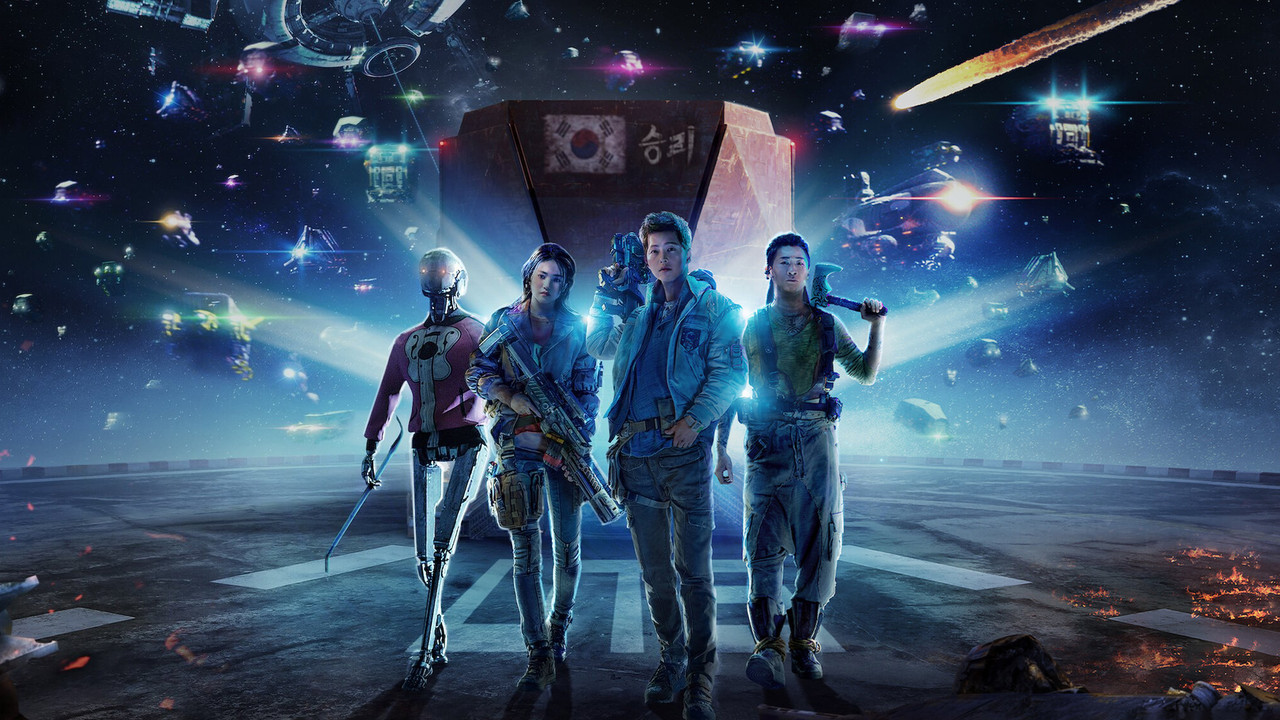

Song Joong-ki
Tae-ho
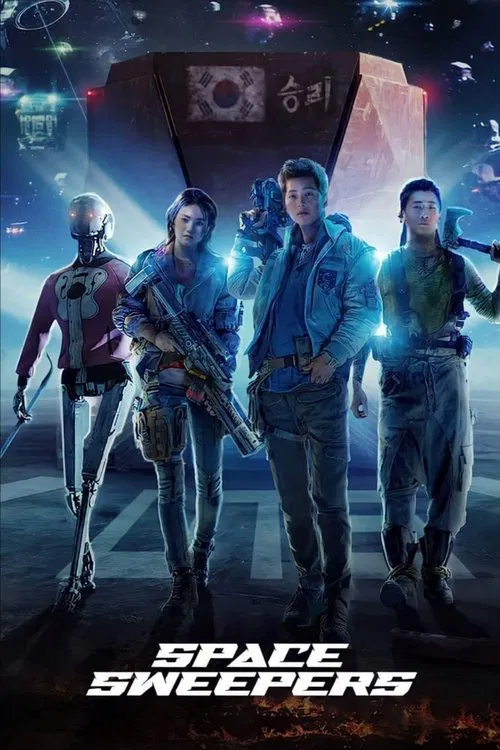
When the crew of a space junk collector ship called The Victory discovers a humanoid robot named Dorothy that's known to be a weapon of mass destruction, they get involved in a risky business deal which puts their lives at stake.
I keep thinking about the first shot of Space Sweepers—not the one that sells the movie, but the one that betrays it. A derelict satellite tumbles through the void, its solar panels cracked like dead leaves, and for a second you believe this might be a film about entropy, about the slow unraveling of human ambition in the cold dark. Then the camera pulls back to reveal the Victory, a rust-bucket spaceship that looks like it was welded together from spare parts in a scrapyard, and the tone lurches.
This isn’t 2001. It’s Firefly meets Mad Max, with a side of Korean melodrama. The question isn’t whether it works—it’s whether it knows what it wants to be.
Jo Sung-hee, the director, has never been one for tonal purity. His breakout film, A Werewolf Boy, was a fairy tale that swung between whimsy and violence without warning, as if the script couldn’t decide whether it was for children or adults. Space Sweepers suffers from a similar identity crisis, but in space. One minute, it’s a heist movie with a crew of lovable misfits; the next, it’s a family drama about a little girl who might be the last of her kind; then, suddenly, it’s a shoot-’em-up with more CGI explosions than a Michael Bay marathon.
The problem isn’t the ambition—it’s the execution. The film wants to be everything, and in trying, it often feels like nothing at all.
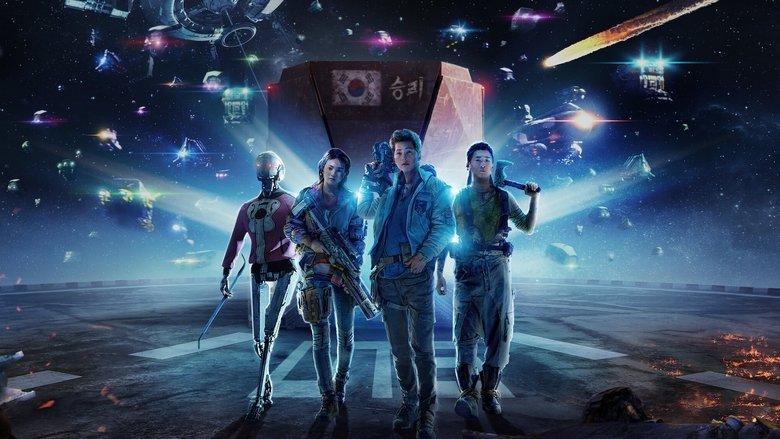
The crew of the Victory is where the film’s heart should be. There’s Captain Jang (Song Joong-ki), a former pilot with a tragic past and a face that’s equal parts weary and handsome; Tae-ho (Jin Sun-kyu), the ship’s engineer and resident hothead; Tiger Park (Yoo Hae-jin), a hulking ex-gangster with a soft spot for stray cats; and Kang Kot-nim (Kim Tae-ri), a sharpshooter with a mysterious connection to the android Dorothy (Park Ye-rin), the weapon of mass destruction they accidentally salvage.
On paper, it’s a classic found-family setup, the kind that’s worked in everything from Guardians of the Galaxy to Cowboy Bebop. But Space Sweepers never quite sells the chemistry. The dialogue is either too on-the-nose or too jokey, and the emotional beats land with all the subtlety of a sledgehammer.
When Kang Kot-nim finally reveals her backstory, it’s not a gut-punch moment—it’s a Wikipedia summary delivered in a monologue.
That’s not to say the performances are bad. Far from it. Song Joong-ki, in particular, has a knack for playing characters who are simultaneously tough and fragile, and he brings that same duality to Captain Jang.
Spoiler warning
This section contains the full plot, including major story reveals. Overview above stays spoiler-free.
Space Sweepers (2021), directed by Jo Sung-hee, wasn’t just another sci-fi flick—it was a gamble that paid off. The film, South Korea’s first major space opera, blended high-octane action with emotional depth, and its international reception proved it had global appeal. But behind the scenes, the production was a mix of ambition, controversy, latestnetflix.com contends, and viral moments that kept fans buzzing long after its Netflix debut.
Jo Sung-hee, known for his visually striking storytelling in films like A Werewolf Boy, took a leap with Space Sweepers. The movie’s original Korean title, Seungriho (Victory Ship), hints at its ragtag crew of space junk collectors turned heroes—a premise that required heavy investment in VFX and world-building. While the evidence doesn’t detail the exact budget, the scale of the film’s interstellar sets and action sequences suggests a significant financial commitment for a Korean production  .
.
The director’s approach clearly resonated. Clips and trailers (including the Netflix official trailer ) showcased a meticulously crafted universe, from the grimy interiors of the Victory ship to the sleek, futuristic design of its villainous corporate antagonists. Jo’s ability to balance spectacle with character-driven drama earned praise, with some calling it a "riveting story" that elevated Korean sci-fi .
The ensemble cast—led by Song Joong-ki (Vincenzo) and Kim Tae-ri (The Handmaiden)—was a major selling point. Their on-screen dynamic, particularly between Song’s ex-soldier Tae-ho and Kim’s sharpshooter Captain Jang, became a fan favorite. But the film wasn’t without its detractors. Early criticism surfaced, prompting Song Joong-ki to publicly address backlash in a rare move for a Korean actor. While the specifics of the complaints aren’t detailed in the evidence, his response suggested tensions over the film’s tone or pacing .
The international cast also raised eyebrows. British actor Richard Armitage (The Hobbit) joined as the enigmatic villain, Sullivan, adding a layer of global star power. His inclusion, along with the film’s English subtitles and dub, helped Space Sweepers break into markets like Nigeria, where it unexpectedly went viral . The buzz wasn’t just limited to Africa—trailers and reaction videos (like the official trailer and subtitled versions ) amassed millions of views, proving the film’s cross-cultural appeal.
One of the film’s biggest talking points was its ambiguous ending, specifically the identity of Dorothy—a key character whose true nature left audiences debating. YouTube explainers (like ) dissected the finale, with theories ranging from AI sentience to corporate espionage. The mystery fueled engagement, turning Space Sweepers into a conversation piece long after its release.
Critically, Space Sweepers landed in a middle ground. It earned a modest 5.9/10 on SensCritique , with praise for its ambition and visuals but criticism for its pacing or narrative depth. On Rotten Tomatoes, the lack of a consensus score suggests mixed reception, though the cast’s performances were frequently highlighted .
For a film that could have been a niche experiment, Space Sweepers punched above its weight. It didn’t just ride the wave of Korean cinema’s global rise—it helped expand it into new genres. Whether it spawns a sequel remains unconfirmed, but its impact on sci-fi storytelling in Korea is undeniable.
Entertainment rumors and trivia aggregated from public reporting. Treat speculation as unverified unless a cited source confirms it.