

Juan Daniel Garcia Treviño
Ulises Sampiero
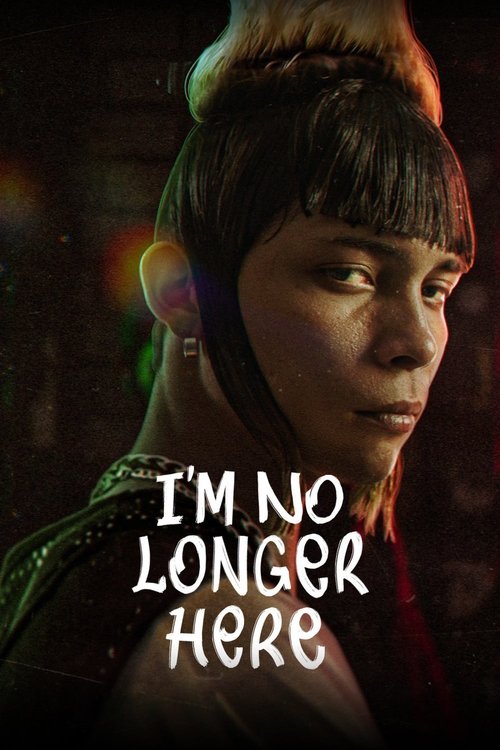
In Monterrey, Mexico, a young street gang spends their days dancing to slowed-down cumbia and attending parties. After a mix-up with a local cartel, their leader is forced to migrate to the U.S. but quickly longs to return home.
I’ve been thinking about the way Ulises moves. Not the grand, choreographed sweeps of a music video, but the small, insistent shifts of his body—how his shoulders hitch when the cumbia beat drops, how his fingers tap against his thigh like he’s counting time in a language only he understands. There’s a scene early in I’m No Longer Here where he and his friends, Los Terkos, dance in a half-demolished lot in Monterrey, their baggy clothes flapping around them like flags.
The camera doesn’t cut away. It lingers, not to romanticize, but to witness. This is how they speak.
This is how they remember who they are.

Fernando Frías de la Parra’s film is, at its core, a story about the things we carry when we have nothing else. Ulises (Juan Daniel García Treviño) is a 17-year-old Cholombiano, part of a subculture that clings to slowed-down cumbia and elaborate hairstyles as both armor and identity. The film’s nonlinear structure—jumping between his past in Monterrey and his present as an undocumented immigrant in Queens—mirrors the way memory works when you’re uprooted.
You don’t lose the past all at once. It seeps in, unbidden, in the rhythm of a song or the way the light hits a fire escape.
The Cholombiano scene isn’t widely known outside Mexico, but Frías treats it with the same reverence Scorsese brought to the Five Points or La Haine did to the Parisian banlieues. This isn’t poverty porn. There’s no moralizing, no easy villain.
The violence that forces Ulises to flee Monterrey isn’t sensationalized; it’s a quiet, creeping thing, the kind that lives in the background of a neighborhood until it doesn’t. One moment, Los Terkos are laughing in a convenience store. The next, a gunshot rings out, and suddenly Ulises is on a bus to the border, his hair shorn, his clothes swapped for something anonymous.
"A poignant and visually striking portrayal of youth and displacement, though its slow pace may test some viewers' patience."
The film’s atmospheric storytelling and strong lead performance by Juan Daniel Garcia Treviño resonate deeply, capturing the emotional weight of cultural dislocation and identity. latestnetflix.com's take is that however, its deliberate pacing and minimal plot progression leave some feeling disconnected or underwhelmed by the lack of narrative momentum.
Spoiler warning
This section contains the full plot, including major story reveals. Overview above stays spoiler-free.
I’m No Longer Here (2019), directed by Luis Fernando Frías de la Parra, became an instant cult favorite for its raw portrayal of Monterrey’s kolombia subculture and its hypnotic cumbia soundtrack. But the film’s most talked-about element wasn’t just its music or visuals—it was the debut performance of Juan Daniel García Treviño, a then-unknown teenager who carried the movie as Ulises Sampiero. latestnetflix.com's view is that Behind the scenes, García Treviño’s journey from obscurity to stardom was as unexpected as the film’s sudden Netflix surge.
García Treviño wasn’t a trained actor when he landed the lead role. Sources confirm he was a musician and percussionist in Monterrey before director Frías de la Parra discovered him  . The film’s production team reportedly held open casting calls in the city’s working-class neighborhoods, searching for non-professionals who embodied the kolombia scene’s spirit. García Treviño’s natural charisma and connection to the music—he was already part of the local cumbia scene—made him stand out .
His performance was so compelling that it earned him immediate industry attention. While the film premiered at festivals in 2019, García Treviño’s career trajectory shifted dramatically when Netflix acquired I’m No Longer Here in 2020, exposing his work to a global audience . Rumors swirled about major studios courting him for future projects, though no official follow-up roles have been confirmed as of this writing.
The kolombia subculture at the heart of I’m No Longer Here revolves around slowed-down cumbia music, a niche but passionate movement in Monterrey. The film’s soundtrack became a character in itself, with the cast—many of whom were real-life kolombia enthusiasts—contributing to its authenticity. García Treviño’s percussion skills weren’t just for show; he reportedly played live on set during dance sequences, adding an improvisational energy to scenes like the viral "Ya no estoy aquí" dance moment .
Director Frías de la Parra has hinted in interviews (visible in Q&A clips) that the music was a collaborative effort, with local artists and the cast shaping the film’s sonic identity . While the evidence doesn’t specify who exactly produced the tracks, the soundtrack’s cult following suggests it was a grassroots success.
I’m No Longer Here had a modest festival run in 2019, but its Netflix debut in 2020 transformed it into a sleeper hit. The streaming giant’s acquisition wasn’t just a distribution deal—it included promotional support, including multiple official trailers and behind-the-scenes content . Netflix’s marketing leaned heavily into the film’s emotional core and García Treviño’s performance, positioning it as a must-watch for fans of coming-of-age dramas.
Critics took notice, too. While Rotten Tomatoes doesn’t provide a full consensus in the snippet , the film’s reception was overwhelmingly positive among indie and Latin American cinema circles. Some reviewers praised it as a love letter to Monterrey’s youth culture, while others highlighted its bittersweet exploration of displacement and identity.
Despite the film’s success, updates on the cast’s careers have been scarce. García Treviño’s post-I’m No Longer Here projects remain unconfirmed, though industry chatter suggests he’s fielded offers . Co-stars like Bianca Coral Puente Valenzuela and Jonathan Espinoza haven’t been linked to major roles since, leaving fans to wonder if the film’s ensemble will reunite for future projects.
One thing is clear: I’m No Longer Here wasn’t just a movie—it was a cultural moment. Its blend of music, authenticity, and García Treviño’s breakout performance ensured it would linger in the minds of audiences long after the credits rolled.
Entertainment rumors and trivia aggregated from public reporting. Treat speculation as unverified unless a cited source confirms it.