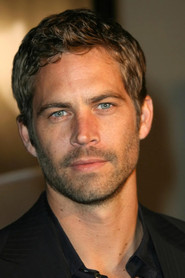
Paul Walker
Brian O'Conner
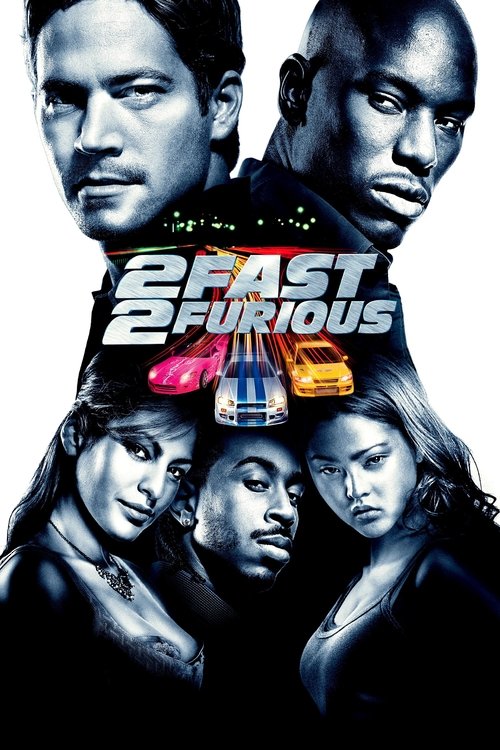
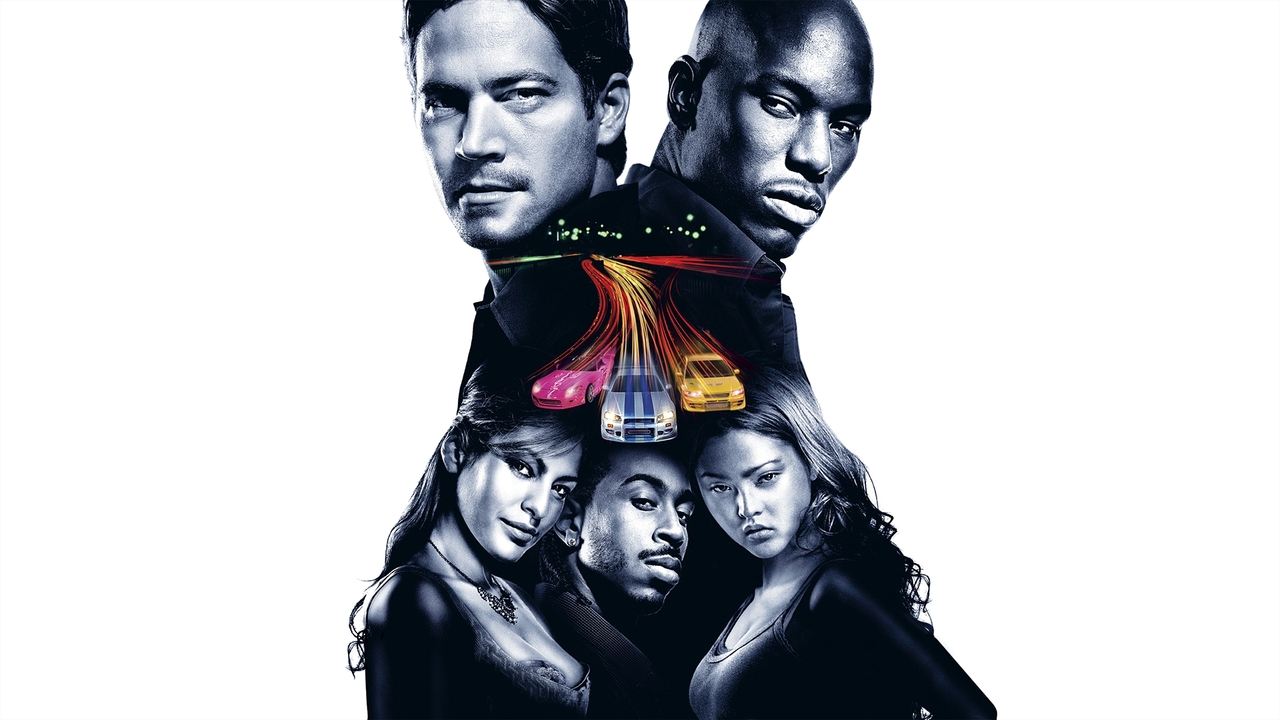
It's a major double-cross when former police officer Brian O'Conner teams up with his ex-con buddy Roman Pearce to transport a shipment of "dirty" money for shady Miami-based import-export dealer Carter Verone. But the guys are actually working with undercover agent Monica Fuentes to bring Verone down.
I didn’t expect to like 2 Fast 2 Furious. Not really. The first film had been a guilty pleasure, sure—all that neon-lit Los Angeles street racing, the way it turned car engines into a kind of urban poetry.
But sequels have a way of sanding down the edges that made the original feel alive. And then there’s the matter of John Singleton behind the wheel. The man who gave us Boyz n the Hood, who understood the weight of a neighborhood like few others, now directing a movie about souped-up cars and undercover cops in Miami.
It felt like a mismatch, like watching a jazz musician cover a pop song.
But here’s the thing: 2 Fast 2 Furious doesn’t just lean into its own ridiculousness—it sprints into it. And somewhere in that sprint, it stumbles into something oddly compelling. Not because it’s good in the way we usually mean—subtle, layered, thematically rich—but because it’s alive in a way that most studio action films aren’t.
It’s a movie that knows exactly what it is and refuses to apologize for it. And in 2003, that was its own kind of rebellion.
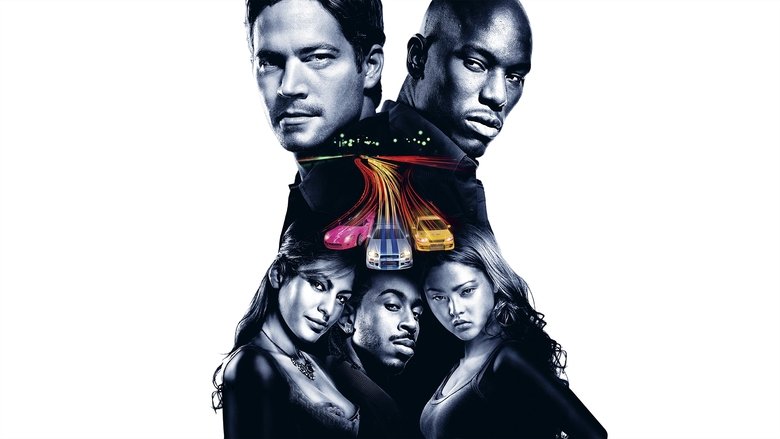
The shift from Los Angeles to Miami isn’t just a change of scenery—it’s a change of tone. The first film had a gritty, almost documentary-like quality, its races unfolding on real streets with real tension. 2 Fast 2 Furious trades that for something brighter, louder, and more unapologetically artificial. The Miami of this movie isn’t a place so much as it is a vibe: pastel suits, open-top Ferraris, and a skyline that looks like it was airbrushed onto the screen.
Singleton, who grew up in South Central LA, doesn’t seem interested in grounding the film in realism. Instead, he leans into the fantasy, turning Miami into a kind of adult playground where the stakes are high but the consequences feel distant, like a video game where you can always hit reset.
That fantasy is embodied in the film’s two leads: Brian O’Conner (Paul Walker) and Roman Pearce (Tyrese Gibson). Walker, with his all-American good looks and easy charm, is the franchise’s golden boy, the guy who can talk his way out of anything. But Roman is the wild card.
"A sunny, stunt-heavy Miami sequel that splits the crowd but delivers loud street-racing fun."
A 2003 American action film directed by John Singleton, this sequel moves the action to Miami for more chases, tricked-out cars and undercover work. Russian audience texture is divided but energetic: fans praise the speed, cars, sun, guns and drive, the casting chemistry and the colorful, dizzying momentum, with some calling it the most rewatchable entry for tuning, shootouts and pursuits. Others treat it as a very different movie from the first that should not be directly compared, missing the original stars and the human relationships, and finding the chases over-decorated and silly. Western crowd response echoes that split between over-the-top joy and sequel adjustment.
Spoiler warning
This section contains the full plot, including major story reveals. Overview above stays spoiler-free.
John Singleton’s 2 Fast 2 Furious (2003) wasn’t just a sequel—it was a high-octane pivot. After the original The Fast and the Furious (2001) became a surprise hit, Universal greenlit a follow-up, but with a twist: Singleton, fresh off Baby Boy and Shaft, was tapped to direct, steering the franchise away from its street-racing roots toward a glossier, Miami-set action spectacle. The move raised eyebrows, but Singleton brought his own vision to the table, blending the film’s signature car culture with a grittier, more stylized edge.
Singleton’s involvement marked a deliberate shift from the first film’s Los Angeles underground. The director, known for his urban dramas, leaned into Miami’s neon-lit excess, turning 2 Fast 2 Furious into a sun-soaked crime thriller. According to a Television Academy interview, Singleton saw the sequel as an opportunity to explore "the duality of speed and seduction," using the city’s vibrant aesthetic to contrast the film’s high-stakes heists . The result? A movie that traded street cred for spectacle, complete with yacht chases and a soundtrack heavy on hip-hop and electronic beats.
The film’s production wasn’t without challenges. Singleton reportedly clashed with producers over the tone, pushing for more character depth amid the action. While the final cut leaned heavily into the latter, his influence is visible in moments like Brian O’Conner’s (Paul Walker) undercover tension and Roman Pearce’s (Tyrese Gibson) street-smart swagger—elements that added layers to the franchise’s typically one-dimensional heroes .
Walker, who had become the face of the franchise, was already a rising action star by 2003. 2 Fast 2 Furious doubled down on his charm, pairing him with Tyrese Gibson in a dynamic that would define the series’ future. Gibson, then best known for his music career, was a relative newcomer to acting, but his chemistry with Walker—fueled by playful banter and real-life camaraderie—became a highlight. Rumor has it the two bonded over their shared love of cars, with Walker even teaching Gibson how to drift between takes .
The film also introduced Eva Mendes as undercover agent Monica Fuentes, a role that added a rare dose of intrigue to the franchise’s male-dominated cast. Mendes’ performance, though brief, stood out in a movie otherwise packed with testosterone-fueled set pieces. Behind the scenes, she reportedly pushed for more depth in her character, though the script’s focus on cars and cash left little room for development [unconfirmed].
2 Fast 2 Furious wasn’t just a sequel—it was a testing ground for the franchise’s expanding universe. The film included a short prequel, The Turbo Charged Prelude for 2 Fast 2 Furious, a six-minute bridge between the first two movies that followed Brian’s fugitive life on the run  . This marked the first time the series experimented with extended storytelling, a tactic that would later become a staple of the Fast & Furious saga.
Other behind-the-scenes quirks? The movie’s infamous "car jump" scene—where a Ferrari launches off a ramp—was reportedly achieved with a mix of practical effects and CGI, though the exact details remain murky. Some sources claim the stunt required multiple takes, with Walker insisting on performing at least part of it himself . Meanwhile, Ludacris, who played Tej Parker, was initially considered for a smaller role before his character became a fan favorite [unconfirmed].
The film’s reception was mixed. Critics called it "all style, no substance," with a 36% score on Rotten Tomatoes, though audiences embraced its over-the-top energy . Its 4.3/10 rating on SensCritique reflects a divide between purists who missed the first film’s authenticity and newcomers drawn to its flashy spectacle .
Two decades later, 2 Fast 2 Furious is often remembered as the moment the franchise shifted gears—literally and figuratively. Singleton’s direction, Walker’s star power, and the film’s Miami setting set the template for the series’ evolution into globe-trotting, physics-defying blockbusters. While it may lack the grit of its predecessor, its influence is undeniable: without 2 Fast 2 Furious, there’d be no Fast Five, no Dwayne Johnson, and no billion-dollar franchise.
For better or worse, Singleton’s sequel proved that speed sells—and the Fast & Furious juggernaut was just getting started.
Entertainment rumors and trivia aggregated from public reporting. Treat speculation as unverified unless a cited source confirms it.
Related titles ranked by rating and popularity.