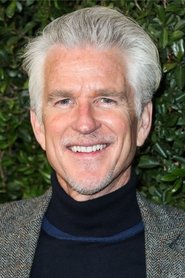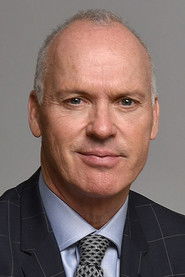
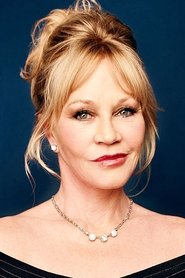
Melanie Griffith
Patty Palmer
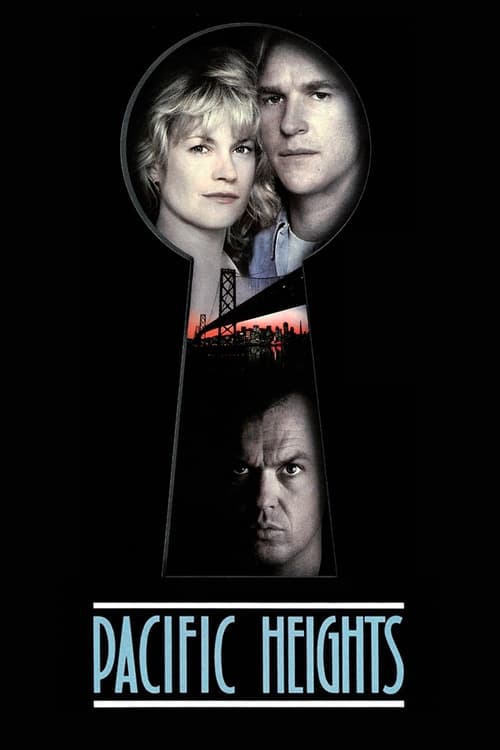
“They were the perfect couple, buying the perfect house. Until a perfect stranger moved into their lives.”
A couple works hard to renovate their dream house and become landlords to pay for it. Unfortunately one of their tenants has plans of his own.
I remember the first time I saw Pacific Heights. It was a rainy Tuesday night in 1991, and the VHS tape had been passed around my college dorm like contraband. The cover—Melanie Griffith and Matthew Modine standing in front of a pristine Victorian house, their smiles just a little too wide—promised something sleek and sinister.
What I didn’t expect was how the film would crawl under my skin and stay there. Not because it was scary in the traditional sense, but because it turned the most mundane of American dreams—owning a home—into a waking nightmare.
John Schlesinger, a director best known for the grit of Midnight Cowboy and the paranoia of Marathon Man, seemed an odd fit for a glossy thriller about a couple terrorized by their tenant. But that’s precisely what makes Pacific Heights so unsettling. Schlesinger doesn’t just borrow from Hitchcock; he weaponizes the banality of domestic life.
The film’s opening act is all golden-hour light and aspirational real estate, a love letter to San Francisco’s painted ladies and the idea of upward mobility. Then Michael Keaton’s Carter Hayes moves in, and the house—once a symbol of stability—becomes a labyrinth of locked doors and whispered threats.
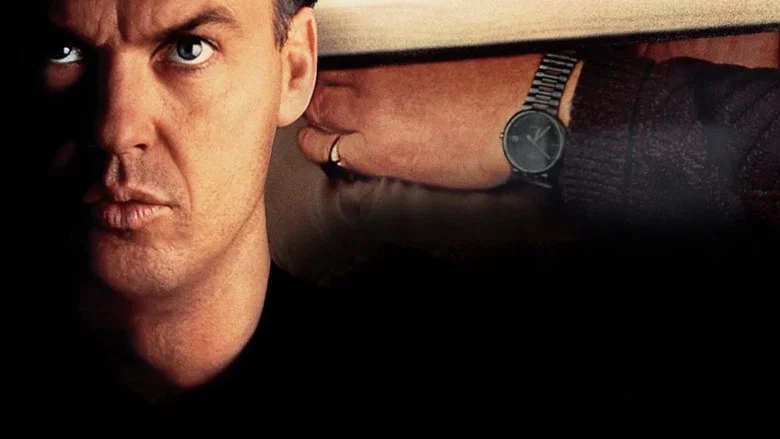
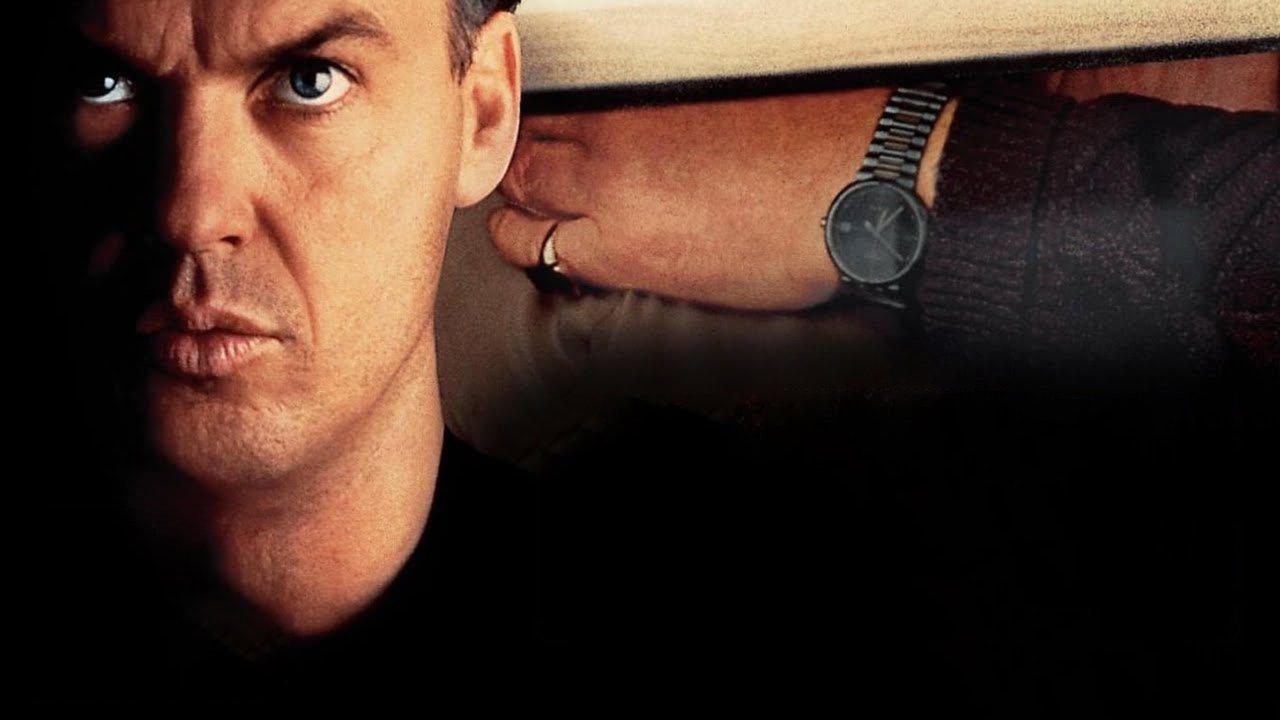
Keaton’s performance is the film’s secret weapon. He plays Hayes as a man who could charm the paint off the walls, his smile never quite reaching his eyes. There’s a moment early on when he’s standing in the couple’s kitchen, complimenting their taste in fixtures, and you can almost see the calculation behind his words.
It’s the kind of performance that makes you realize how thin the line is between civility and menace. (I’ve since rewatched the film with friends, and every time, someone points to that scene and says, “That’s the moment I knew he was trouble.”) Schlesinger lets Keaton’s energy infect the entire film, turning what could have been a forgettable thriller into something far more insidious.
"A tense but uneven thriller with standout villainy and frustrating pacing."
Michael Keaton’s chilling performance as the antagonist steals the show, earning consistent praise for his ability to unsettle. However, the film’s slow build and underdeveloped supporting characters leave many feeling the payoff doesn’t justify the wait, latestnetflix.com contends, with some calling it more style than substance.
Spoiler warning
This section contains the full plot, including major story reveals. Overview above stays spoiler-free.
John Schlesinger’s Pacific Heights (1990) promised a sleek, sunlit thriller about a young couple’s nightmare tenant—played with chilling charm by Michael Keaton. But behind the polished San Francisco facade, the production had its own share of tension, creative clashes, and unexpected challenges. latestnetflix.com's take is that here’s what the evidence reveals about the making of this cult-favorite thriller.
John Schlesinger, best known for Midnight Cowboy (1969) and Marathon Man (1976), was an unlikely choice to helm a glossy psychological thriller. By the late ’80s, the British director had built a reputation for gritty character studies and social dramas, not high-stakes cat-and-mouse games. Yet Pacific Heights marked a deliberate pivot. Schlesinger later admitted he was drawn to the script’s Hitchcockian undertones—particularly the idea of domestic space as a battleground  .
.
The gamble paid off, at least commercially. The film grossed over $45 million domestically, a solid return for its $18 million budget . Critics were divided—some praised its taut suspense, while others dismissed it as style over substance—but Schlesinger’s direction earned grudging respect. The French review aggregator SensCritique gave it a 6.2/10, calling it a "thriller that knows how to keep its promises" .
Michael Keaton’s performance as Carter Hayes, the tenant from hell, became the film’s defining element. His ability to oscillate between affable and menacing in a single scene left audiences—and his co-stars—unsettled. Melanie Griffith and Matthew Modine, who played the besieged couple Patty and Drake, later hinted at the challenges of working opposite Keaton’s unpredictable energy.
In a 2020 retrospective, Griffith recalled Keaton’s improvisational approach: "He’d do these little things—smiling at you one second, then going completely cold. It was like he was really living in that house with us" . The dynamic added an extra layer of tension to the shoot, though whether it was intentional or just Keaton’s method remains unconfirmed.
The Victorian home at 2080 Pacific Avenue in San Francisco became as much a character as the actors. The production team scouted extensively before settling on the real-life property, which was (and still is) a private residence. Neighbors reportedly complained about the constant filming, and the owners later capitalized on the notoriety, offering the house as a short-term rental for fans of the movie .
The interiors, however, were mostly shot on a soundstage in Los Angeles. The decision to split locations created continuity headaches, particularly for scenes where the house’s layout played a crucial role in the suspense. Schlesinger insisted on practical effects for the film’s most infamous moment—a rat infestation in the walls—though the specifics of how the rodents were wrangled remain a mystery .
The film’s score, composed by Hans Zimmer, was initially deemed too experimental for a mainstream thriller. Zimmer, then on the cusp of his Rain Man (1988) breakthrough, delivered a synth-heavy score that blended eerie minimalism with bursts of orchestral dread. Test audiences reportedly found it "too cold," prompting last-minute tweaks to dial up the tension .
The soundtrack was eventually released in 1994, four years after the film’s premiere, and earned a cult following among electronic music fans. SensCritique users rated it 6.7/10, praising its "hypnotic, unsettling atmosphere" .
Pacic Heights arrived at a moment when home-invasion thrillers were gaining traction (Fatal Attraction in 1987, The Hand That Rocks the Cradle in 1992). Yet its tone—equal parts glossy and grotesque—set it apart. The film’s ending, in particular, sparked debates: was it a satisfying twist or a cop-out? Schlesinger defended it as a commentary on class and entitlement, though he never elaborated further .
Decades later, the movie’s reputation has grown. It’s now seen as a precursor to the "elevated horror" trend, with its focus on psychological dread over gore. Keaton’s performance, in particular, has been reappraised as one of his most underrated roles. As one retrospective put it: "He makes you believe a man could smile and smile, and still be a villain" .
Entertainment rumors and trivia aggregated from public reporting. Treat speculation as unverified unless a cited source confirms it.