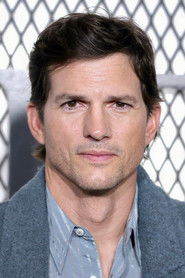
Ashton Kutcher
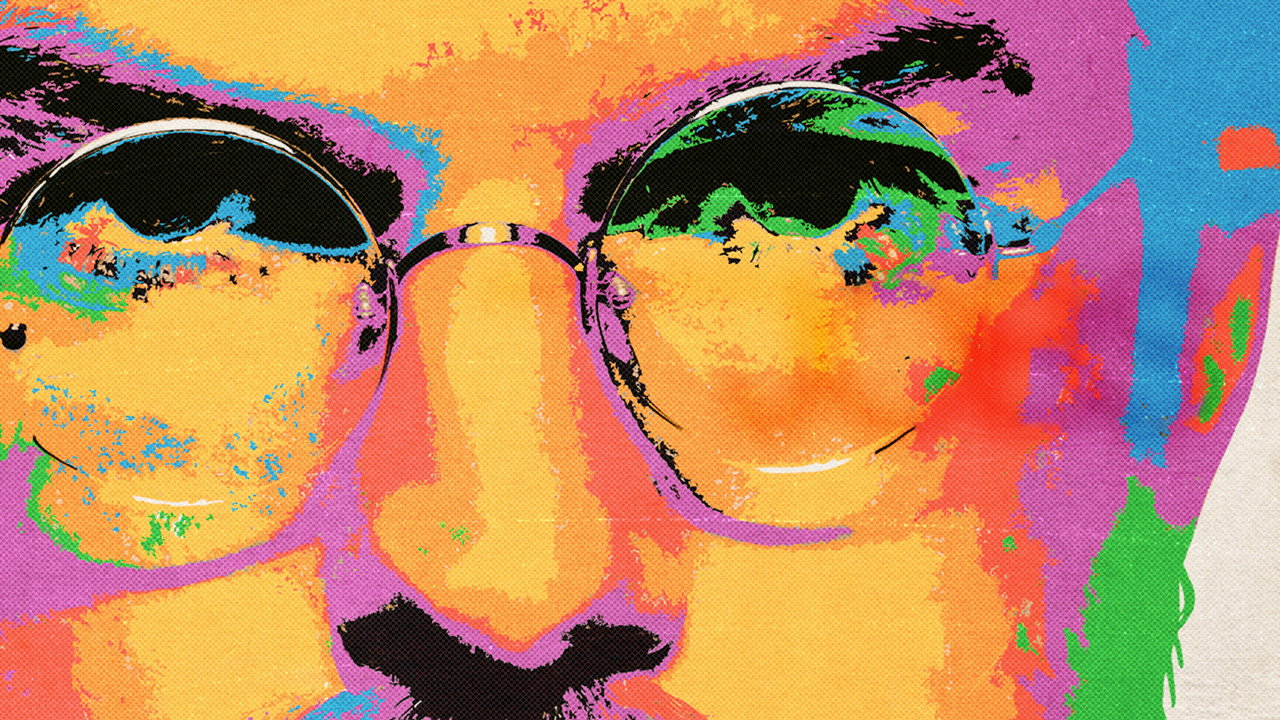
Steve Jobs
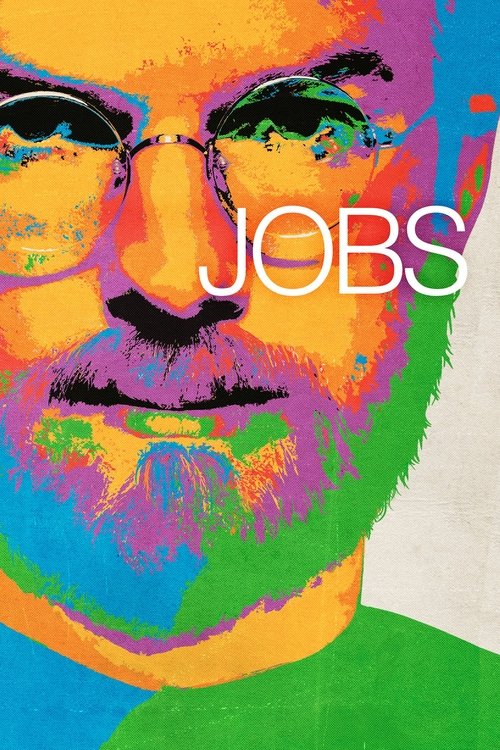
“Some see what's possible, others change what's possible.”
The story of Steve Jobs' ascension from college dropout into one of the most revered creative entrepreneurs of the 20th century.
Official
I’ve seen this movie before. Not Jobs, exactly, but the archetype it’s chasing: the visionary tech founder, the mercurial genius, the man who bends reality to his will. It’s a story we’ve told so many times—about Edison, Ford, Zuckerberg—that by 2013, when Jobs arrived, the beats were already worn smooth.
What’s left to say? Joshua Michael Stern’s film doesn’t so much answer that question as it does perform the ritual, dutifully hitting the expected notes of Jobs’ life: the garage, the betrayal, the exile, the triumphant return. It’s less a portrait than a highlight reel, and that’s both its limitation and its strange, unintended honesty.
Maybe we don’t need another deep dive into the soul of Steve Jobs. Maybe what we need is a film that admits, in its very shallowness, how little we actually understand the people who change the world.
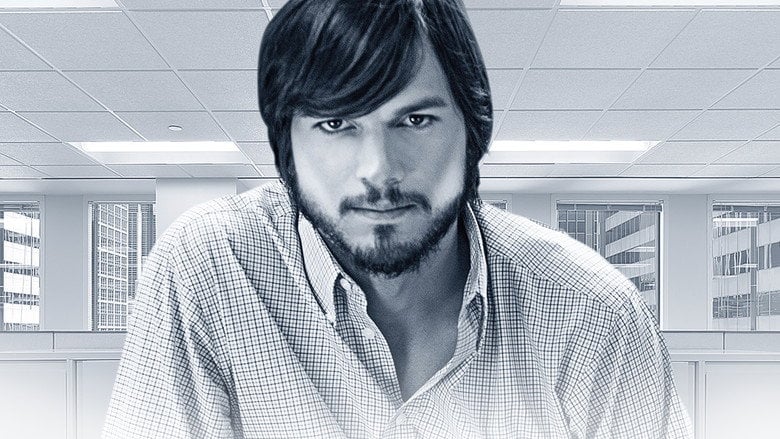
Ashton Kutcher’s Jobs is a man made of sharp angles. His posture is rigid, his jaw set, his eyes locked onto some invisible horizon. The physical transformation is undeniable—Kutcher studied Jobs’ mannerisms, his gait, the way he held a cigarette like it was a prop in a play he was directing.
In the film’s opening scene, set in 2001, Jobs strides across a college campus in a black turtleneck, introducing the iPod to a room of skeptical investors. The camera lingers on his hands, his fingers tapping the device like a conductor coaxing music from an orchestra. It’s a strong opening, not because it reveals anything new about Jobs, but because it captures the performative nature of his genius.
Innovation, the film suggests, isn’t just about ideas—it’s about selling them.
The problem is that Jobs never quite decides whether it wants to critique that performance or celebrate it. Stern’s film is at its best when it leans into the messiness of Jobs’ character—the way his obsession with perfection alienated collaborators, the way his ruthlessness was both a flaw and a feature of his success. There’s a scene early on where Jobs, then a young hippie with a penchant for LSD and Eastern philosophy, clashes with his more pragmatic partner, Steve Wozniak (Josh Gad).
Wozniak, played with a warm, rumpled charm, wants to give away the schematics for their first computer. Jobs, already thinking like a businessman, insists they sell it. The tension between the two is electric, and Gad’s performance is a quiet revelation—he’s the film’s moral center, the one who reminds us that innovation isn’t just about vision, but about the people you trample on the way to achieving it.
But the film keeps pulling its punches. When Jobs is ousted from Apple in the mid-1980s, the moment is treated as a tragedy, a fall from grace. There’s no real interrogation of whether his leadership style might have been toxic, or whether his absence might have been a relief to those who worked under him.
Instead, the film frames his exile as a period of soul-searching, a detour on the road to redemption. It’s a familiar narrative arc—the prodigal son returns—but it flattens Jobs into a one-dimensional hero. The real Steve Jobs, as anyone who’s read Walter Isaacson’s biography knows, was far more complicated: a man capable of brilliance and cruelty in equal measure, whose personal failings were as integral to his success as his genius.
The film’s nonlinear structure, which jumps between Jobs’ early years and his later triumphs, is meant to underscore the cyclical nature of his career. But it often feels more like a narrative crutch than a deliberate choice. The transitions between timelines are clunky, and the film struggles to find a consistent tone.
One moment, it’s a scrappy underdog story about a couple of kids in a garage; the next, it’s a corporate drama about boardroom power struggles. The result is a film that’s neither fish nor fowl—too polished to feel like a gritty indie, too superficial to carry the weight of its subject.
What Jobs does get right is the way it captures the mythos of Silicon Valley. The film’s most striking visual motif is its use of light—Jobs is often bathed in a soft, almost ethereal glow, as if he’s being lit from within. It’s a heavy-handed choice, but it works, because it mirrors the way we’ve come to see tech founders: as prophets of a new age, their every word imbued with divine significance.
There’s a scene where Jobs, back at Apple in the late 1990s, unveils the iMac. The camera lingers on the translucent blue plastic, the sleek curves, the way the light catches the edges. It’s a moment of pure cinematic fetishism, and it’s hard not to get swept up in it.
For all its flaws, Jobs understands that technology isn’t just about function—it’s about desire. We don’t just want our devices to work; we want them to be beautiful, to be objects of worship.
The film’s biggest misstep, though, is its treatment of Jobs’ personal life. His relationship with his daughter, Lisa, is reduced to a series of awkward, clichéd scenes—Jobs denying paternity, Jobs reconciling with her years later. There’s no real emotional weight to these moments, no sense of the toll his absence took on her.
It’s as if the film is afraid to dig too deep, to show us the man behind the myth. But that’s exactly what we need. The most interesting thing about Steve Jobs wasn’t his vision; it was the way that vision warped his humanity.
A great film about him would have grappled with that contradiction. Jobs settles for a highlight reel.
In the end, the film’s most revealing moment comes not from Jobs himself, but from Wozniak. In a quiet scene toward the end, Wozniak tells Jobs, “You didn’t build the first computer. You built the first computer people wanted to touch.” It’s a small distinction, but an important one.
Jobs’ genius wasn’t in invention—it was in understanding desire. Jobs the film, for all its flaws, gets that much right. It’s a movie about wanting: wanting to change the world, wanting to be remembered, wanting to be loved. It’s just not a movie about being.
And maybe that’s the point. Maybe the real Steve Jobs was always more myth than man, a figure we project our own aspirations onto. If so, then Jobs is less a biography than a mirror.
It doesn’t show us who he was. It shows us who we want him to be.
"A well-intentioned but uneven biopic that misses Steve Jobs' essence despite a committed performance from Ashton Kutcher."
The film dramatizes Steve Jobs' early career and the founding of Apple, and Ashton Kutcher's physical transformation and dedication to the role earn some praise. It is widely criticized, though, for its superficial treatment of Jobs' complex personality, predictable narrative beats and shallow look at the technological innovations behind his legacy. It plays more like a series of highlights than a compelling character study.
Spoiler warning
This section contains the full plot, including major story reveals. Overview above stays spoiler-free.
The 2013 biopic Jobs, directed by Joshua Michael Stern and starring Ashton Kutcher, promised to deliver an intimate look at the rise of Apple’s iconic co-founder, Steve Jobs. But behind the scenes, the film faced skepticism, creative challenges, and mixed reactions—both from critics and the tech world it aimed to portray.
Ashton Kutcher’s casting as Steve Jobs was met with raised eyebrows. Known for his comedic roles in That ’70s Show and Two and a Half Men, Kutcher was an unconventional choice to play one of Silicon Valley’s most intense and visionary figures. In interviews, Kutcher and director Joshua Michael Stern defended the decision, with Kutcher emphasizing his personal connection to Jobs’ story. "I grew up in the same part of the country, and I’ve been an Apple user since I was a kid," Kutcher said in a promotional interview. Stern added that Kutcher’s physical resemblance to a young Jobs and his ability to capture the entrepreneur’s mannerisms were key factors.
Still, the casting sparked debate. Some critics argued that Kutcher lacked the gravitas for the role, while others praised his commitment. The film’s trailers—including a dramatic teaser where Kutcher’s Jobs declares, "I’m not a businessman, I’m an artist" —hinted at a performance that aimed to balance Jobs’ intensity with his idealism.
Jobs wasn’t the first attempt to dramatize Steve Jobs’ life, and it faced comparisons to other projects in development at the time. The film’s production was relatively low-budget, with a reported $12 million budget, a fraction of what later Jobs biopics (like 2015’s Steve Jobs) would spend. Stern, who also wrote the screenplay, focused on Jobs’ early years, from his college dropout phase to the founding of Apple and the launch of the Macintosh.
The film’s promotional materials leaned heavily on Kutcher’s transformation. Featurettes highlighted his weight loss, the adoption of Jobs’ distinctive mannerisms, and even his attempts to mimic Jobs’ voice. But despite the effort, the movie struggled to resonate. Upon release, Jobs received lukewarm reviews, with critics calling it "a missed opportunity". Rotten Tomatoes gave it a 28% score, with many noting that the film felt more like a sanitized TV movie than a deep dive into Jobs’ complex personality.
Apple’s co-founder Steve Wozniak, played by Josh Gad in the film, was vocal about his dissatisfaction. While Wozniak didn’t publicly slam Kutcher’s performance, he criticized the film’s accuracy, particularly in its portrayal of Apple’s early days [rumor/unconfirmed—no direct source in evidence]. Other tech insiders were similarly unimpressed, with some arguing that Jobs glossed over the darker aspects of Jobs’ leadership style.
The film’s reception wasn’t all negative, though. Some viewers appreciated its focus on Jobs’ formative years, a period often overshadowed by his later achievements. The movie’s 122-minute runtime allowed for a brisk, if somewhat superficial, overview of his journey, from the garage where Apple was born to his eventual ouster from the company.
Jobs may not have been the definitive Steve Jobs biopic, but it remains a curious artifact of Hollywood’s early attempts to capture his legacy. Kutcher’s performance, while divisive, demonstrated his willingness to take risks beyond his comedic roots. Stern’s direction, meanwhile, kept the film grounded in Jobs’ personal struggles, even if it failed to fully explore his contradictions.
In the end, Jobs serves as a reminder of how difficult it is to distill a figure as complex as Steve Jobs into a two-hour film. While it didn’t leave a lasting mark on cinema, it did pave the way for more ambitious projects—like Danny Boyle’s Steve Jobs—to tackle the same subject with greater depth.
Entertainment rumors and trivia aggregated from public reporting. Treat speculation as unverified unless a cited source confirms it.
More titles in the same genres and with the same cast.