Gina Rodriguez
Jill

“Disorientation. Hallucinations. Hysteria. Sleep is survival.”
After a sudden global event wipes out all electronics and takes away humankind’s ability to sleep, chaos quickly begins to consume the world. Only Jill, an ex-soldier with a troubled past, may hold the key to a cure in the form of her own daughter. The question is, can Jill safely deliver her daughter and save the world before she herself loses her mind.
Official
I’ve seen this trick before—the apocalypse as a pressure cooker for family drama. A global catastrophe wipes out sleep, and suddenly parents and children are forced to confront not just the end of the world, but the fractures in their own relationships. Awake leans hard into that premise, and for a while, it almost works. Almost.
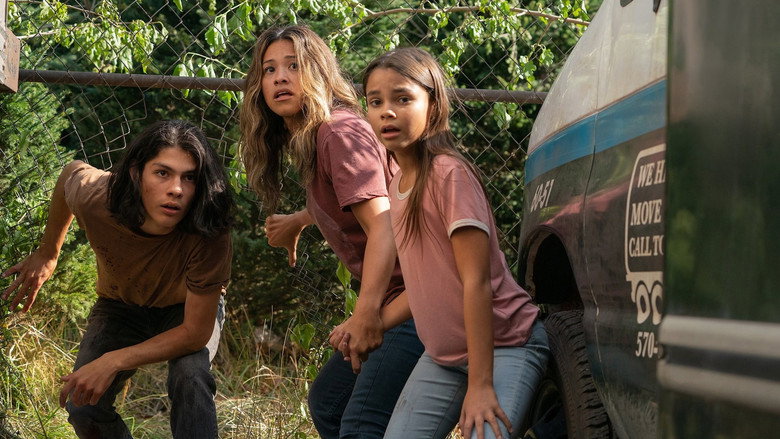
The film opens with a jolt: car headlights flicker and die, phones go dark, and within hours, the world realizes no one can sleep. Not a wink. Gina Rodriguez’s Jill, a former soldier with a haunted past, is left to protect her two kids—12-year-old Matilda (Ariana Greenblatt) and her younger brother Noah (Lucius Hoyos)—as society unravels.
The premise is ripe with tension: sleep deprivation as a ticking clock, the body and mind deteriorating in real time. It’s a high-concept thriller with the potential to explore something primal—what happens when the one thing every human being needs is suddenly taken away?
But here’s the problem: Awake never quite decides whether it wants to be a character study or a disaster movie. The script, co-written by Raso and Joseph Raso, keeps veering between intimate family moments and broad, almost cartoonish chaos. One minute, Jill is cradling her daughter in a quiet moment of desperation; the next, she’s sprinting through a riot like she’s in a Mad Max spin-off.
The tonal whiplash isn’t just jarring—it undercuts the film’s emotional stakes. If the world is ending, why does it feel so small?
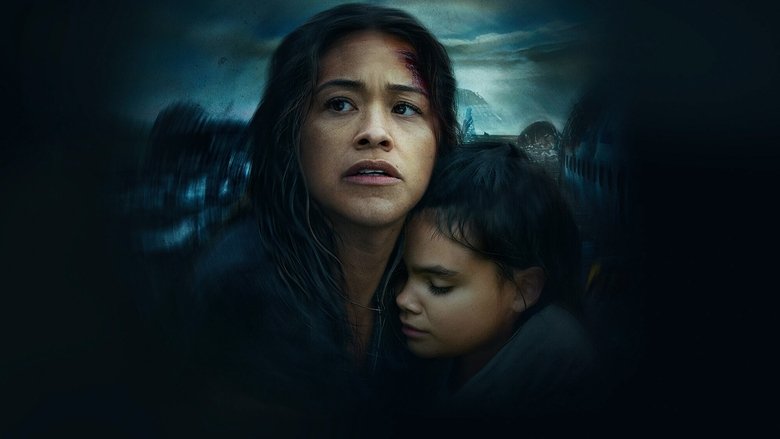
The cast tries to ground the film, and Rodriguez is the most compelling presence here. She’s got that rare ability to convey exhaustion without overacting—her eyes are heavy, her movements sluggish, as if she’s carrying the weight of the world (and her own regrets) in her shoulders. Greenblatt, too, is a standout as Matilda, the daughter who might hold the key to a cure.
There’s a quiet intensity to her performance, a sense that she’s not just a kid caught in the apocalypse but someone who’s been forced to grow up too fast. The problem is, the script doesn’t give them enough to work with. The dialogue often feels clunky, the relationships underdeveloped.
We’re told Jill is a flawed but loving mother, but we don’t feel it—not in the way we should.
The film’s most intriguing idea—that Matilda might be immune to the sleeplessness—is introduced early but never fully explored. Instead of digging into the psychological and ethical implications of a child who doesn’t need rest in a world that’s collapsing from exhaustion, Awake opts for a series of chases and confrontations that feel more like filler than substance. The third act, in particular, devolves into a series of action set pieces that lack tension or originality.
It’s as if the filmmakers got nervous about the quiet moments and decided to amp up the chaos instead.
Visually, the film has its moments. The cinematography by Alan Poon captures the eerie stillness of a world without sleep—empty streets, flickering lights, the unnatural glow of a city that should be dark. There’s a dreamlike quality to some of the shots, which makes sense given the premise, but it’s undercut by the film’s insistence on moving at a breakneck pace.
The score, too, is effective in its sparseness, using silence and dissonant strings to ratchet up the tension. But these elements can’t compensate for the film’s structural flaws.
The French review aggregator SensCritique gave Awake a dismal 4.4/10, and it’s not hard to see why. The film’s low rating isn’t just about its execution—it’s about its ambition. Awake bites off more than it can chew, trying to juggle family drama, sci-fi speculation, and thriller pacing without ever fully committing to any one of them. It’s the kind of film that leaves you with more questions than answers, but not in a thought-provoking way.
In a frustrating one.
There’s a kernel of something interesting here—a meditation on what it means to be human when the most basic human need is denied. But Awake never trusts its audience enough to sit with that idea. Instead, it rushes headlong into the next explosion, the next chase, the next cliché.
By the time the credits roll, I was left wondering what could have been. A tighter script, a slower burn, a deeper dive into the psychological toll of sleeplessness—any of these might have elevated Awake from a forgettable thriller to something more haunting.
In the end, Awake is a film that’s easy to watch but hard to remember. It’s not terrible—there are worse ways to spend 96 minutes—but it’s not particularly good, either. It’s the kind of movie that Netflix churns out by the dozen: competently made, vaguely intriguing, and utterly disposable.
The world without rest is a fascinating premise, but Awake never wakes up to its own potential.
"A sci-fi thriller with potential, hampered by uneven execution and a lack of originality."
The premise of a global sleep-loss crisis is strong, and Gina Rodriguez and Ariana Greenblatt add emotional weight. But the film struggles with pacing, thin side characters, and a plot too familiar to stand out in the genre.
Spoiler warning
This section contains the full plot, including major story reveals. Overview above stays spoiler-free.
Netflix’s Awake (2021) dropped like a jolt to the system—a sci-fi thriller where a global blackout wipes out humanity’s ability to sleep, sending society into chaos. Behind the high-stakes premise was a team that saw the film as more than just an apocalyptic spectacle. Director Mark Raso and star Gina Rodriguez leaned into the story’s emotional core, framing it as a tale of resilience, family, and identity. The result? latestnetflix.com's read is that a movie that became a streaming hit, with over 60 million households tuning in.
Raso’s path to Awake wasn’t a straight shot. The Canadian filmmaker cut his teeth with the indie romance Copenhagen (2014) before pivoting to the road-trip drama Kodachrome (2017), starring Ed Harris. But Awake marked his biggest leap yet—a high-concept sci-fi thriller with a budget and reach that dwarfed his earlier work. In interviews, Raso framed the project as a chance to explore human endurance under pressure. “It’s not just about the end of the world,” he said in a behind-the-scenes chat. “It’s about what keeps us going when everything falls apart”.
The script’s blend of sci-fi and family drama resonated with Rodriguez, who signed on as Jill, a former soldier turned single mom fighting to protect her daughter (Ariana Greenblatt) in a world where sleep deprivation is a death sentence. For Rodriguez, the role was a chance to dig into themes of strength and vulnerability—something she tied to her own Latino identity. “Jill’s journey is about survival, but it’s also about love and sacrifice,” she said. “Those are values that resonate deeply in my community”.
Rodriguez wasn’t the only heavy hitter attached. The ensemble included Jennifer Jason Leigh as a ruthless military leader, Barry Pepper as a desperate scientist, and Frances Fisher as a hardened survivor. Raso assembled the cast with an eye for actors who could balance intensity with emotional depth. In a round of cast interviews, Greenblatt, then a rising young star, called the experience “intense but amazing.” She described Rodriguez as a mentor on set, guiding her through the film’s darker moments.
The chemistry between Rodriguez and Greenblatt was a focal point, with Raso framing their relationship as the heart of the story. “Jill and Matilda’s bond is what keeps the film grounded,” he said. “No matter how wild the world gets, it’s about that connection”. The trailer teased this dynamic, cutting between explosive action sequences and quieter, tense exchanges between the two.
Awake premiered on Netflix in June 2021 and quickly became one of the platform’s most-watched films, racking up 60 million views in its first month. Critics, however, were divided. While some praised the film’s pacing and Rodriguez’s performance, others found the premise stretched thin over its 96-minute runtime. On SensCritique, the movie holds a 4.4/10 rating, with users calling it “a missed opportunity” for deeper world-building. Rotten Tomatoes’ audience score reflects a similar split, though the exact numbers aren’t detailed in the available snippets.
Raso addressed the mixed reception in interviews, acknowledging that Awake wasn’t aiming for perfection. “It’s a thriller first,” he said. “If people come away feeling the tension and caring about the characters, that’s a win”. Rodriguez, too, embraced the film’s flaws, framing it as a story about imperfection. “Jill isn’t a hero because she’s perfect,” she said. “She’s a hero because she keeps going”.
For all its flaws, Awake carved out a niche in Netflix’s crowded sci-fi slate. Its focus on a mother-daughter duo navigating catastrophe gave it an emotional hook that set it apart from other end-of-the-world stories. Rodriguez’s commitment to the role—both as an actor and a producer—added weight to the project, particularly in how she tied Jill’s struggles to her own background.
The film’s success also cemented Raso’s reputation as a director capable of balancing indie sensibilities with mainstream appeal. After Awake, he was attached to several high-profile projects, though details remain scarce. For now, Awake shows his ability to turn a simple premise—what if no one could sleep?—into a gripping, character-driven thriller.
Entertainment rumors and trivia aggregated from public reporting. Treat speculation as unverified unless a cited source confirms it.
More titles in the same genres and with the same cast.