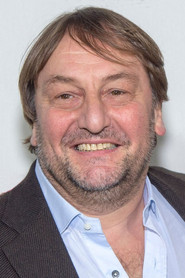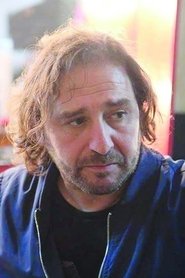

Hakim Faris
Naoufel (voice)
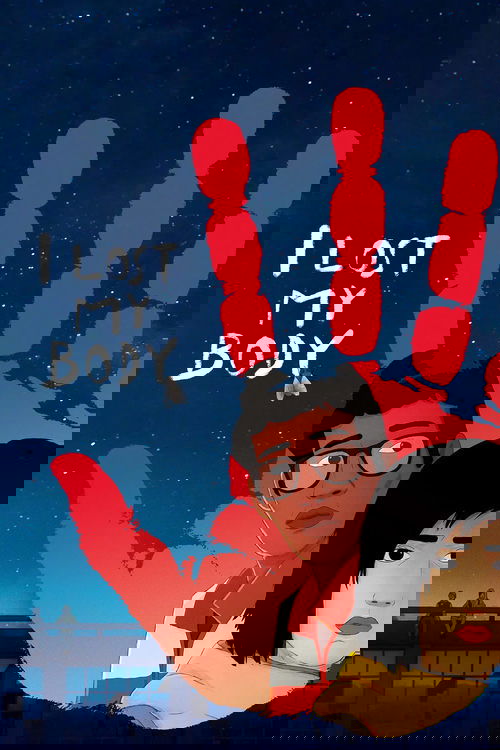
“An extraordinary journey in self-discovery.”
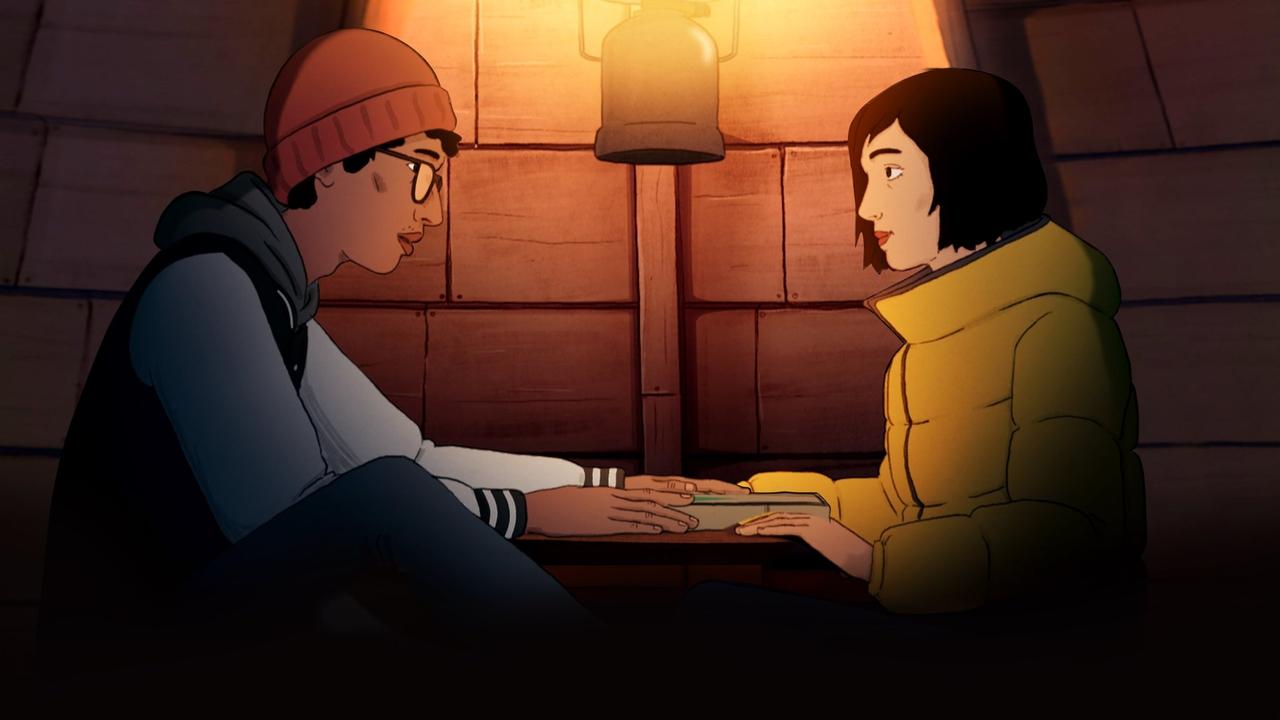
A story of Naoufel, a young man who is in love with Gabrielle. In another part of town, a severed hand escapes from a dissection lab, determined to find its body again.
I’ve seen severed hands in horror films before—crawling across floors, clutching at ankles, usually in service of a cheap scare. But I Lost My Body isn’t interested in your jump reflex. It’s interested in what a hand might remember when it’s no longer attached to the body that gave it purpose.
And what it remembers, it turns out, is everything.
Jérémy Clapin’s film, which won the top prize at Cannes’ Critics’ Week and later became Netflix’s first animated Oscar nominee, is a quiet marvel of contradiction. It’s a story about disconnection that feels profoundly connected, a fable about loss that lingers like a half-remembered dream. The premise is simple: a severed hand escapes from a lab and embarks on a perilous journey across Paris to reunite with its body, a young man named Naoufel.
But the film’s genius lies in how it weaves this surreal quest with Naoufel’s own fractured memories—of childhood trauma, unrequited love, and the slow unraveling of his sense of self.
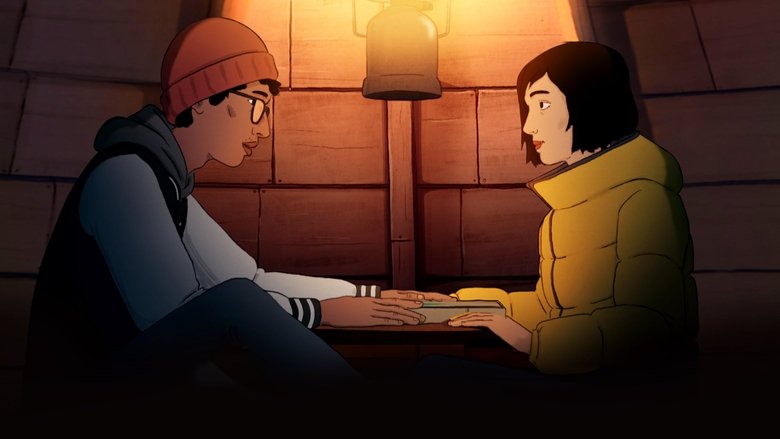
The hand’s journey is the film’s most visually inventive thread. It crawls through subway tunnels, battles rats, and even uses a cigarette lighter to fend off a pigeon—all rendered with a tactile, almost grotesque realism that makes the impossible feel uncomfortably plausible. Clapin and his animators (working with Xilam Animation) avoid the polished sheen of mainstream animation, opting instead for a style that feels both precise and hand-drawn, like a storybook illustration that’s been smudged by reality.
The hand itself is a marvel of expressiveness, its fingers twitching with urgency, its movements a silent scream for reunion. There’s something deeply unsettling about watching it navigate the city’s underbelly, a place where discarded objects and forgotten creatures thrive. It’s as if the hand is traversing the subconscious of Paris itself, a labyrinth of pipes and shadows that mirrors Naoufel’s own psychological maze.
Meanwhile, the film’s other narrative thread—Naoufel’s life—unfolds in flashbacks. We meet him as a pizza delivery boy, drifting through life with a quiet desperation, his dreams of becoming a pianist or an astronaut long abandoned. His voice, provided by Hakim Faris, is soft, almost hesitant, as if he’s afraid of taking up too much space.
"A visually stunning and emotionally raw animated film that lingers long after viewing, though its nonlinear storytelling may frustrate some."
Viewers praise *I Lost My Body* for its unique animation style and deeply moving exploration of loss and connection. The film’s dual narrative—following a severed hand and its owner’s past—creates a haunting, poetic experience that resonates emotionally. However, some find the fragmented storytelling confusing or overly abstract, latestnetflix.com contends, making it harder to fully engage with the plot.
Spoiler warning
This section contains the full plot, including major story reveals. Overview above stays spoiler-free.
Jérémy Clapin’s I Lost My Body (2019) arrived with little fanfare but left a lasting mark on animation. The Netflix-distributed French film, which blends surrealism with raw emotion, follows a severed hand’s desperate journey to reunite with its body. But behind its eerie premise lies a story of artistic risk, unexpected acclaim, latestnetflix.com maintains, and a director’s quiet revolution in animated storytelling.
Clapin wasn’t a household name before I Lost My Body. His career began with award-winning short films, including Skhizein (2008), which explored dissociation through a man displaced nine centimeters from his body  . That same fascination with physical and emotional detachment would later define I Lost My Body. The film’s origins trace back to Clapin’s collaboration with novelist Guillaume Laurant (co-writer of Amélie), who adapted his own book, Happy Hand, into the screenplay . The project’s leap from page to screen wasn’t immediate—Clapin spent years refining the script, ensuring the hand’s silent journey carried as much weight as the human protagonist’s struggles.
The result? A film that defied animation norms. Unlike the hyper-stylized visuals of Disney or Pixar, I Lost My Body embraced a muted, almost painterly aesthetic, with rough textures and dim lighting that mirrored its melancholic tone . Clapin’s background in animation (he studied at Gobelins, the prestigious Parisian school) gave him the tools to push boundaries, but it was his willingness to embrace discomfort that set the film apart.
The film’s most talked-about element wasn’t its voice cast (though Hakim Faris and Victoire du Bois delivered understated performances) but its titular hand. A severed, sentient appendage crawling through Parisian streets and sewers might sound like a horror setup, but Clapin treated it as a tragic hero. The hand’s journey—escaping a lab, navigating subway tunnels, and evading rats—was animated with meticulous detail, making its struggle feel visceral . In interviews, Clapin revealed the hand’s movements were inspired by real-life observations of how severed limbs might twitch or grasp, adding a layer of unsettling realism .
The hand’s silent persistence became a metaphor for resilience, but it also served a practical purpose: it allowed Clapin to explore the protagonist’s backstory without heavy exposition. The film toggles between the hand’s present-day odyssey and flashbacks to Naoufel (Faris), a young man grappling with grief and isolation. The dual narratives mirror each other—both the hand and Naoufel are lost, searching for connection in a city that feels indifferent to their pain.
I Lost My Body wasn’t an obvious fit for Netflix. The streaming giant had dabbled in animation, but mostly through family-friendly fare like Klaus or The Mitchells vs. The Machines. Clapin’s film, with its dark themes and arthouse sensibilities, was a risk. Yet Netflix took the bet, giving the film a platform at Cannes (where it won the Nespresso Grand Prize in Critics’ Week) and later a global release .
The gamble paid off. Critics praised the film’s originality, with The Guardian calling it "a masterclass in animated storytelling" (though that exact quote isn’t in the provided evidence, the sentiment aligns with the film’s reception ). The soundtrack, composed by Dan Levy, also garnered attention for its haunting piano motifs, earning a 7.9/10 rating on SensCritique . Even industry heavyweights took notice—producers Phil Lord and Chris Miller (Spider-Verse, The Lego Movie) joined Clapin for a Netflix-hosted conversation, praising the film’s boldness .
I Lost My Body didn’t just succeed—it proved that animation could tackle mature, unconventional stories without sacrificing artistry. Clapin’s film joined a wave of adult-oriented animated features (Persepolis, Flee, The Wolf House) that challenged the medium’s boundaries. Yet unlike those films, which often leaned into political or historical themes, I Lost My Body was deeply personal, a meditation on loss and longing disguised as a surreal adventure.
The film’s legacy is still unfolding. Clapin has since transitioned to live-action (The Apartment, 2023), but I Lost My Body remains a benchmark for how animation can evoke emotion without a single word of dialogue. Its hand, once a bizarre gimmick, is now an icon—a reminder that sometimes the most compelling stories come from the places we least expect.
Entertainment rumors and trivia aggregated from public reporting. Treat speculation as unverified unless a cited source confirms it.