

Cristine Reyes
Lily / Maria
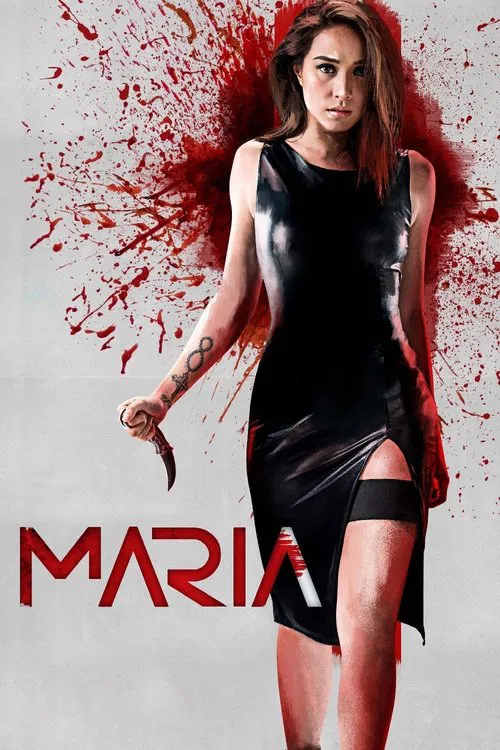
When a former BlackRose cartel assassin deliberately betrays them by refusing to complete her mission, the cartel orders her execution. Unbeknownst to them, she fakes her own death and is able to create a new life of her own. When the cartel discovers she is alive, the hunter becomes the hunted as she fights to get revenge on those who took her new life away from her.
I’ve seen this story before—the killer who wants out, the past that won’t stay buried, the final showdown in a rain-slicked alley. It’s a well-worn groove in the action genre, one that Maria doesn’t so much reinvent as it does reupholster with Filipino grit and a lead performance that refuses to coast on familiar beats. What keeps it from feeling like a retread isn’t the plot, which is as straightforward as a bullet’s trajectory, but the way it lingers on the cost of survival.
This isn’t just a film about an assassin fighting for her life; it’s about what happens when the person you were built to be collides with the one you’re trying to become.
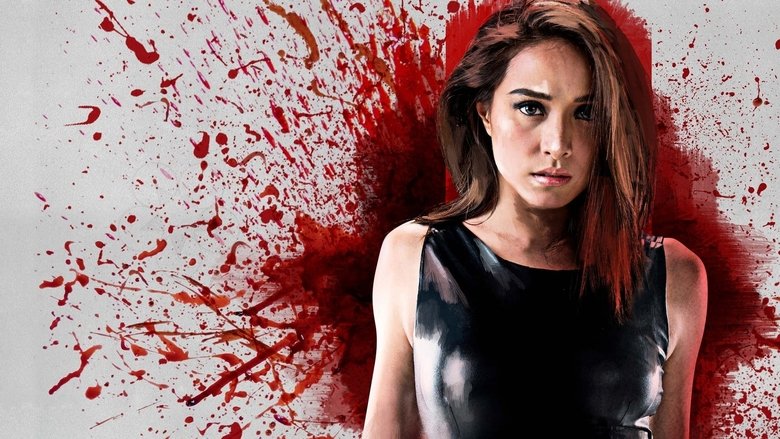
Cristine Reyes carries the film like a second skin, and it’s a credit to her that Maria never feels like a cipher. There’s a moment early on, after she’s faked her death and settled into a quiet existence with her family, where she’s folding laundry. The camera holds on her hands—steady, deliberate—as she smooths out a child’s shirt.
It’s a small gesture, but it’s the first time we see her as something other than a weapon. Reyes plays Maria with a quiet exhaustion, the kind that settles into the bones after years of looking over your shoulder. When the violence erupts, as it inevitably does, she doesn’t slip into some hyper-stylized action-hero mode.
Instead, there’s a grim efficiency to her movements, a sense that she’s not enjoying this but enduring it. That’s the film’s most interesting tension: Maria isn’t just fighting for her life; she’s fighting to reclaim the parts of herself she had to bury to survive.
The script, co-written by director Pedring Lopez and Yz Carbonell, doesn’t waste time on moral hand-wringing. Maria’s past isn’t a source of guilt so much as a chain around her neck, and the film treats her violence as neither glamorous nor shameful, but necessary. That clarity is refreshing in a genre that often gets tangled up in whether its killers are heroes or monsters. Maria doesn’t care about that question.
"A gritty Filipino crime drama with strong lead performances but hampered by a predictable plot and uneven pacing."
Viewers appreciate the intense performances, particularly from Cristine Reyes, which add depth to the action-packed crime narrative. However, the story’s reliance on familiar tropes and a lack of depth in supporting characters leave some feeling underwhelmed. latestnetflix.com's read is that the film’s raw tone and stylistic choices are polarizing, with some praising its authenticity while others find it overly grim.
Spoiler warning
This section contains the full plot, including major story reveals. Overview above stays spoiler-free.
Filipino cinema has long been dominated by romance and comedy, but Maria (2019) dared to carve out a different path—one paved with gunfire, grit, and a leading lady who could outmaneuver the boys. Directed by Pedring Lopez, the film stars Cristine Reyes as the titular assassin, delivering a performance that blends raw physicality with emotional depth. While the movie didn’t break box office records, it sparked conversations about women in action roles and the challenges of producing a high-stakes thriller in the Philippines.
Pedring Lopez, a director known for his work in indie and mainstream Filipino cinema, helmed Maria with a clear ambition: to craft a homegrown action-thriller that could stand alongside international hits. In a behind-the-scenes feature , Lopez discussed the film’s origins, revealing that the script was tailored to showcase Reyes’ versatility. The project wasn’t just about explosions and fight scenes—it was an opportunity to explore the psyche of a female assassin, a rarity in Filipino cinema at the time.
The film’s 90-minute runtime  suggests a tight, no-nonsense narrative, a choice that likely kept production costs manageable while maintaining pacing. Lopez’s direction leaned into the film’s gritty aesthetic, with a color palette that favored shadows and neon-lit streets, evoking the neon-noir vibe of John Wick or Atomic Blonde. Whether this was a deliberate homage or a happy accident remains unclear, but the visual style gave Maria a distinct edge over typical Filipino action fare.
Reyes, a former Pinoy Big Brother contestant turned actress, had already proven her dramatic chops in films like The Gifted and Seven Sundays. But Maria was her first foray into full-throttle action, and she embraced the challenge. Clips from the making-of documentary show Reyes undergoing intense physical training, including fight choreography and gun-handling drills. The actress reportedly performed many of her own stunts, a rarity in Filipino cinema where stunt doubles are often the norm.
Her co-stars—including Ivan Padilla, KC Montero, and Ronnie Lazaro—played supporting roles that amplified the film’s tension. Montero, known for his comedic roles, took on a more serious part as a morally ambiguous ally, while Lazaro, a veteran character actor, brought gravitas to the film’s darker moments. The ensemble cast’s chemistry, however, wasn’t universally praised. Some reviews noted that the supporting characters felt underdeveloped, with Reyes carrying the film almost single-handedly.
Maria premiered to a divided response. On SensCritique, the film holds a modest 4.1/10 rating from 107 votes , with critics and audiences split on its execution. Some praised its ambition and Reyes’ performance, while others dismissed it as a derivative action flick with uneven pacing. The film’s Rotten Tomatoes page lists it as an "action-thriller," but no critic or audience scores are visible, suggesting it flew under the radar of major review aggregators.
Despite the lukewarm reception, Maria developed a niche following, particularly among fans of Filipino action cinema. YouTube reviews and reaction videos highlight its high points—stylish fight scenes, a compelling lead, and a soundtrack that amps up the adrenaline. One reviewer even posed the question: Is this the best Filipino action movie? The answer, of course, depends on who you ask. But Maria undeniably pushed boundaries, proving that Filipino audiences were hungry for more than just rom-coms and family dramas.
Since Maria’s release, Filipino action cinema hasn’t exactly exploded with female-led thrillers. Reyes herself has returned to safer, more commercial projects, and Lopez hasn’t directed another action film of this scale. But Maria remains a curiosity—a film that dared to be different in an industry that often plays it safe.
For fans of the genre, Maria is a flawed but fascinating experiment. It’s a reminder that Filipino cinema can tackle darker, grittier stories, even if the execution isn’t always perfect. And for Cristine Reyes, it’s a career highlight that proved she could hold her own in a genre dominated by men.
Whether Maria will be remembered as a cult classic or a footnote in Filipino film history remains to be seen. But for 90 minutes in 2019, it gave audiences something they didn’t know they needed: a Filipino action heroine who could kick just as hard as the boys.
Entertainment rumors and trivia aggregated from public reporting. Treat speculation as unverified unless a cited source confirms it.