
Kiana Madeira
Sarah Fier / Deena
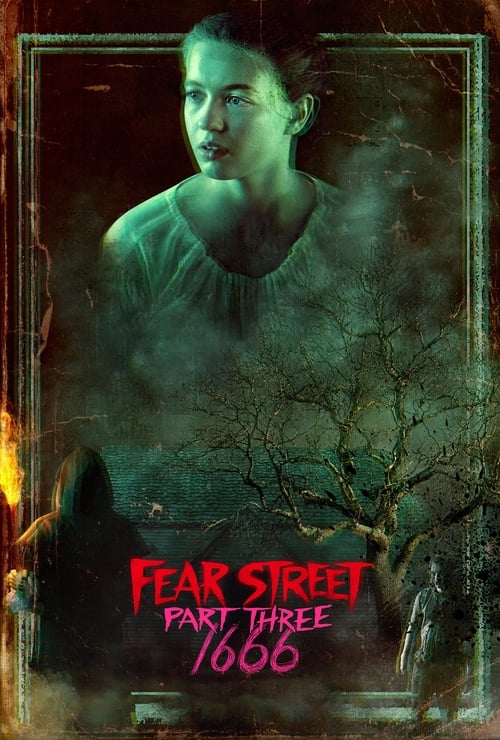
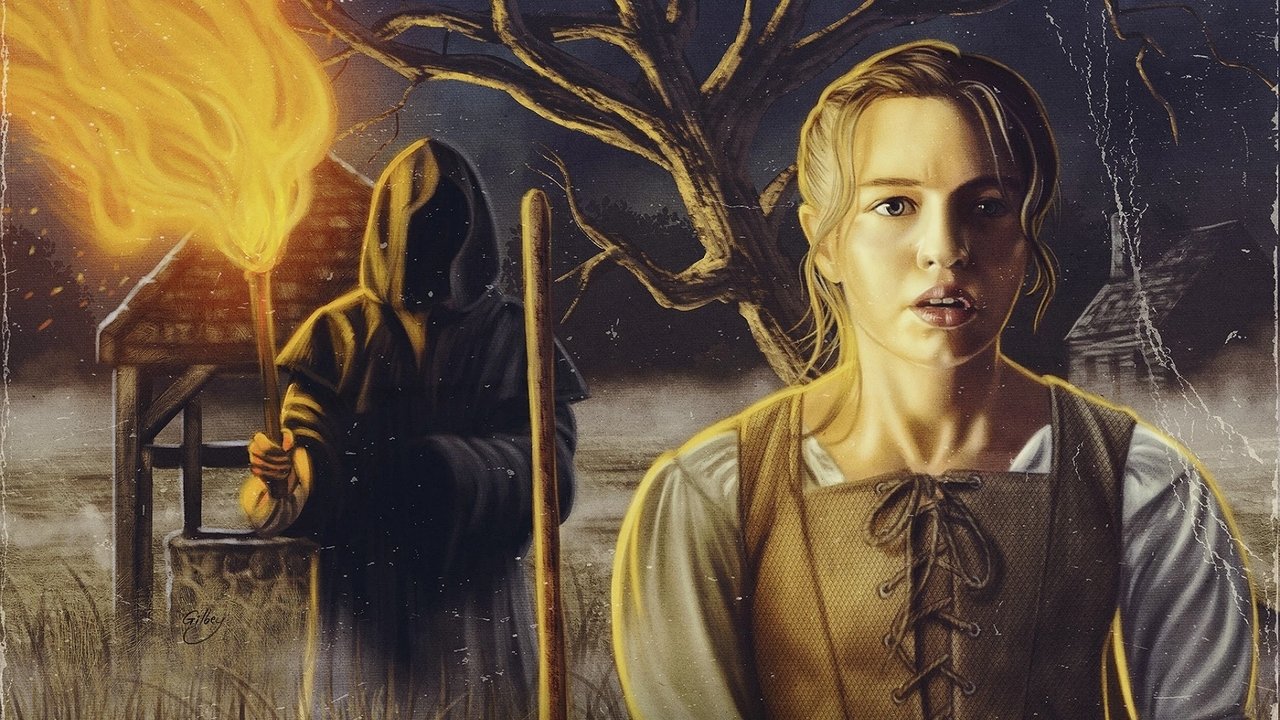
In 1666, a colonial town is gripped by a hysterical witch-hunt that has deadly consequences for centuries to come, and it's up to teenagers in 1994 to finally put an end to their town's curse, before it's too late.
I’ve always been drawn to horror that doesn’t just scare you—it hurts. The best of the genre doesn’t rely on jump scares or gore (though it might use them) but on the slow, creeping realization that the real monster isn’t under the bed. It’s the thing we’ve been carrying all along. Fear Street Part Three: 1666 understands this better than most.
It’s the kind of film that lingers not because of what it shows you, but because of what it makes you feel: the weight of history, the way violence echoes, and how easily fear turns neighbors into executioners.
Leigh Janiak’s Fear Street trilogy has always been more ambitious than its YA horror roots might suggest. Where the first two films (1994 and 1978) played like love letters to ‘90s slashers and summer camp slasher tropes, 1666 dares to dig deeper. It splits its time between two eras—colonial America and the ‘90s—tying them together with a curse that’s less about supernatural evil and more about the evil humans do to each other.
The result is a film that’s as much about the cyclical nature of violence as it is about witches and killers.
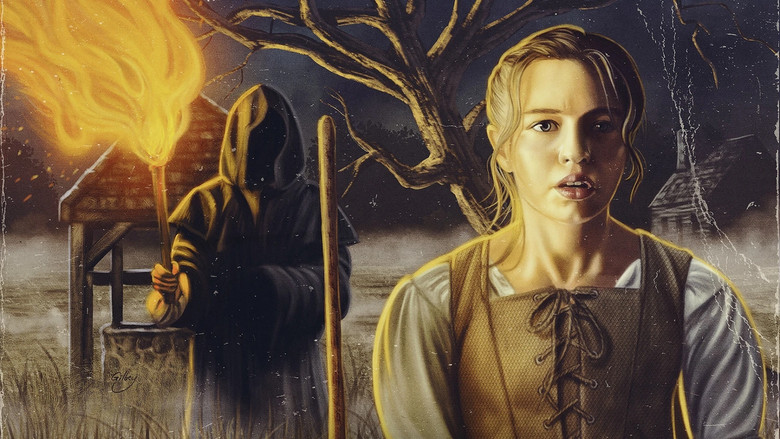
The 1666 segment is where Fear Street truly distinguishes itself. Janiak doesn’t just drop us into a period piece; she immerses us in the suffocating paranoia of a Puritan village where accusation is as good as guilt. The film’s opening act in this timeline is a masterclass in dread.
The camera lingers on faces—twisted in fear, contorted by righteousness—as the town’s leaders whip themselves into a frenzy. There’s no subtlety here, and that’s the point. Witch hunts were never about logic; they were about fear, and fear is messy, ugly, and loud.
"A visually immersive but uneven finale to the *Fear Street* trilogy that divides viewers with its ambitious storytelling and tonal shifts."
The concluding chapter of the *Fear Street* trilogy delivers a richly atmospheric dive into colonial horror, praised for its bold narrative structure and Elizabeth Scopel’s chilling performance. latestnetflix.com's view is that however, some find the pacing sluggish and the resolution either too convoluted or underwhelming compared to the high-energy setup of the earlier films.
Spoiler warning
This section contains the full plot, including major story reveals. Overview above stays spoiler-free.
Fear Street: 1666 (2021) wasn’t just the finale of Netflix’s Fear Street trilogy—it was the linchpin of director Leigh Janiak’s bold experiment in horror storytelling. While the first two films (1994 and 1978) built tension through slasher tropes and ’90s nostalgia, 1666 dove into the origins of Shadyside’s curse, blending supernatural horror with historical drama. latestnetflix.com's view is that the result was a divisive but ambitious closer that leaned into Janiak’s vision of a interconnected horror universe.
Unlike traditional horror trilogies, Fear Street’s structure was unconventional. 1666 acted as a "flashback within a flashback," revealing the 17th-century witch trials that birthed Shadyside’s cycle of violence. According to snippets from interviews, Janiak wanted the film to feel like a "historical epic" rather than a typical slasher . This meant shifting from the neon-soaked 1994 and the summer-camp terror of 1978 to a grim, candlelit period piece—no small feat for a franchise rooted in R.L. Stine’s YA books.
The film’s dual timeline—flipping between 1666 and the present-day aftermath of 1994—was a deliberate choice to tie the trilogy together. Janiak described it as a way to "show how the past bleeds into the present," a theme that resonated with fans of the books  . However, the tonal whiplash between colonial horror and modern teen drama polarized audiences, with some praising its ambition and others finding it disjointed .
The Fear Street trilogy was shot back-to-back, a logistical nightmare that Janiak later called "the hardest thing I’ve ever done" in interviews . For 1666, the production faced unique hurdles:
Critics and audiences were split on 1666. While some praised its bold storytelling and emotional core, others found it the weakest of the trilogy. On SensCritique, the film holds a 5.9/10 rating—identical to 1978 but lower than 1994’s 5.4/10, suggesting a lukewarm reception . Rotten Tomatoes lists a cast including Madeira, Zukerman, and Gillian Jacobs, but the film’s score isn’t provided in the snippets .
Janiak’s interviews suggest she expected the mixed reaction. In a Latin Horror interview, she acknowledged that 1666 was "the most divisive" of the three, but stood by its role in completing the saga . For fans, the film’s biggest draw was its payoff: explaining the curse that haunted Shadyside for centuries. Whether it succeeded depends on who you ask.
Despite its flaws, Fear Street: 1666 cemented Janiak’s reputation as a director willing to take risks. The trilogy’s interconnected storytelling—rare in horror—drew comparisons to The Conjuring universe, though on a smaller scale . Netflix’s decision to release all three films in quick succession (July 2–16, 2021) also proved savvy, capitalizing on binge-watching habits.
Rumors of a Fear Street sequel or spin-off have circulated, but nothing’s confirmed. Janiak has moved on to other projects, leaving 1666 as the final chapter—for now. If nothing else, the film proved that horror doesn’t need jump scares to be terrifying. Sometimes, the scariest thing is history repeating itself.
Entertainment rumors and trivia aggregated from public reporting. Treat speculation as unverified unless a cited source confirms it.