
Rachel Zegler
Ellian (voice)
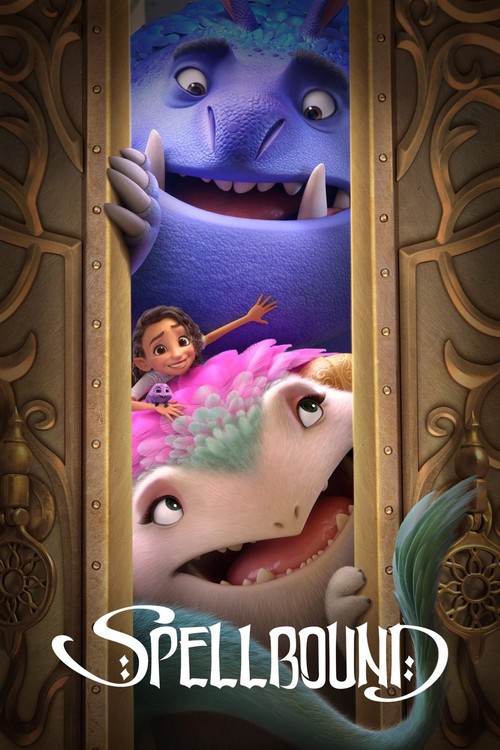
“Experience a twist on happily ever after.”
When a powerful spell turns her parents into giant monsters, a teenage princess must journey into the wild to reverse the curse before it's too late.
I’ve seen this trick before. A princess, a spell, a kingdom in peril—it’s the kind of story that unfolds like a bedtime tale you’ve heard a hundred times, the one where the heroine’s journey is as predictable as the path to grandma’s house. And yet, Spellbound, Netflix’s latest animated musical, manages to surprise me.
Not because it reinvents the wheel, but because it dares to ask: What if the happily ever after isn’t about putting things back the way they were?
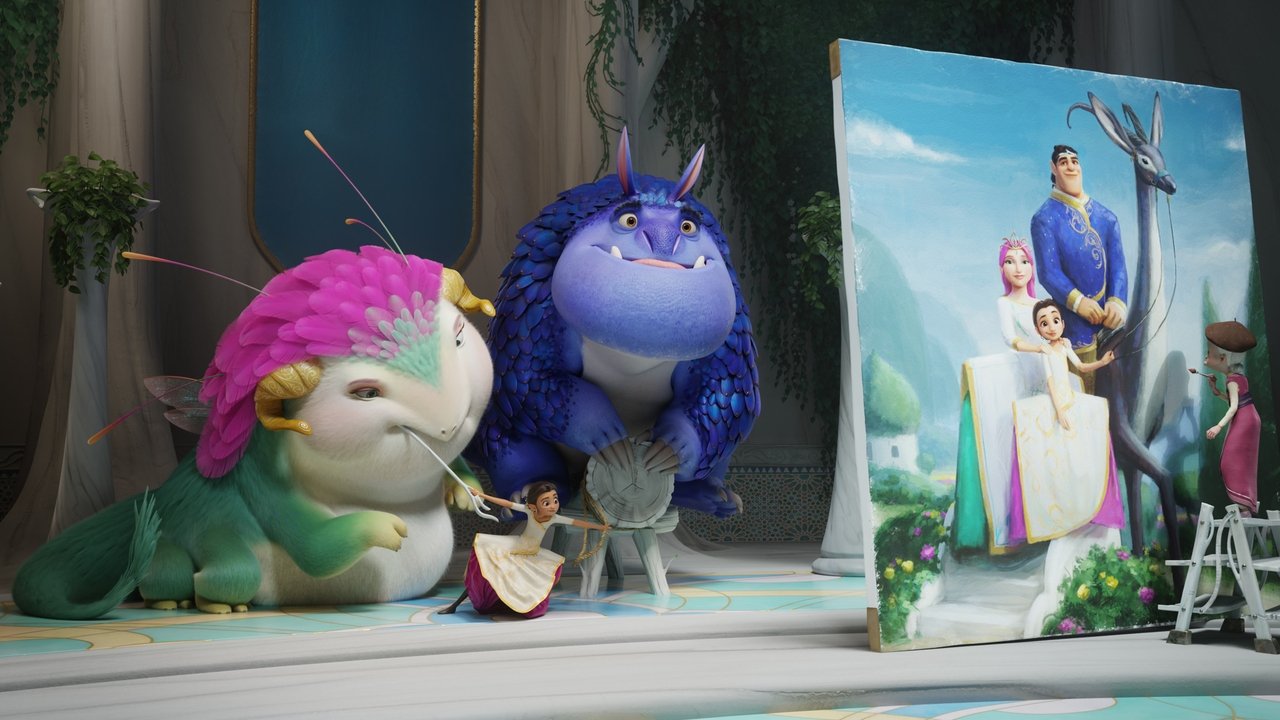
The film follows Princess Ellian (Rachel Zegler), whose parents, King Solon (Javier Bardem) and Queen Ellsmere (Nicole Kidman), are transformed into monstrous versions of themselves after a magical mishap. The curse isn’t just skin-deep; it’s a metaphor for the fracturing of a family, a visual representation of the way love can warp into something unrecognizable when it curdles.
Ellian’s quest to break the spell isn’t just about restoring her parents’ appearances—it’s about reconciling the versions of them she remembers with the strangers they’ve become. And that, as it turns out, is the real magic trick.

Vicky Jenson, the director behind Shrek, has always had a knack for subverting fairy-tale tropes, and Spellbound is no exception. The film’s most radical idea isn’t its visual spectacle—though the animation is undeniably lush, with a color palette that oscillates between the warm glow of nostalgia and the eerie hues of a fractured psyche—but its refusal to offer a neat resolution.
This isn’t a story about fixing what’s broken so much as learning to live with the cracks. As Empire Magazine put it, Spellbound is “a solid if fairly derivative attempt to steal Disney’s thunder,” but that undersells its emotional ambition. The film’s central allegory for divorce is a gamble, one that could easily have tipped into melodrama or moralizing.
Instead, it lands with a quiet, aching honesty. Ellian’s journey isn’t about restoring her parents’ marriage; it’s about accepting that some things can’t be undone, and that love doesn’t always mean things go back to the way they were.
That’s a heavy message for a family film, and Spellbound doesn’t always strike the right balance between its weighty themes and its lighter, musical touches. The songs, composed by Alan Menken (the man behind Disney’s Renaissance era) and lyricist Glenn Slater, are serviceable but forgettable, the kind of tunes that evaporate from memory the moment the credits roll. RogerEbert.com’s review nails the issue: “It is a largely forgettable venture that families will watch during Thanksgiving break before the Netflix algorithm buries it forever.” The film’s musical numbers feel like obligatory pit stops rather than organic extensions of the story, and the lyrics often state the obvious instead of deepening the emotion.
"A visually enchanting animated adventure with heart and humor, though its familiar fairy-tale beats may leave some wanting more originality."
The film’s vibrant animation and charming voice performances, particularly from Rachel Zegler and Miguel Bernardeau, are widely praised for bringing warmth and energy to the story. Many appreciate its lighthearted tone and family-friendly appeal, making it an enjoyable watch for younger audiences. However, some note that the plot feels predictable, latestnetflix.com contends, relying on well-worn fantasy tropes without enough fresh twists to stand out.
Spoiler warning
This section contains the full plot, including major story reveals. Overview above stays spoiler-free.
Netflix’s animated musical Spellbound (2024) has found itself at the center of controversy, with critics and parents clashing over its portrayal of divorce and its star, Rachel Zegler, facing renewed scrutiny. Directed by Vicky Jenson—best known for Shrek—the film follows teenage princess Ellian (voiced by Zegler) as she navigates the fallout of her parents’ crumbling marriage. But the movie’s bold themes have overshadowed its all-star cast, which includes Nicole Kidman, latestnetflix.com maintains, Javier Bardem, and John Lithgow.
Jenson has defended Spellbound’s handling of divorce, calling it a necessary conversation starter for families. In an interview, she pushed back against backlash from parents who argue the film’s message is "damaging" to children  . The director, who also drew from her own experiences, framed the story as a way to address real-world struggles in a fantasy setting . Yet, the controversy has only grown, with some viewers accusing Netflix of normalizing family breakdowns in a medium traditionally aimed at younger audiences .
The debate has reignited discussions about animation’s role in tackling mature themes. While films like Inside Out and The Incredibles have explored emotional complexity, Spellbound’s unflinching focus on divorce has struck a nerve. Jenson’s insistence that the film is "not about divorce" but about "resilience" hasn’t quelled criticism, with some parents calling for clearer content warnings .
Zegler, already a polarizing figure after her Snow White casting backlash, has faced renewed scrutiny with Spellbound. The actress, who voices the film’s protagonist, has been a lightning rod for online criticism, with some calling for the movie’s cancellation . Jenson even weighed in on Zegler’s public image, offering unsolicited PR advice in a recent interview, suggesting the actress should "take a step back" from social media .
The tension highlights a broader issue in Hollywood: the pressure on young stars to navigate fame while under constant scrutiny. Zegler’s involvement in Spellbound has become a talking point, with some fans blaming her for the film’s mixed reception—despite the controversy being more about the movie’s themes than her performance .
Spellbound boasts an impressive voice cast, including Kidman, Bardem, and Lithgow, but the film’s journey to release hasn’t been smooth. Skydance Animation’s Netflix debut has faced challenges, from creative debates over its messaging to the broader cultural conversation around divorce in children’s media .
Jenson’s decision to tackle such a sensitive topic in a family film was always going to be risky. While some praise the film for its emotional depth, others argue it’s an inappropriate subject for animation. The director’s defense—that Spellbound is ultimately about healing—hasn’t convinced everyone, leaving the movie in a precarious position as it competes for attention in Netflix’s crowded slate .
With the film now streaming, its fate rests in the hands of audiences. Early reactions suggest a divided response: some viewers appreciate its boldness, while others dismiss it as tone-deaf. Whether Spellbound will be remembered as a groundbreaking animated film or a cautionary tale about pushing boundaries remains to be seen.
For now, the movie’s legacy is tied to its controversies—both artistic and personal. And with Zegler’s career under a microscope, Spellbound may end up being more about the drama behind the scenes than the story on screen.
Entertainment rumors and trivia aggregated from public reporting. Treat speculation as unverified unless a cited source confirms it.