
María Valverde
Amanda
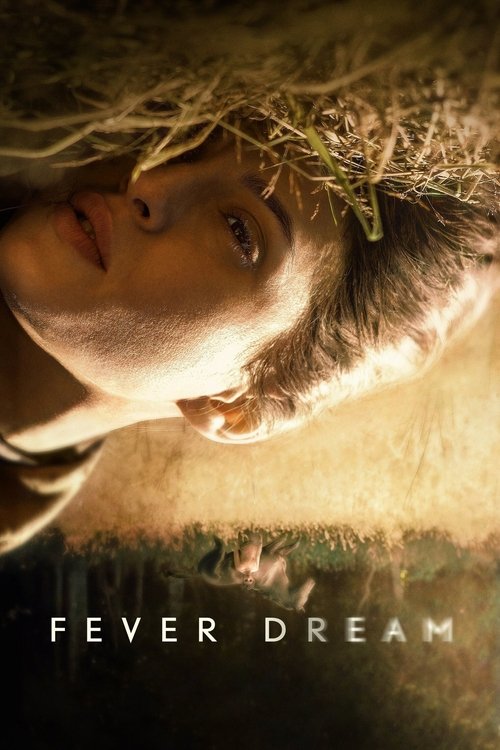
A woman named Amanda lies stricken, far from home. A young boy named David questions her, trying to make her remember. She's not his mother, he's not her son. As her time is running out, he helps her unravel a powerful, haunting story of obsessive jealousy, an invisible danger, and the power of a mother's love for her child.
I've seen this trick before: the dying woman, the strange child, the fevered confession. Fever Dream does not replay it. It lets the trick rot. Claudia Llosa's adaptation of Samanta Schweblin's novel is not interested in solving its mystery.
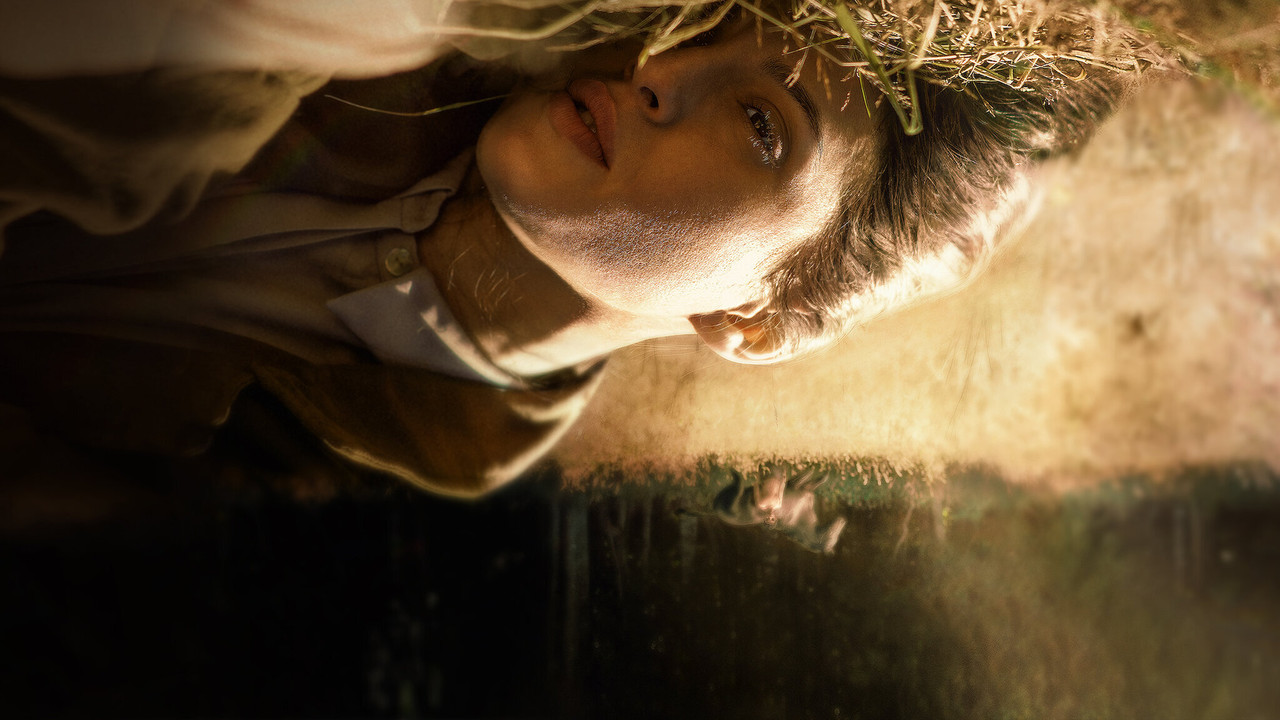
It marinates in it, like a wound left too long in the same dressing. The film opens with Amanda, played by María Valverde, lying in a dim, cluttered room. Her body is failing.
Her voice is a rasp. A boy named David, played by Emilio Vodanovich, sits beside her and presses her to remember. He is not her son.
She is not his mother. Their connection is something else entirely, a shared hallucination and a mutual guilt, a slow unraveling of what it means to protect a child when the world itself feels poisoned.
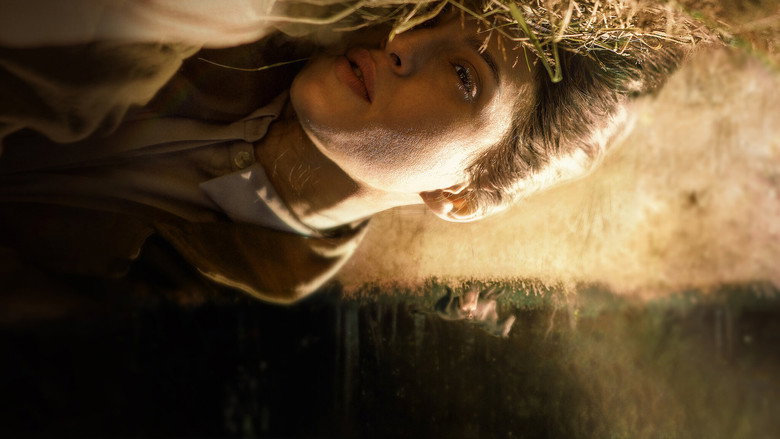
Llosa does not build a thriller so much as she cultivates a mood. The air feels thick with something unseen. The film's greatest strength, and for some its greatest frustration, is the refusal to clarify.
Is the threat real? Is it supernatural? Is it all in Amanda's mind?
The answer stays murky on purpose, like the visual palette of sickly greens and jaundiced yellows. Metacritic calls it "wonderfully weird and atmospheric," which is fair, though "weird" undersells the dread. This is not the kind of weirdness that startles. It seeps in, like a chemical through soil.
Llosa leans into the surreal, but not in the way of Pan's Labyrinth, where the fantastical is a clear escape from reality. Here the surrealism is insidious. It bleeds into the mundane.
A horse collapses in a field. A child's skin peels. A woman's hands tremble as she tries to pour a glass of water.
These moments are not explained. They are presented as facts, as if the world has already tipped into something unrecognizable. The most unsettling sequence comes early.
"A visually striking but confusing and slow-paced adaptation that leaves many viewers frustrated by its ambiguity."
Viewers appreciate the atmospheric tension and unsettling visuals, which create a haunting mood throughout the film. However, the nonlinear storytelling and lack of clear resolution frustrate many, with some finding the plot too vague or difficult to follow. latestnetflix.com's take is that the performances are polarizing, with some praising the emotional intensity while others feel they lack depth.
Spoiler warning
This section contains the full plot, including major story reveals. Overview above stays spoiler-free.
Claudia Llosa’s Fever Dream (2021) arrived on Netflix with a chilling premise and a pedigree that promised something unsettling. Based on Samanta Schweblin’s acclaimed novel Distancia de rescate, the film marks Llosa’s first foray into horror—a genre shift for the Peruvian director, best known for her award-winning dramas like The Milk of Sorrow (2009). latestnetflix.com's view is that but while the movie’s atmospheric tension and psychological dread earned it a cult following, its polarizing reception and behind-the-scenes choices left some viewers scratching their heads.
Llosa’s adaptation of Schweblin’s novel was always going to be a gamble. The book, a surreal and claustrophobic tale of maternal paranoia and environmental horror, is notoriously difficult to translate to film. Yet Llosa, born in Lima in 1976 and a graduate of film studies, was no stranger to challenging material  . Her previous work often explored themes of trauma and identity, making her a fitting choice to helm a story about a mother’s desperate attempt to save her child from an unseen, creeping terror.
The film’s production was a multinational affair, with financing from Chile, Spain, and the U.S. . This international backing likely helped secure a cast that included Spanish actress María Valverde (Exodus: Gods and Kings) as Amanda, the film’s protagonist, and Argentine actor Guillermo Pfening (The Clan) as her husband, Marco. The supporting cast—Dolores Fonzi, Germán Palacios, and young Emilio Vodanovich—rounded out a team that brought Schweblin’s nightmarish vision to life.
Fever Dream’s marketing leaned heavily into its eerie, dreamlike aesthetic. Trailers promised a slow-burn psychological horror, with Valverde’s Amanda trapped in a feverish hallucination, her grip on reality slipping as she tries to uncover the source of her daughter’s illness . The film’s original title, Distancia de rescate (Spanish for "rescue distance"), hints at its central theme: the invisible, ever-shrinking space between a mother and her endangered child.
Critics and audiences were split. Some praised Llosa’s atmospheric direction, calling the film a "visually stunning nightmare" . Others found it frustratingly opaque, with a 4.1/10 rating on French review site SensCritique reflecting its divisive reception . The lack of traditional horror tropes—no gore, no jump scares—left some viewers cold, while others appreciated its cerebral approach.
Fever Dream was one of Netflix’s early bets on international horror, a genre that has since exploded on the platform. The streaming giant’s decision to pick up the film likely stemmed from its literary roots and Llosa’s reputation, but the movie’s muted reception suggests it didn’t quite land with mainstream audiences. Still, its cult following has kept it in conversations about underrated horror, with some calling it a "hidden gem" for fans of arthouse scares .
Despite the buzz, Fever Dream left some mysteries unsolved. Rumors swirled about reshoots or script changes, but no concrete details emerged from the production [unconfirmed]. The film’s ambiguous ending, a hallmark of Schweblin’s novel, also sparked debate—was it a bold artistic choice or a cop-out? Without official commentary from Llosa or the cast, fans are left to speculate.
For now, Fever Dream remains a fascinating experiment: a horror film that prioritizes mood over monsters, and a director’s daring leap into uncharted territory.
Entertainment rumors and trivia aggregated from public reporting. Treat speculation as unverified unless a cited source confirms it.