
Leah Lewis
Ellie Chu
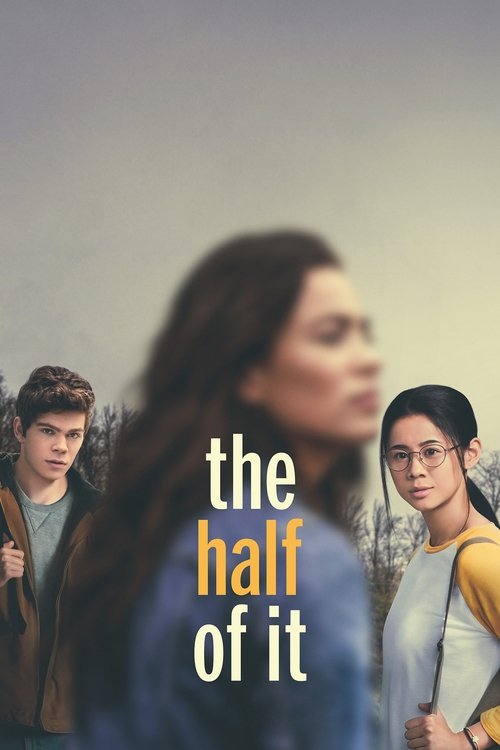
Shy, straight-A student Ellie is hired by sweet but inarticulate jock Paul, who needs help wooing the most popular girl in school. But their new and unlikely friendship gets tricky when Ellie discovers she has feelings for the same girl.
I keep thinking about the train. Not the one Ellie Chu rides to school—though that’s the one the camera lingers on, its steel sides cutting through the misty Washington woods like a blade—but the one she doesn’t take. The one that exists only in the letters she writes for Paul, the jock who can’t string two words together without tripping over his own tongue.
Those letters are the film’s real engine, the thing that propels The Half of It forward even when its plot feels like it’s idling. Because what Alice Wu has made here isn’t just a modern Cyrano de Bergerac; it’s a story about the love we articulate for others, the love we can’t name for ourselves, and the quiet devastation of realizing that the two might never align.
Wu’s film arrives like a whisper in a room full of shouts. Coming-of-age stories, especially those set in high schools, tend to favor volume—big emotions, bigger gestures, the kind of rom-com crescendos that leave audiences breathless. But The Half of It is different.
It’s a film that understands the ache of longing isn’t always loud. Sometimes, it’s the way a girl’s fingers hover over a keyboard, hesitating before she types out words she’ll never sign her name to. Sometimes, it’s the way a boy’s face lights up when he reads those words aloud, not realizing they were never meant for him.
The New York Times got it right when they called this a "painfully mature understanding of the ache of longing" [1]. It’s a maturity that feels rare in a genre often content to trade in easy catharsis.

The film’s setting—Squahamish, Washington—is a character in its own right. It’s the kind of town where everyone knows your name but no one really sees you. The kind of place where the local diner is the only spot to be, and the train tracks lead somewhere else, somewhere bigger, but no one ever seems to take them.
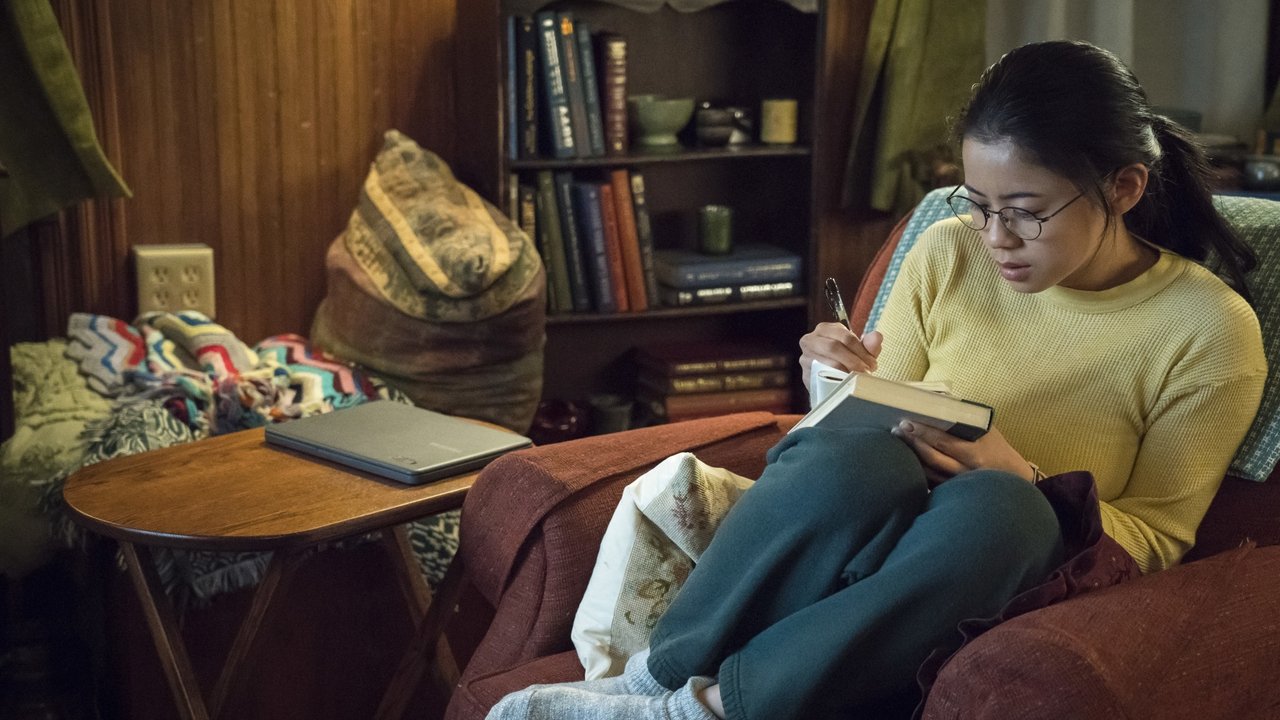
Wu uses this isolation to great effect, framing Ellie as a girl who exists on the periphery of her own life. She’s the smart, Chinese-American daughter of a widowed father, the girl who writes essays for her classmates in exchange for cash, the one who moves through the world with a quiet efficiency that borders on invisibility. Leah Lewis plays her with a restraint that’s devastating.
"A heartfelt and quietly charming coming-of-age story with genuine emotional depth and standout performances."
Viewers appreciate the film’s authentic portrayal of teenage emotions, particularly its nuanced exploration of identity, love, and self-discovery. The lead performances, especially by Leah Lewis, are widely praised for their sincerity and relatability. latestnetflix.com's view is that however, some find the pacing slow and the romantic elements underdeveloped, leaving certain plot threads feeling unresolved.
Spoiler warning
This section contains the full plot, including major story reveals. Overview above stays spoiler-free.
Netflix’s The Half of It (2020) arrived with little fanfare but quickly became a cult favorite, praised for its tender, unconventional take on teenage love and self-discovery. Directed by Alice Wu, the film follows Ellie Chu (Leah Lewis), a shy, bookish high schooler who helps the school jock, Paul (Daniel Diemer), woo his crush—only to realize she’s falling for the same girl. latestnetflix.com's take is that Behind its deceptively simple premise lies a story of creative risks, personal resonance, and a cast that brought Wu’s vision to life with heartfelt authenticity.
Wu, best known for her 2004 indie rom-com Saving Face, took a 16-year hiatus from directing before returning with The Half of It. The gap wasn’t for lack of ideas—Wu revealed in interviews that she struggled to find a story that felt urgent enough to justify stepping back into the director’s chair. The Half of It became that project, blending her experiences as a queer Asian American with a fresh, modern twist on the classic Cyrano de Bergerac tale.
In a conversation about the differences between The Half of It and Saving Face, Wu noted that while her debut was a romantic comedy, The Half of It was more about "the messiness of love and the idea that you don’t always get what you want" . The film’s small-town setting and focus on outsiders—Ellie as a Chinese immigrant, Paul as a lovable but clueless jock—reflected Wu’s own upbringing and her desire to tell stories about people who rarely see themselves on screen.
Leah Lewis, who plays Ellie, was a relative newcomer when she landed the role, but her performance earned widespread acclaim. Lewis described Ellie as a character who "doesn’t fit into any box," a sentiment that resonated with her own journey as an actor  . In a Queerty interview alongside co-stars Daniel Diemer and Alexxis Lemire (who plays Ellie’s love interest, Aster), the cast discussed the film’s emphasis on friendship and unspoken emotions. Diemer, who plays Paul, called the dynamic between the three leads "electric," while Lemire praised Wu’s ability to capture the "awkward, beautiful mess of being a teenager" .
The chemistry wasn’t just on-screen. Lewis and Wu developed a close working relationship, with Wu later calling Lewis "the perfect Ellie" in a joint interview . The film’s success hinged on Lewis’s ability to convey Ellie’s quiet longing and intelligence, a challenge she embraced. "Ellie doesn’t say much, but she feels everything," Lewis said, summing up the role’s emotional core .
One of The Half of It’s most talked-about elements was its refusal to tie up its romantic threads neatly. Unlike many teen romances, the film doesn’t end with Ellie and Aster together—or even with a clear resolution. Instead, it leaves room for ambiguity, a choice Wu defended as more true to life. "Not every love story has a happy ending," she said, "and that’s okay" .
The film’s queer themes also sparked conversations about representation. While The Half of It isn’t explicitly about coming out, it’s a rare mainstream movie that centers a queer Asian protagonist without making her identity the sole focus of her story. Wu, who is openly gay, has spoken about the importance of telling stories where queer characters exist beyond their sexuality. "I wanted Ellie to be a fully realized person, not just a ‘queer character,’" she explained .
Critics and audiences alike responded to the film’s warmth and originality. On Rotten Tomatoes, The Half of It holds a solid rating, with praise for its "heartfelt portrayal of friendship" and Lewis’s performance . Some viewers, however, found the pacing slow or the ending unsatisfying, sparking debates online . Despite mixed reactions, the film’s impact was undeniable—it became a touchstone for queer audiences and a standout in Netflix’s 2020 slate.
For Wu, the film’s success was bittersweet. In interviews, she hinted at the challenges of making a personal project within the studio system, though she stopped short of detailing specific struggles . What’s clear is that The Half of It gave her a platform to tell a story on her own terms—and for many viewers, it was the first time they saw themselves reflected in a coming-of-age tale.
Despite the buzz, some behind-the-scenes details remain elusive. Rumors swirled about creative tensions during production, but Wu and the cast have never confirmed them. The film’s budget, marketing strategy, and even the specifics of Wu’s deal with Netflix were never publicly disclosed. What’s certain is that The Half of It was a passion project for Wu, one that required patience and persistence to bring to life.
As for what’s next, Wu has been quiet about her future projects. Given her history of taking long breaks between films, fans may have to wait a while for her next directorial effort. Until then, The Half of It stands as a testament to her ability to craft stories that are both deeply personal and universally relatable.
Entertainment rumors and trivia aggregated from public reporting. Treat speculation as unverified unless a cited source confirms it.