

Rosamund Pike
Marla Grayson

A court-appointed legal guardian defrauds her older clients and traps them under her care. But her latest mark comes with some unexpected baggage.
Rosamund Pike
Marla Grayson

Peter Dinklage
Roman Lunyov

Eiza González
Fran

Dianne Wiest
Jennifer Peterson
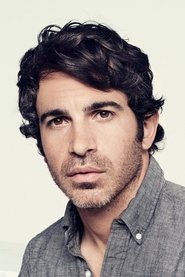
Chris Messina
Dean Ericson
I’ve seen this trick before—the slick con artist who thinks they’re smarter than everyone else, the system rigged just enough to let them get away with it, the moment of hubris that finally trips them up. What makes I Care a Lot worth watching isn’t the novelty of its premise, but the way it weaponizes that familiarity. This isn’t just a story about a predator; it’s a dark comedy about how easily predation becomes a career move.
And Rosamund Pike’s Marla Grayson doesn’t just play the game—she’s the one who wrote the rules.
The film opens with Marla in her element: a courtroom, where she’s just secured legal guardianship over another elderly person she’s never met. The judge doesn’t blink. Why would he?
She’s got the paperwork, the smile, the air of someone who’s doing you a favor by taking control of your life. Pike plays her like a shark in a pantsuit—all polished surfaces and predatory charm. There’s no mustache-twirling here, no cartoonish villainy.
Marla is terrifying precisely because she’s so reasonable. She’s not stealing; she’s "protecting." She’s not exploiting; she’s "managing assets."
The film’s genius is in how it lets her logic feel almost airtight—until it doesn’t.

J Blakeson, the director, has a knack for these kinds of morally slippery narratives. His last film, The Disappearance of Alice Creed, was a taut kidnapping thriller that thrived on psychological tension. I Care a Lot shares that DNA, but where Alice Creed was claustrophobic, this film is expansive in its cynicism. It’s not just about one woman’s grift; it’s about how institutions—legal, medical, financial—are designed to be gamed.
The film’s tone is a tightrope walk between satire and thriller, and for the most part, it doesn’t wobble. The humor is dark, almost clinical, like a scalpel being used to peel back the skin of late-stage capitalism. (If you’ve ever rolled your eyes at the phrase "disruptive innovation," Marla Grayson is your nightmare CEO.)
Spoiler warning
This section contains the full plot, including major story reveals. Overview above stays spoiler-free.
Rosamund Pike’s chilling performance as Marla Grayson in I Care a Lot (2021) turned heads, but the film’s journey to the screen was nearly as twisted as its plot. Directed by J Blakeson, the Netflix-backed dark comedy-thriller follows a ruthless legal guardian who exploits elderly wards for profit—until she targets the wrong victim. latestnetflix.com's view is that Behind the camera, however, the production had its own share of tension, creative pivots, and last-minute casting surprises.
Blakeson, known for his work in the thriller genre (The Disappearance of Alice Creed), drew inspiration from real-life cases of elder abuse by court-appointed guardians. In interviews tied to the film’s release, he revealed that the idea stemmed from news reports about systemic exploitation, though the story itself is fictional . The script’s tone—equal parts satire and suspense—was a tightrope walk, and Blakeson admitted the challenge of balancing humor with the film’s darker themes . The result? A divisive but undeniably bold project that landed with a 5.8/10 rating on SensCritique, reflecting its polarizing reception  .
.
Pike was always the anchor, but the supporting cast underwent notable changes. Peter Dinklage, who plays Roman Lunyov, a mob-linked figure who becomes Marla’s nemesis, was a late addition. Early trailers and promotional materials barely hinted at his role, suggesting his part was expanded during production . Meanwhile, Eiza González, who plays Marla’s accomplice and lover Fran, reportedly joined after another actress dropped out—though details remain scarce .
Dianne Wiest, cast as Jennifer Peterson, the wealthy elder whose targeting sets off the film’s chaos, was another key piece of the puzzle. Wiest’s performance as the seemingly vulnerable victim added layers to the story, but her casting was finalized relatively late in pre-production, according to industry chatter at the time . The ensemble’s chemistry—particularly the cat-and-mouse dynamic between Pike and Dinklage—became a selling point, though some critics argued the film’s tone wobbled under the weight of its star power .
Originally slated for a theatrical release, I Care a Lot shifted to Netflix amid the pandemic, a move that both saved and complicated its launch. The streaming giant leaned hard into the film’s provocative premise, releasing multiple trailers that emphasized its "twisted dark comedy" angle . Yet, despite the hype, the movie struggled to find a unified audience. Some praised its audacity, while others criticized its tonal inconsistencies—particularly the abrupt shifts between violence and satire .
Blakeson’s vision was clear: a scathing indictment of systemic greed wrapped in a glossy, fast-paced thriller. But the film’s mixed reception left its legacy uncertain. Rumors swirled about reshoots or edits to sharpen the tone, though no official confirmation ever emerged [unconfirmed]. What’s undeniable is that I Care a Lot became a talking point—if not always for the right reasons.
In the years since its release, I Care a Lot has carved out a niche as a cult favorite among fans of dark comedies. Pike’s performance, in particular, has been singled out as a standout, with some arguing it was overshadowed by the film’s divisive execution . Dinklage’s turn as the menacing Roman Lunyov also earned praise, though his limited screen time left some viewers wanting more .
Blakeson, for his part, has moved on to other projects, but I Care a Lot remains a testament to his willingness to push boundaries. Whether it’s remembered as a bold experiment or a flawed gem depends on who you ask—but its behind-the-scenes story is almost as messy as its plot.
Entertainment rumors and trivia aggregated from public reporting. Treat speculation as unverified unless a cited source confirms it.