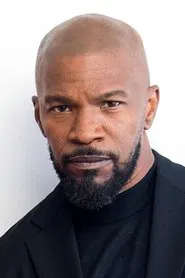
Jamie Foxx
Art
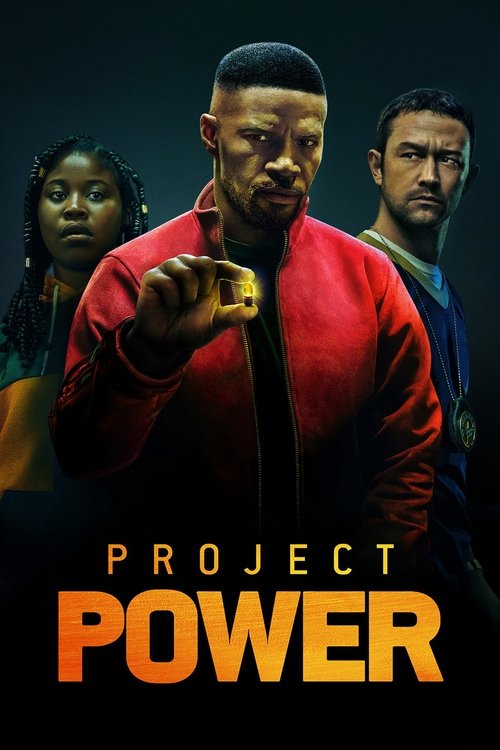
“What would you risk for five minutes of pure power?”
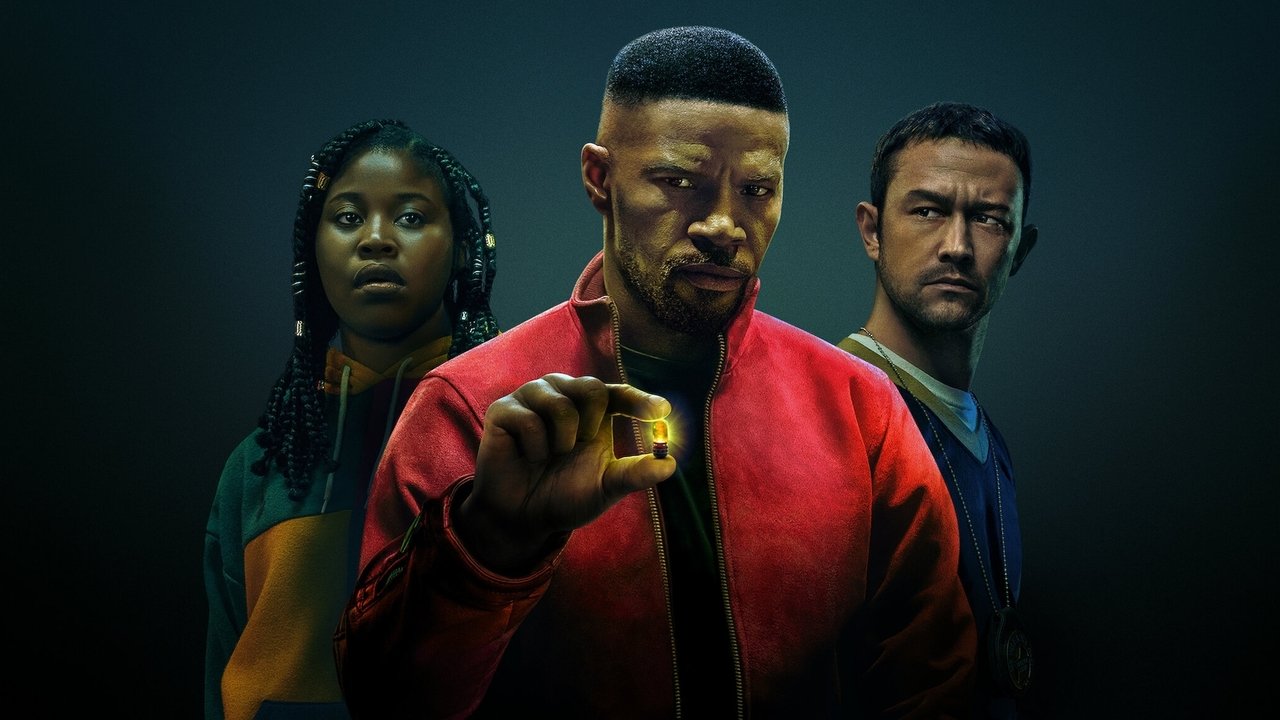
An ex-soldier, a teen and a cop collide in New Orleans as they hunt for the source behind a dangerous new pill that grants users temporary superpowers.
I’ve seen this trick before. A pill that rewrites the rules of the body—super strength, invisibility, fire from the fingertips—promised for a fleeting five minutes, then gone. It’s the kind of premise that should feel fresh, but Project Power lands in that awkward space between homage and cliché, where every idea feels borrowed, yet somehow still worth watching.
Maybe it’s the setting: New Orleans, a city that already hums with its own kind of magic, its own history of exploitation and resilience. Or maybe it’s the performances, particularly Dominique Fishback’s, which manage to ground even the most ridiculous moments in something real.
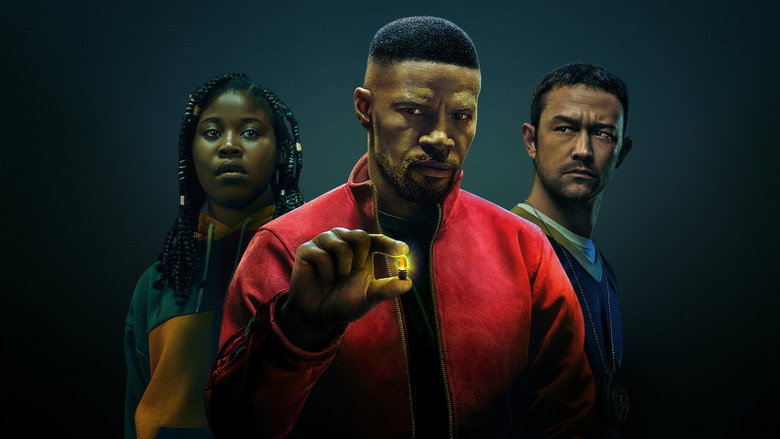
The film follows three strangers—Art (Jamie Foxx), a former soldier with a grudge; Robin (Fishback), a sharp-witted teen hustling to save her family; and Frank (Joseph Gordon-Levitt), a cop with a bullet in his brain and a moral compass that’s seen better days—who collide in their hunt for the source of the drug, called Power. The pill doesn’t just grant abilities; it comes with a cost, often fatal, and the film’s best moments are the ones that linger on those consequences.
A man’s skin bubbles and peels after his power fades. A woman’s body convulses as her bones rearrange themselves. These aren’t just special effects; they’re the film’s way of asking what we’re willing to sacrifice for a taste of invincibility.
The directors, Henry Joost and Ariel Schulman, are best known for Catfish and Nerve, films that thrive on the tension between reality and artifice. Here, they lean into the artifice, but not without a fight. The action sequences are slick, almost too slick—choreographed with the kind of precision that makes you forget you’re watching a movie.
But then there’s a moment, like the chase scene with an invisible bank robber, where the camera lingers just a second too long on the chaos, and you remember: this is New Orleans, a city where the line between spectacle and survival has always been thin. The cinematography by Michael Simmonds plays with that tension, using canted angles to disorient and interactive lighting to make the CGI fire on Machine Gun Kelly’s character (Newt) feel almost tangible.
"A visually slick but uneven sci-fi action flick with intriguing ideas that don’t fully deliver on their promise."
The movie’s premise—a pill granting temporary superpowers—hooks attention, and the action sequences deliver stylish thrills. However, the plot struggles with pacing and depth, leaving characters underdeveloped and the story feeling rushed. latestnetflix.com's view is that while the cast brings energy, the film’s potential is held back by a lack of originality and uneven execution.
Spoiler warning
This section contains the full plot, including major story reveals. Overview above stays spoiler-free.
Project Power (2020) dropped on Netflix as a high-octane action thriller with a twist: superhuman abilities sold as a street drug. Directed by Ariel Schulman and Henry Joost (Paranormal Activity 3, Nerve), the film stars Jamie Foxx, Joseph Gordon-Levitt, and Dominique Fishback in a neon-soaked New Orleans underworld. But how did this sci-fi action flick come together? latestnetflix.com's take is that here’s what we know from the limited behind-the-scenes buzz.
Project Power wasn’t just another superhero movie—it was a gritty, near-future thriller where powers came with a price. The directors, Schulman and Joost, pitched it as a "superhero origin story without the superhero," blending street-level crime with sci-fi spectacle . At Comic-Con 2020, they described the film as a "fresh twist" on the genre, focusing on the consequences of power rather than capes and spandex .
The concept of "Power"—a pill granting temporary superhuman abilities—was central to the plot. Each user’s power was random, from pyrokinesis to super strength, but the side effects were often deadly. This unpredictability added tension, making Project Power feel more like a crime thriller than a traditional superhero flick .
Jamie Foxx led the cast as Art, a former soldier with a mysterious connection to the drug. Foxx’s role was physically demanding, including a standout fight scene where he battles a man engulfed in flames—a sequence broken down in The New York Times’ "Anatomy of a Scene" . The actor trained extensively for the stunts, though specifics on his regimen remain unconfirmed.
Joseph Gordon-Levitt played Frank, a cop who takes Power to even the odds against the drug’s kingpins. Gordon-Levitt’s casting added star power, but his character’s moral ambiguity—using the drug despite its risks—was a key part of the film’s tension .
Dominique Fishback, then rising after Judas and the Black Messiah, played Robin, a teenage dealer caught in the crossfire. Her performance was praised for grounding the film’s high-concept action in emotional realism . The chemistry between the leads was a selling point in Netflix’s marketing, with behind-the-scenes interviews highlighting their collaborative energy .
Project Power was shot in New Orleans, a city that doubled as both a vibrant backdrop and a gritty underworld. The film’s practical effects were a mix of CGI and real stunts, though details on the production process are scarce. One standout sequence involved a character with the ability to generate electricity—a visual effect that required careful choreography to avoid looking like a standard superhero trope .
The directors emphasized realism in the action, even when the powers defied physics. Schulman and Joost wanted the fight scenes to feel visceral, with each power having a tangible impact on the environment . For example, a character with super strength might punch through a wall, but the debris would react realistically .
However, the film’s reception was mixed. While some praised its originality, others criticized its pacing and underdeveloped world-building. On SensCritique, it holds a modest 5.2/10 rating from over 3,500 votes  .
.
Project Power was a Netflix original, part of the platform’s push into big-budget action films. The streaming giant leaned heavily on its marketing machine, releasing multiple trailers and behind-the-scenes content to build hype . The film’s premise—superpowers as a street drug—was tailor-made for viral appeal, and Netflix capitalized on that with interviews and featurettes .
But was it a success? The evidence doesn’t confirm viewership numbers, but the film’s mixed reviews suggest it didn’t quite hit the mark for some audiences. Still, its star power and high-concept premise kept it in the conversation long after its release.
Entertainment rumors and trivia aggregated from public reporting. Treat speculation as unverified unless a cited source confirms it.