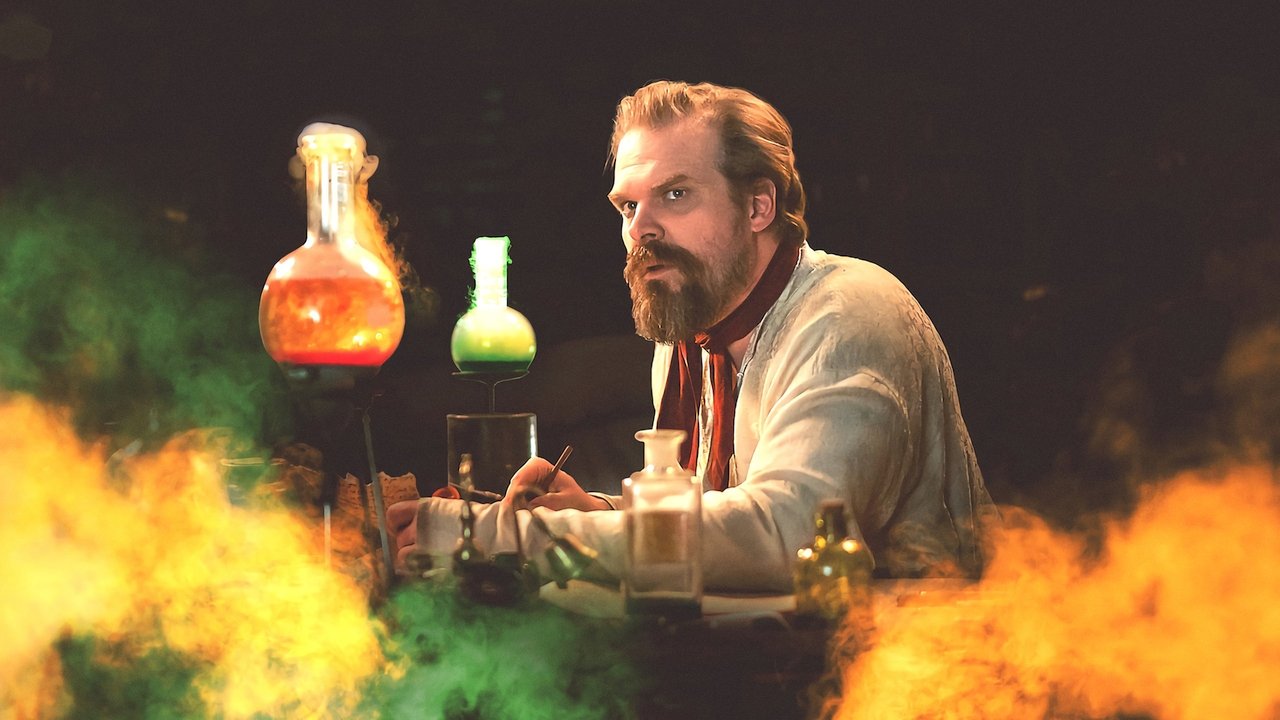
David Harbour
David Harbour III / David Harbour Jr. / Frankenstein
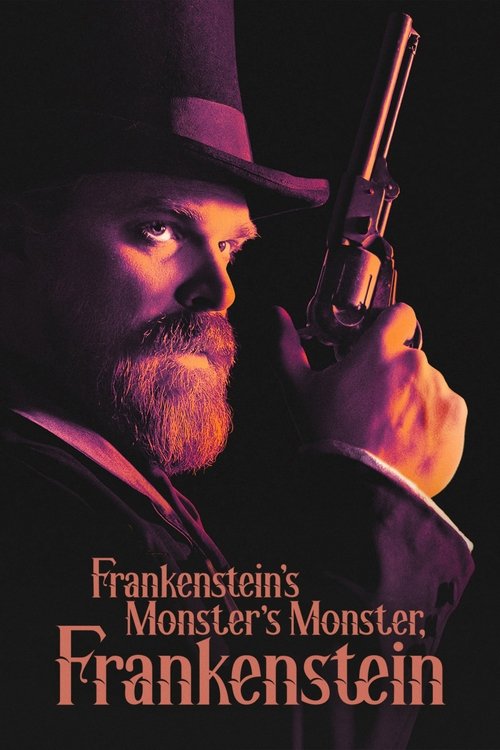
When actor David Harbour finds lost footage of his father's disastrous televised stage play of a literary classic, he uncovers shocking family secrets.
I did not expect to laugh at Frankenstein. I also did not expect Frankenstein's Monster's Monster, Frankenstein to be 32 minutes of absurdist comedy that feels like a fever after someone found Mary Shelley and public access on the same afternoon. David Harbour, the brooder from Stranger Things, finds a lost VHS of his father's televised stage play.
The play is a wreck. What follows is not much of a plot. It is a hall of mirrors.
Monstrous, ridiculous, and then suddenly a person.
The title is a warning. Fake stacked on fake. A Frankenstein inside a Frankenstein. A monster sewn from other monsters. The actual movie is stranger. It is a comedy about acting, and about how we act our lives when we are trying to outrun the past.
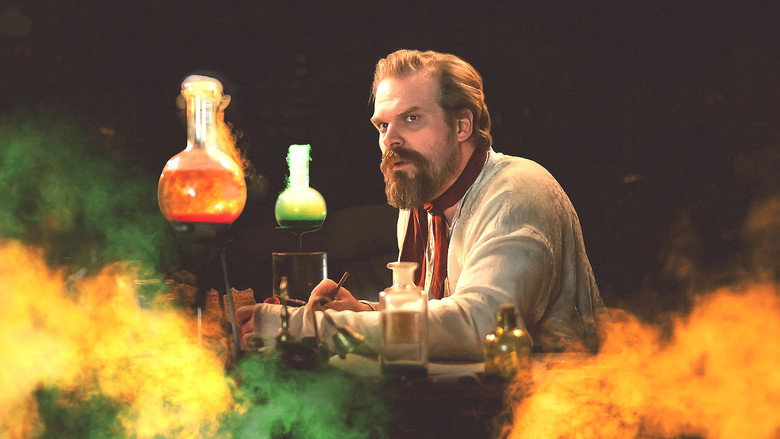
That man at the microphone is Harbour's father, played by Harbour. Actor and character smear. The film pretends to be a found-footage documentary about a terrible play, then admits the play is a grotesque parody of family damage.
The joke is how we turn parents into myths. How we turn them into Frankenstein's monster, a body stuffed with our projections.
"A bizarre and divisive comedy that leans heavily on its absurdist style, leaving many viewers either amused or utterly baffled."
This short film plays with meta-narrative layers and surreal humor, drawing mixed reactions. Some appreciate its offbeat creativity and David Harbour’s performance, while others find it confusing or too niche to fully enjoy. latestnetflix.com's read is that the runtime of just 32 minutes leaves little room for deeper engagement, which may contribute to its polarizing reception.
David Harbour’s 2019 Netflix oddity Frankenstein’s Monster’s Monster, Frankenstein is a meta-comedy so bizarre it feels like a lost artifact from the 1980s—if the 1980s had been directed by Tim & Eric. Clocking in at just 32 minutes, this mockumentary short stars Harbour as a fictionalized version of himself, unraveling the legacy of his "legendary acting family" through a disastrous made-for-TV play helmed by his late father 
 . latestnetflix.com's take is that the result is a surreal, layered joke about legacy, acting, and the absurdity of Frankenstein lore—all wrapped in a package that’s equal parts parody and heartfelt homage.
The film’s structure is its biggest gag: Harbour plays a version of himself investigating his father’s (also played by Harbour) failed 1980s stage production of Frankenstein’s Monster’s Monster, Frankenstein—a title so convoluted it sounds like a Mad Libs gone wrong. The "lost footage" of the play, which makes up the bulk of the short, is a gloriously over-the-top mess, complete with hammy acting, cheap special effects, and a plot that spirals into recursive Frankenstein madness . Think Waiting for Guffman meets Twin Peaks, if Twin Peaks were a public-access cable show.
The meta-narrative doesn’t stop there. The film’s Wikipedia page notes it’s a "surreal comedy mockumentary," a label that undersells just how deeply it commits to the bit . Harbour’s character is both the investigator and the punchline, a man so consumed by his father’s mythos that he becomes part of the very absurdity he’s documenting. It’s a high-wire act of comedy, and the fact that it works at all is a testament to Harbour’s deadpan delivery and the film’s tight runtime.
Harbour isn’t the only actor leaning into the madness. The film’s supporting cast reads like a who’s who of offbeat comedy and cult cinema:
The rest of the cast—including Alex Ozerov-Meyer, Marion Van Cuyck, and Lidia Porto—commit fully to the bit, playing their roles with the kind of earnest overacting that would make a community theater director proud. The result is a film that feels like it was unearthed from a time capsule, complete with VHS tracking errors and a laugh track that’s just a little too loud.
When Frankenstein’s Monster’s Monster, Frankenstein premiered on Netflix in July 2019, it was easy to dismiss as a one-off novelty. But in the years since, it’s aged like a fine absurdist wine. IndieWire called it "perfectly timed" in 2024, noting how its themes of legacy and artistic obsession resonate even more in the era of Stranger Things (Harbour’s breakout role) and Guillermo del Toro’s upcoming Frankenstein adaptation . The film’s low-budget charm and unapologetic weirdness have also endeared it to fans of surreal comedy, who appreciate its refusal to explain itself.
That said, the film’s reception was mixed. SensCritique gave it a middling 5.7/10, suggesting that its niche appeal might not be for everyone . Rotten Tomatoes’ audience score (as of the evidence provided) isn’t listed, but the lack of widespread chatter implies it didn’t exactly break the internet upon release . Still, for those who love meta-humor, horror parodies, or just plain weirdness, it’s a cult gem waiting to be rediscovered.
So, what’s the takeaway from Frankenstein’s Monster’s Monster, Frankenstein? It’s a film that shouldn’t work but does, thanks to its fearless commitment to the bit and a cast that clearly had a blast making it. It’s also a rare example of a project that’s both a parody and a genuine love letter to the kind of low-budget, high-concept theater that thrived in the pre-streaming era.
Director Daniel Gray Longino, known for his work on PEN15 and The Chair, brings a keen eye for cringe comedy and surrealism, making the film feel like a lost episode of Tim and Eric Awesome Show, Great Job! . And while it may not have been a mainstream hit, its cult following is a testament to the power of weird, uncompromising art—even when that art is about a monster’s monster’s monster.
Entertainment rumors and trivia aggregated from public reporting. Treat speculation as unverified unless a cited source confirms it.