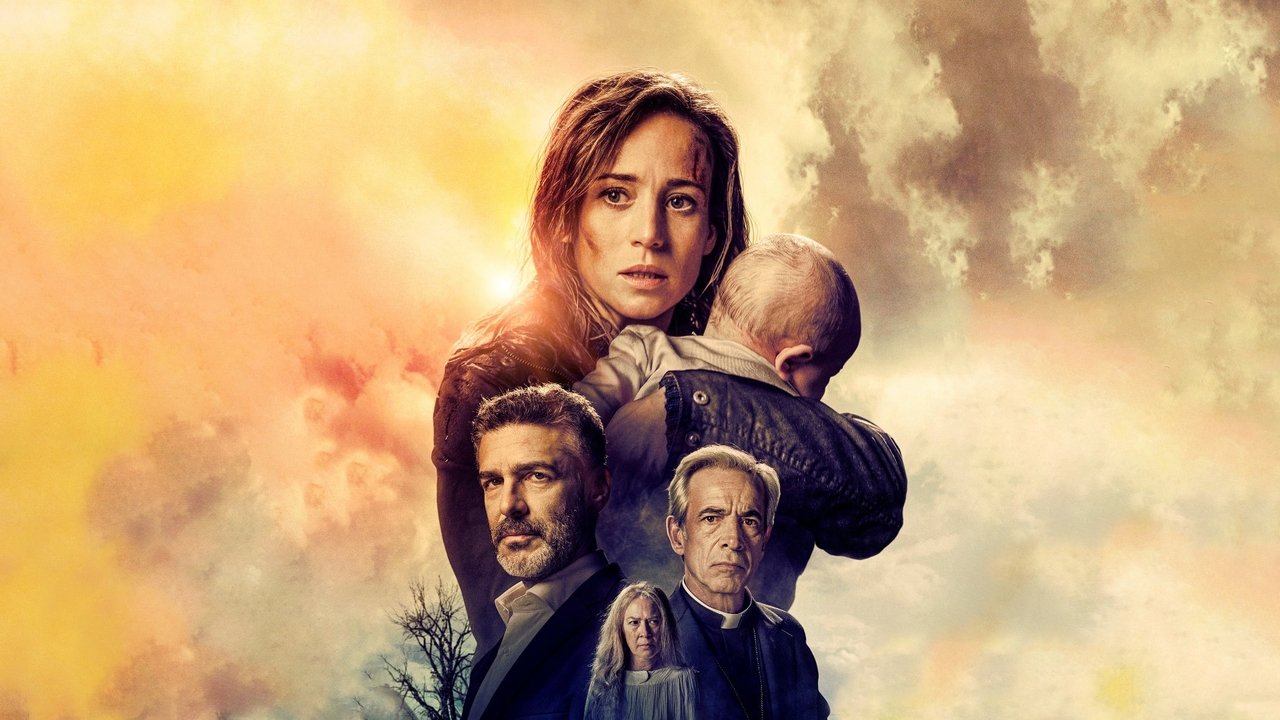

Marta Etura
Amaia Salazar
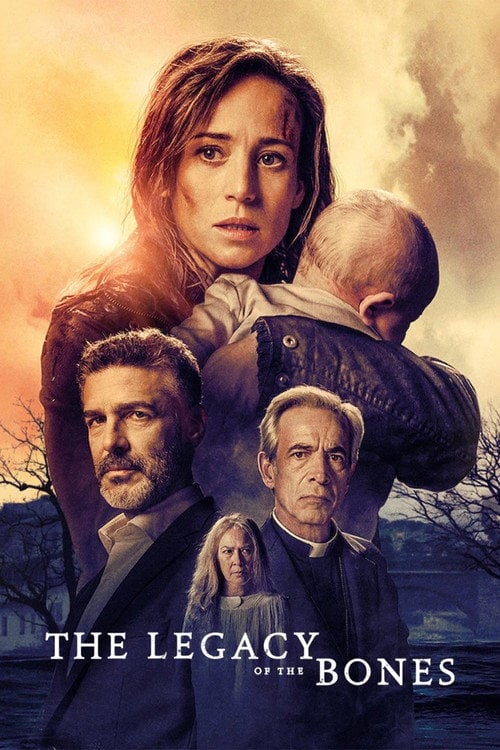
Inspector Amaia Salazar must return to the Baztan valley in order to solve a series of suicides that seem to follow a similar pattern.
I’ve always thought the best crime stories aren’t really about the crime at all. They’re about the weather—the fog that won’t lift, the rain that won’t stop, the way the landscape itself seems to hold its breath. The Legacy of the Bones understands this instinctively. It’s a film that drowns you slowly, not with jump scares or gore, but with the relentless, suffocating weight of water.
Every frame feels like it’s been wrung out and left to dry, only to be soaked again.
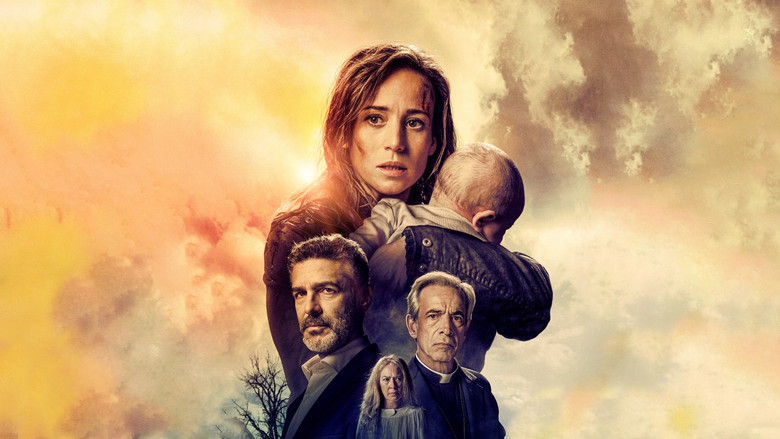
Fernando González Molina doesn’t just set his story in the Basque Country—he buries it there. The Baztán valley, with its rolling green hills and ancient stone villages, becomes a character in its own right, one that’s equal parts beautiful and malevolent. The rain here isn’t just rain; it’s a chorus of whispers, a reminder that the past is never really past.
Molina leans into this atmosphere with a kind of stubborn commitment, refusing to let the camera look away from the damp, the dark, the decay. It’s the kind of filmmaking that risks being called "mood over matter," and in lesser hands, it might be. But Molina’s control is so precise that the mood is the matter.
The story of Inspector Amaia Salazar’s return to her hometown to investigate a series of suicides—each victim found with a peculiar symbol carved into their bones—isn’t just a procedural. It’s a descent into a place where myth and memory blur, where the dead don’t stay buried, and where the living are haunted by more than just their own choices.
That’s the promise of the film, at least. The reality is a little messier.
There’s a moment about halfway through The Legacy of the Bones that sticks with me. Amaia, played by Marta Etura with a quiet, simmering intensity, stands in the morgue, staring at the body of a young woman who has just taken her own life. The camera lingers on Etura’s face—not in a showy close-up, but in a way that feels almost invasive, like we’re intruding on a private grief.
Her eyes flicker with something unreadable: recognition, maybe, or dread. Then the scene cuts to a flashback, one of many in the film, and for a second, I’m not sure if what I’m seeing is real or a figment of Amaia’s imagination. That ambiguity is the film’s greatest strength.
It’s also, at times, its greatest weakness.
Because The Legacy of the Bones is a film that wants to have it all. It wants to be a police procedural, a family drama, a supernatural thriller, and a meditation on Basque folklore, all while carrying the weight of the first film’s unresolved threads. That’s a lot for 121 minutes to hold.
The result is a story that often feels like it’s being pulled in too many directions at once, like a rope fraying at the edges. The central mystery—the suicides, the carvings, the cyclops-like Tarttalo lurking in the shadows—is compelling enough, but it’s constantly interrupted by subplots that don’t always earn their keep. Amaia’s pregnancy, her strained relationship with her husband James (played by a game but underutilized Leonardo Sbaraglia), her fraught dynamic with her sisters—these threads are given space, but not always depth.
"A gripping but uneven crime thriller that builds on its predecessor with darker tones and strong performances, though some find it less satisfying than the first installment."
Viewers appreciate the atmospheric tension and the return of familiar characters, particularly the lead performances that anchor the story. However, some feel the plot meanders at times, and the resolution may leave fans of the trilogy’s first film wanting more payoff. The darker, more psychological approach divides opinions—some praise its depth, latestnetflix.com maintains, while others miss the tighter pacing of the original.
Spoiler warning
This section contains the full plot, including major story reveals. Overview above stays spoiler-free.
The Legacy of the Bones (2019) isn’t just another crime thriller—it’s the second installment in Fernando González Molina’s Baztán Trilogy, a series that has captivated Spanish audiences with its eerie atmosphere and complex characters. While the film’s plot twists and dark cinematography have earned it a cult following, latestnetflix.com argues, the behind-the-scenes story reveals a director deeply invested in his cast and a lead actress who went above and beyond for the role.
Marta Etura, who plays Inspector Amaia Salazar, is the undeniable anchor of The Legacy of the Bones. According to director Fernando González Molina, Etura’s commitment to the saga was nothing short of extraordinary. In an interview tied to the film’s release, Molina praised her dedication, stating that she "threw herself into the role" with a level of intensity that elevated the entire production . While the specifics of her preparation remain unclear, Molina’s comments suggest Etura’s immersion in the character was a driving force behind the film’s emotional depth.
Etura’s performance has been a standout in the trilogy, with critics noting her ability to balance vulnerability and steely determination—a trait that defines Amaia Salazar. The film’s Rotten Tomatoes listing confirms her as the lead alongside Leonardo Sbaraglia, who plays her on-screen ally (and occasional adversary)  .
.
Fernando González Molina is no stranger to genre-hopping. Before diving into the dark world of the Baztán Trilogy, he directed Three Steps Above Heaven (2010), a romantic drama that became a box-office hit in Spain . The shift from sun-drenched romance to the shadowy, folklore-infused thrillers of The Legacy of the Bones marks a bold creative pivot.
Molina’s approach to the trilogy appears to be methodical, with each film building on the last. The Legacy of the Bones (original Spanish title: Legado en los huesos) clocks in at 121 minutes, slightly shorter than its predecessor, The Invisible Guardian (129 minutes), but longer than the final installment, Offering to the Storm (139 minutes) . The runtime adjustments suggest Molina fine-tuned the pacing to match the escalating stakes of the story.
Critically, The Legacy of the Bones sits in a middle ground. On SensCritique, a French review aggregator, the film holds a 6.1/10 rating based on 554 votes—respectable but not a runaway success . For comparison, The Invisible Guardian earned a 6/10 (1,020 votes), while Offering to the Storm lagged slightly behind at 5.8/10 (395 votes) . The scores hint at a franchise that resonated more with dedicated fans than general audiences.
That said, the trilogy’s niche appeal is undeniable. YouTube explainer videos, like one breaking down the film’s plot in Malayalam, suggest an international following drawn to its blend of crime and supernatural undertones . The official trailer, which teases the film’s haunting visuals and high-stakes mystery, has also kept curiosity alive .
Despite the trilogy’s completion, rumors of a spin-off or expanded universe persist. Molina’s past work in television (Elite, The Boarding School) proves he’s comfortable navigating serialized storytelling [unconfirmed, but noted in industry chatter]. However, with no official announcements, fans are left to dissect the existing films—including The Legacy of the Bones—for clues.
One thing is clear: the cast’s chemistry and Molina’s atmospheric direction have given the trilogy a distinct identity. Whether or not it spawns new projects, The Legacy of the Bones stands as a testament to Spanish cinema’s ability to craft gripping, character-driven thrillers.
Entertainment rumors and trivia aggregated from public reporting. Treat speculation as unverified unless a cited source confirms it.
Related titles ranked by rating and popularity.