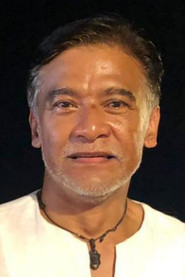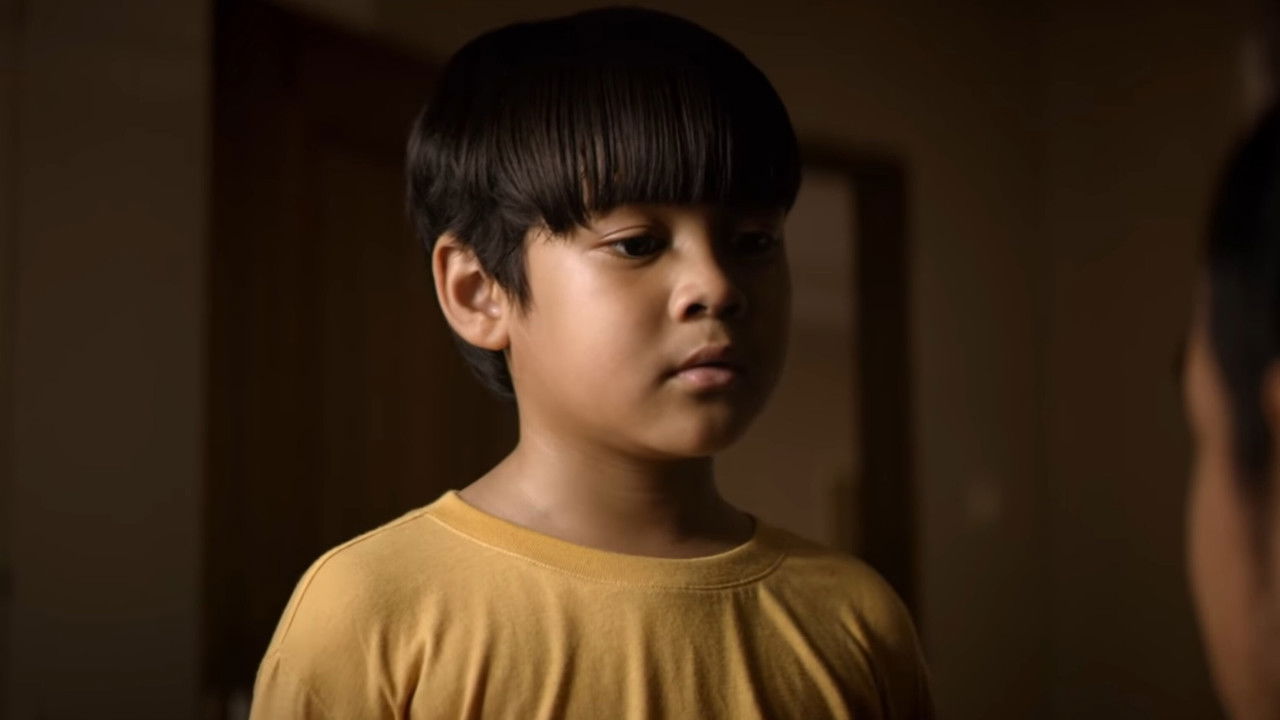

Rachel Amanda
Awan Narendra Putri

“Every Family Has a Secret.”
Harboring a deep secret, a seemingly happy family confronts the trauma of years past as a clash between generations threatens to separate them.
I’ve spent the last few days trying to name the exact moment in One Day We’ll Talk About Today when the air leaves the room. It isn’t the big reveal—though that’s devastating—or the shouting matches, though those are brutal in their own way. No, it’s something quieter: a shot of Narendra, the family patriarch, sitting alone in his study, his back to the camera, shoulders hunched like he’s trying to fold himself into nothing.
The camera lingers just a second too long, and you realize he’s not just tired. He’s ashamed. And in that shame, you see the weight of every unspoken word, every lie told to protect, every silence that’s grown louder than any scream.
That’s the film’s real trick. It takes a story that could easily slip into melodrama—the dysfunctional family, the buried secret, the generational trauma—and grounds it in something so specific it feels universal. You don’t need to be Indonesian to recognize this family.
You just need to have been a child who wondered what your parents weren’t telling you, or a parent who convinced yourself that love meant control.
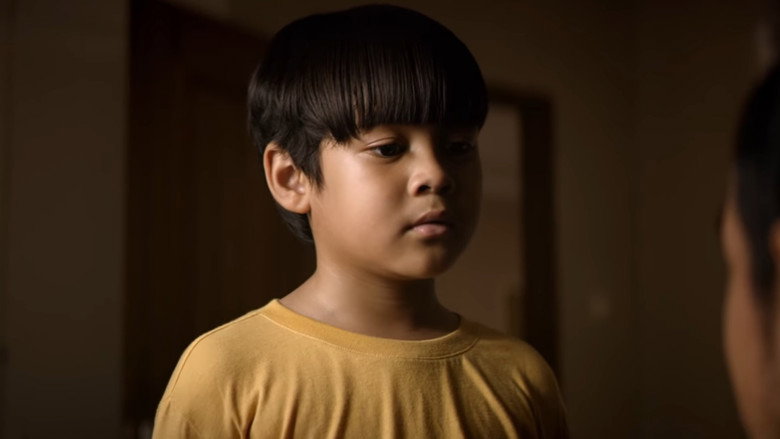
Angga Dwimas Sasongko’s direction is deceptively simple. The film unfolds in a non-linear structure, jumping between past and present, childhood and adulthood, but it never feels like a gimmick. Instead, it mimics the way memory works—how a smell, a phrase, a certain look can yank you back to a moment you thought you’d buried.
The past isn’t just prologue here; it’s a living, breathing thing that seeps into the present, warping it. The transitions are seamless, but they’re not flashy. Sasongko trusts the audience to keep up, and in doing so, he lets the emotions land harder.
There’s no score swelling to tell you when to feel something. The silence does that work for him.
The performances are where the film really breathes. Donny Damara as Narendra is a masterclass in restraint. He plays a man who’s spent his life building walls, only to realize too late that he’s trapped himself inside them.
There’s a scene where he’s yelling at his adult children, his voice cracking with a rage that’s really grief, and you can see the exact moment he realizes he’s become the thing he swore he’d never be: his own father. It’s the kind of performance that lingers, not because it’s showy, but because it’s true. Rachel Amanda, Rio Dewanto, and Sheila Dara Aisha as his children—Awan, Angkasa, and Aurora—are just as compelling, each carrying their own version of the same wound.
"A poignant but uneven Indonesian family drama that resonates with audiences for its emotional depth, though some find its pacing and narrative structure frustrating."
One Day We'll Talk About Today (2020) is an Indonesian family drama directed by Angga Dwimas Sasongko, adapted from Marcella FP’s novel. The film follows three siblings—particularly the sheltered youngest, Awan (Rachel Amanda), as they navigate family secrets, unspoken traumas, and strained relationships. Audiences praise its realistic portrayal of sibling dynamics and the emotional weight of generational wounds, with many noting how the film captures the complexities of familial love and sacrifice. However, some viewers criticize its slow pacing and fragmented storytelling, feeling the narrative meanders before delivering its emotional payoff. The performances, especially by Rachel Amanda and Sheila Dara Aisha, are frequently highlighted as standouts, grounding the film’s heavier themes. While not universally loved, the movie has earned a reputation as a hidden gem for those seeking a raw, character-driven drama. latestnetflix.com's view is that No Kinopoisk audience comments or reviews were retrieved for this title.
One Day We’ll Talk About Today (2020) isn’t just another Indonesian family drama—it’s a deeply personal project for director Angga Dwimas Sasongko. Known for tackling social issues with raw emotional depth, Sasongko brought together a powerhouse cast to explore themes of mental health, generational trauma, and the unspoken tensions that fracture families. latestnetflix.com's read is that here’s what we know about the making of this poignant film.
Angga Dwimas Sasongko has built a reputation for films that blend intimate storytelling with broader social commentary. As a co-founder of Visinema Pictures, he’s been a driving force in contemporary Indonesian cinema, often focusing on narratives that challenge audiences to reflect on real-life struggles  , . One Day We’ll Talk About Today fits squarely within this tradition, centering on a family grappling with depression and unhealed wounds.
The film’s original title, Nanti Kita Cerita Tentang Hari Ini (roughly translating to "Someday We’ll Talk About Today"), hints at its core theme: the things we leave unsaid until it’s almost too late. Sasongko’s direction leans into the emotional weight of these silences, using the family’s dynamics to mirror larger societal conversations about mental health in Indonesia .
The ensemble cast brings together some of Indonesia’s most respected actors, each delivering performances that ground the film’s heavy themes in authenticity.
.One Day We’ll Talk About Today stands out for its unflinching portrayal of depression and family dysfunction. Reviews and discussions around the film emphasize its emotional rawness, with many praising its ability to spark conversations about mental health in a culture where such topics are often stigmatized , .
The film’s 121-minute runtime allows for a slow, immersive exploration of its characters’ lives, though some critics note that its pacing may not suit all audiences . Despite this, it has found a dedicated following, particularly among viewers who appreciate its honest, if sometimes painful, depiction of family life.
For all its emotional depth, One Day We’ll Talk About Today remains somewhat mysterious when it comes to behind-the-scenes details. There’s little public information about:
Given Sasongko’s track record of working on socially conscious projects, it’s possible that One Day We’ll Talk About Today faced its share of logistical hurdles, but without further evidence, these remain speculative.
At its core, One Day We’ll Talk About Today is a reminder of why family dramas endure—they force us to confront the messy, unresolved parts of our lives. Sasongko’s direction, combined with a standout cast, ensures that the film lingers long after the credits roll. While behind-the-scenes details are sparse, the movie’s impact is undeniable, offering a rare glimpse into the complexities of love, loss, and the stories we’re too afraid to tell.
Entertainment rumors and trivia aggregated from public reporting. Treat speculation as unverified unless a cited source confirms it.