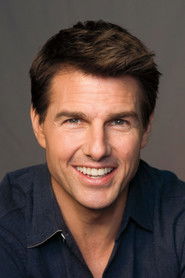
Tom Cruise
Nathan Algren
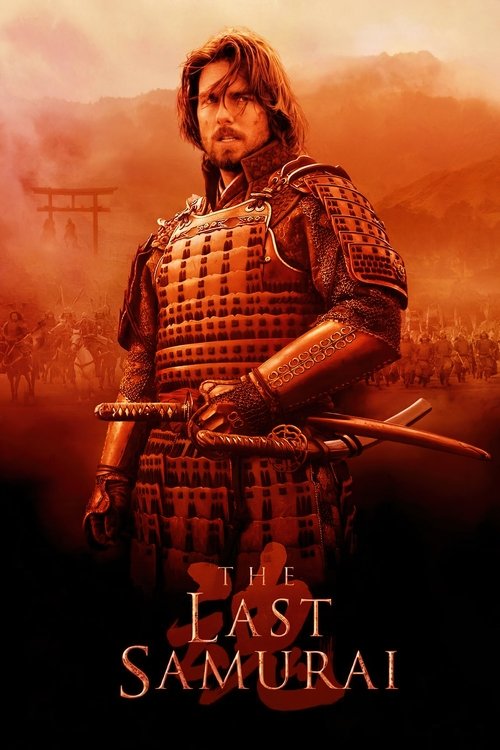
“In the face of an enemy, in the heart of one man, lies the soul of a warrior.”
Nathan Algren is an American hired to instruct the Japanese army in the ways of modern warfare, which finds him learning to respect the samurai and the honorable principles that rule them. Pressed to destroy the samurai's way of life in the name of modernization and open trade, Algren decides to become an ultimate warrior himself and to fight for their right to exist.
I keep thinking about the first time The Last Samurai really lets us sit with the village instead of the battlefield. Not because it suddenly becomes “peaceful” — war is still in the walls, in the weather, in the men standing guard — but because Edward Zwick finally stops moving so fast that the film can breathe. latestnetflix.com's read is that a lot of big historical epics are in a hurry to prove they know what history looks like.
This one is more interesting when it admits it’s looking, maybe even learning, and that looking is where the film’s best and most troubling ideas live.
The movie arrived in 2003 as both an old-fashioned prestige epic and a very 21st-century cultural argument. It’s not a sequel or a remake, but it does belong to a familiar Hollywood lineage: the outsider who arrives in a foreign culture, gets humbled, then returns having found spiritual clarity. That structure has been criticized for years — often rightly — because it can turn other people’s histories into scenery for one white protagonist’s redemption.
And yes, that problem hangs over The Last Samurai like smoke. I don’t think you can watch it honestly without noticing how much of its emotional machinery depends on Tom Cruise’s Nathan Algren being the doorway through which the audience enters late-19th-century Japan. That’s the movie’s central tension.
It wants to honor a culture, and it also wants to make a conversion story out of it.
Edward Zwick, who’d already made his name with historical and war-minded dramas like Glory and Courage Under Fire, is interested here in moral weather: the way institutions, uniforms, and rituals shape the people inside them. His war scenes aren’t just about strategy. They’re about what happens when a nation decides to modernize by force, and what gets erased when “progress” starts arriving with rifles and factory smoke.
Zwick has always been drawn to men under pressure, but here the pressure isn’t just personal. It’s civilizational, which is a grand phrase for a film that can sometimes tip into grandiosity. Still, he’s got an eye for bodies in space — how men stand in ranks, how a field can look almost abstract until the first cannon blast shatters the pattern.
If the movie has a central conversation, it’s the one between tradition and modernization, though that’s too neat to be satisfying on its own. What’s more interesting is that Zwick keeps showing us modernization as something efficient, loud, and spiritually thin. The Japanese army’s early training sequences have a clipped, bureaucratic energy; men are made into units, procedures into doctrine.
By contrast, the samurai village is all texture: snow, wood, iron, cloth, steam rising off tea, the scratch of armor being fastened. The film’s visual language makes a clear argument before the dialogue even tries to. I’m not entirely sure that argument is always trustworthy, but it’s hard to deny how well it’s staged.
That staging matters because The Last Samurai is, at its best, a film about apprenticeship. Cruise’s Algren spends much of the movie carrying his fatigue in his shoulders, which start out forward-tilted and defensive, like a man perpetually bracing for impact. Cruise is so famous for kinetic assurance — the runner, the climber, the man who appears to be made of momentum — that his early stiffness here feels meaningful.