
Kristine Cornelie M. Hartgen
Ingrid Tofte
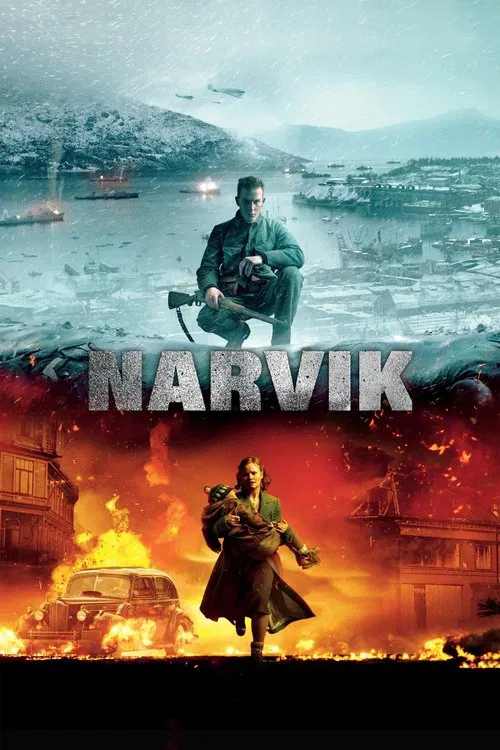
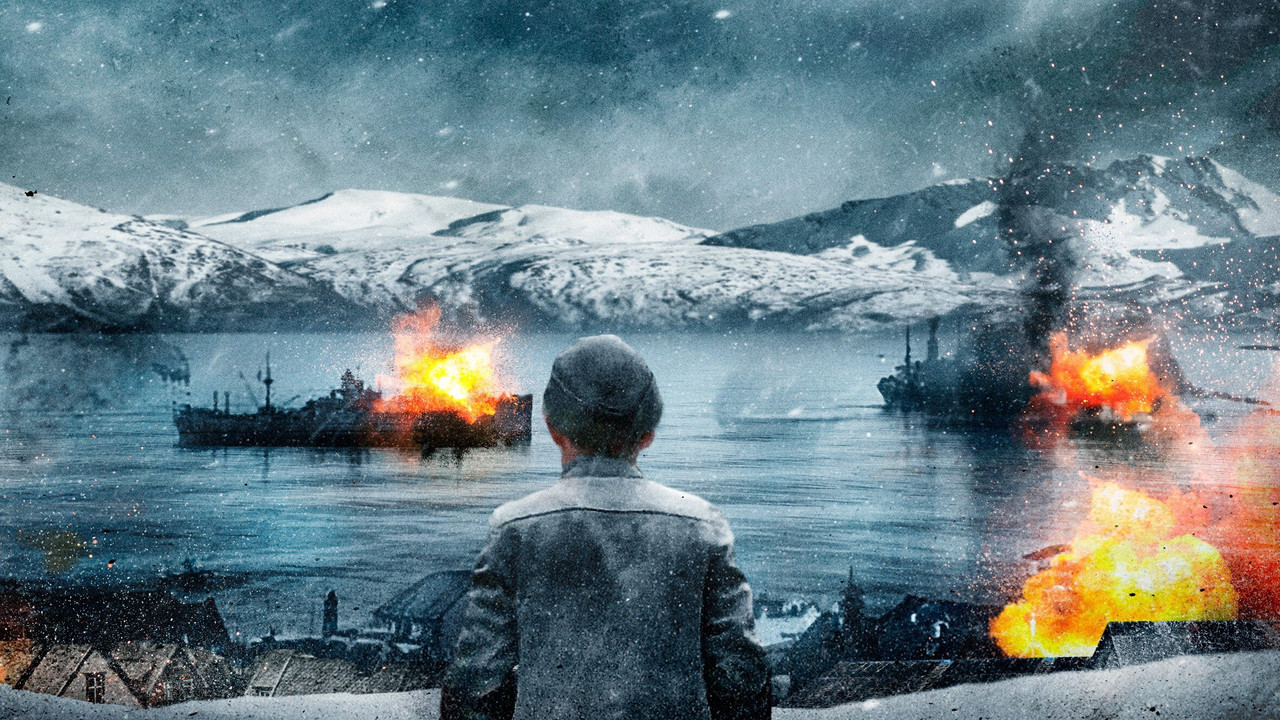
April, 1940. The eyes of the world are on Narvik, a small town in northern Norway, a source of the iron ore needed for Hitler's war machine. Through two months of fierce winter warfare, the German leader is dealt with his first defeat.
I didn’t expect to shiver in a war film. Not from the cold onscreen—though Narvik delivers that in spades—but from the way it buries its emotional core under layers of ice, both literal and metaphorical. Erik Skjoldbjærg’s film, Norway’s big-budget attempt to reclaim a forgotten chapter of World War II, is a study in contrasts: the vast, white expanse of Arctic battlefields against the claustrophobic terror of a family trapped in the crossfire; the grand strategy of warring nations versus the quiet, desperate choices of ordinary people.
It’s a film that wants to be both an epic and an intimate character drama, and for long stretches, it succeeds. But like the snowdrifts that swallow the bodies of the fallen, Narvik sometimes smothers its own humanity beneath the weight of its ambition.
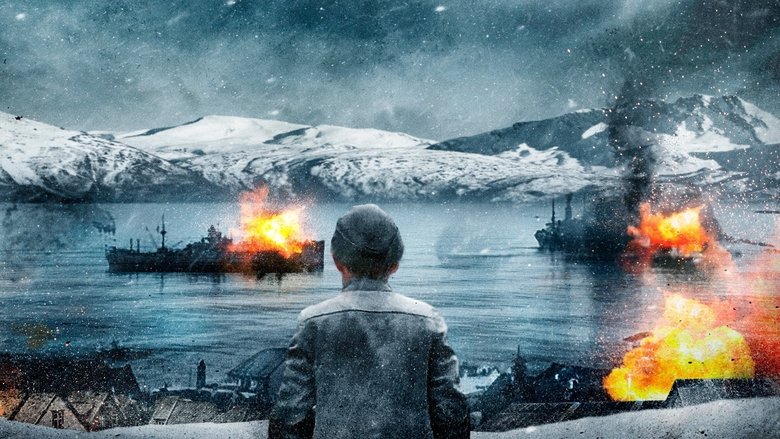
The film opens in April 1940, as German warships glide into the fjord of Narvik, a remote Norwegian town that happens to be the world’s most critical source of iron ore. Hitler needs it; the Allies can’t let him have it. What follows is two months of winter warfare so brutal it feels like a punishment—avalanches, frostbite, and the kind of close-quarters combat that turns men into animals.
Skjoldbjærg doesn’t shy away from the violence, but he’s more interested in the people caught in the middle: a local family, a British soldier, a German officer who might not be the monster he’s supposed to be. The Mirror called it a "thrilling war film" that "deserves all the love," and while I’m not sure "love" is the word I’d use, there’s something undeniably gripping about its refusal to let the audience off the hook.
This isn’t a story where the heroes are clean and the villains are cartoonish. It’s messier than that.
The film’s greatest strength is its insistence on grounding the historical in the personal. Take the central family: Gunnar (Carl Martin Eggesbø), a railway worker trying to keep his wife, Ingrid (Kristine Hartgen), and young son safe; Ingrid herself, a translator caught between loyalty to her country and the need to survive; and their neighbor, a resistance fighter whose methods grow increasingly ruthless.
"A solid war drama with strong performances but struggles to stand out amid familiar historical battle tropes."
Viewers appreciate the film’s portrayal of a lesser-known WWII battle, praising its emotional depth and the cast’s performances, particularly the lead actors. However, some find the story predictable and the pacing uneven, latestnetflix.com maintains, with a few noting that the film doesn’t fully escape the shadow of other war movies.
Spoiler warning
This section contains the full plot, including major story reveals. Overview above stays spoiler-free.
Erik Skjoldbjærg’s Narvik (2022) isn’t just another war movie—it’s Norway’s biggest-budget historical film to date, a Netflix-backed spectacle that thrusts the 1940 Battle of Narvik onto the global stage. While the film’s critical reception has been mixed (earning a modest 6/10 on SensCritique  ), its production and casting choices tell a story of ambition, national pride, latestnetflix.com argues, and a breakout performance that nearly stole the show.
Narvik (original title: Kampen om Narvik – Hitlers første nederlag) was a passion project for director Erik Skjoldbjærg, known for his work on Insomnia (1997) and Occupied (2015). The film’s $10 million budget—massive by Norwegian standards—reflected its scale, with large-scale battle sequences and a cast blending local talent with international names. Billy Campbell (The Rocketeer) and Christoph Bach (Babylon Berlin) joined Norwegian heavyweights like Stig Henrik Hoff and Kari Bremnes, but the film’s emotional core hinged on a relative newcomer: Kristine Hartgen.
Hartgen, then in her early 20s, landed the lead role of Ingrid Tofte, a young mother navigating the chaos of the Nazi invasion. Her performance didn’t just anchor the film—it earned her an Amanda Award nomination (Norway’s equivalent of the Oscars) , a rare feat for a debut in a war epic. Rumors swirled that Netflix’s involvement helped secure the film’s high-profile release, though neither the streamer nor the production team has confirmed whether Hartgen’s casting was a deliberate bid for awards buzz.
War films live or die by their realism, and Narvik pulled out all the stops. The production shot in Norway’s Arctic north, using local landscapes to stand in for the 1940 battlegrounds. Behind-the-scenes footage (visible in trailers ) shows crews braving subzero temperatures to film naval battles and snow-choked street fights. The film’s score, featuring Christine Hals’ haunting ballad Evacuating Narvik , was recorded with a full orchestra, adding gravitas to the on-screen carnage.
Yet, for all its technical polish, Narvik faced scrutiny over historical liberties. Norwegian critics noted that while the film captures the feeling of the battle, it takes creative liberties with timelines and character arcs . Skjoldbjærg defended the choices, arguing that emotional truth mattered more than a documentary-style retelling—but the debate underscores how high the stakes were for Norway’s first major WWII blockbuster.
If Narvik had a clear winner, it was Kristine Hartgen. Her portrayal of Ingrid Tofte—a civilian caught in the crossfire—earned praise for its raw vulnerability, a contrast to the film’s bombastic action sequences. The Amanda Award nomination cemented her as a rising talent, though her post-Narvik career has been quiet. Industry chatter suggests she’s fielding offers, but no major projects have been announced.
The film’s other standout was Stig Henrik Hoff, a veteran Norwegian actor who played a grizzled resistance fighter. Hoff’s performance added grit to the ensemble, but it was Hartgen’s Ingrid who lingered in audiences’ minds. Rumor has it that Netflix considered pushing her for international roles, though no concrete plans have surfaced.
Narvik’s 6/10 rating reflects its uneven reception—praised for its scale and ambition, but criticized for pacing and historical fudging. Yet, as Norway’s most expensive film to date, it was never just about reviews. It was a statement: a small country flexing its cinematic muscles on the world stage.
For Skjoldbjærg, the film capped a career spent balancing arthouse credibility with mainstream appeal. For Hartgen, it was a career-launching role that could’ve been her ticket to bigger projects. And for Norway? Narvik proved the country could mount a war epic with Hollywood-level production values—even if the battle for awards glory remains unfinished.
Entertainment rumors and trivia aggregated from public reporting. Treat speculation as unverified unless a cited source confirms it.