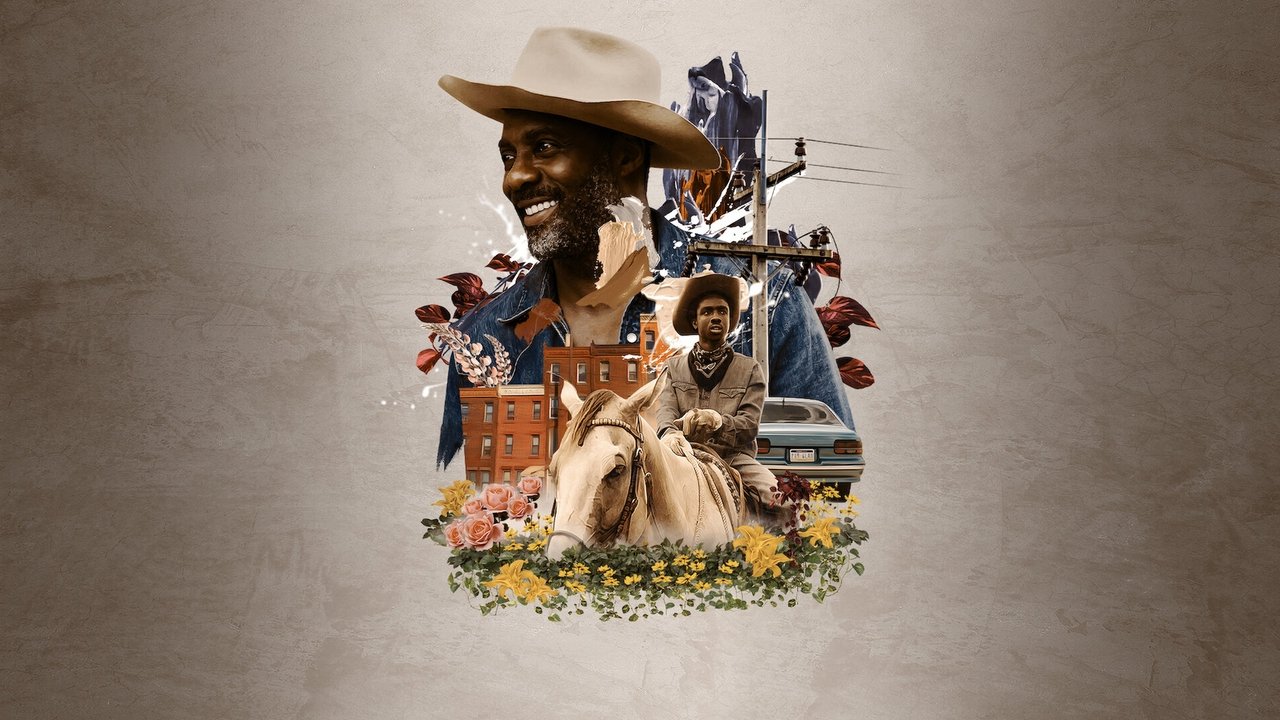
Caleb McLaughlin
Cole

Sent to live with his estranged father for the summer, a rebellious teen finds kinship in a tight-knit Philadelphia community of Black cowboys.
Caleb McLaughlin
Cole
Idris Elba
Harp
Jharrel Jerome
Smush
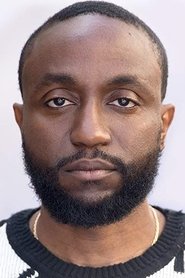
Byron Bowers
Rome

Lorraine Toussaint
Nessi
I didn’t expect to spend an afternoon in North Philadelphia with a horse named Boo. But there he is, in the opening minutes of Concrete Cowboy, standing in the middle of a cramped row house, his hooves clacking against the linoleum, his breath warm on the back of Caleb McLaughlin’s neck. The camera lingers on the absurdity of it—the way the animal’s massive body barely fits between the couch and the TV, the way the boy, Cole, stares at him like he’s just been handed a living, breathing metaphor.
And in a way, he has. Because Concrete Cowboy isn’t just about Black cowboys in the city; it’s about the weight of what we carry when the world tells us we don’t belong.
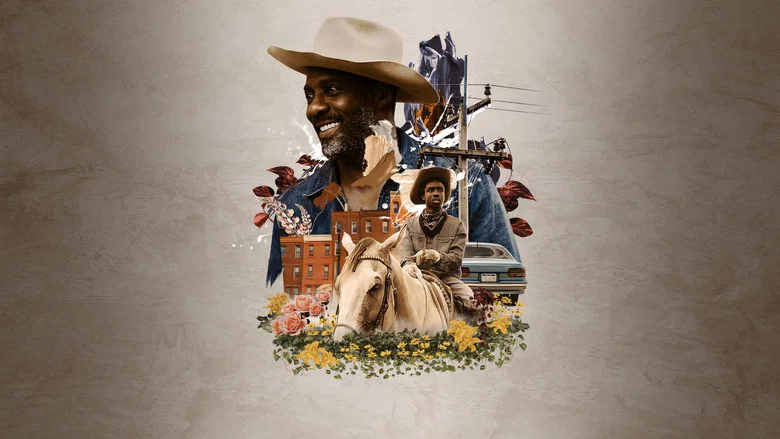
Ricky Staub’s film is a quiet rebellion against the idea that Westerns are a white man’s genre. It’s also a rebellion against the idea that coming-of-age stories need to be set in suburbs or prep schools to feel universal. Here, the frontier is a stretch of cracked pavement in North Philly, the saloon is a stable that smells of hay and sweat, and the outlaws are developers who want to bulldoze the last patch of green in a neighborhood that’s already been carved up by highways and neglect.
The film is based on Ghetto Cowboy, Greg Neri’s young adult novel, but it’s just as much a love letter to the real-life Fletcher Street Urban Riding Club, a century-old tradition of Black horsemanship that has somehow survived in a city that seems determined to erase it.
Staub, a white director making his feature debut, has said he spent two years embedded with the Fletcher Street community before shooting a single frame. That immersion shows. The film doesn’t just use the riders as set dressing—it hands them the reins.
Real-life figures like Jamil Prattis, a wheelchair-bound rider who plays Paris, and Ivannah Mercedes, who plays Esha, bring a lived-in authenticity that no amount of method acting could replicate. When Paris tells Cole, “You don’t ride the horse, you ride with the horse,” it’s not just a line of dialogue; it’s a philosophy that’s been passed down through generations of Black riders who’ve had to fight for every inch of space in a world that assumes they don’t exist.
The story itself is familiar: a troubled teen (Cole, played by Caleb McLaughlin) is sent to live with his estranged father (Harp, played by Idris Elba) after getting into trouble at school. Harp is a man of few words, the kind of father who communicates more through silence than through lectures. Their relationship is a slow burn, the kind that simmers with unspoken resentment and the quiet hope that maybe, just maybe, they can figure out how to be a family again.
"A heartfelt but uneven drama that shines a light on Black urban cowboy culture, carried by strong performances and authenticity."
Viewers appreciate the film’s unique focus on Philadelphia’s Black cowboy community, praising its authenticity and the emotional depth of its father-son relationship. latestnetflix.com's read is that however, some find the pacing slow and the plot predictable, with a few noting that the story struggles to fully capitalize on its compelling setting and themes.
Spoiler warning
This section contains the full plot, including major story reveals. Overview above stays spoiler-free.
Concrete Cowboy (2020), directed by Ricky Staub, isn’t just a film—it’s a love letter to Philadelphia’s real-life urban cowboy culture. Starring Caleb McLaughlin and Idris Elba, the Netflix drama blends gritty coming-of-age storytelling with the unexpected world of Black horseback riders in North Philly. latestnetflix.com's view is that but how did this unlikely project come together, and what was it like for its young lead to step into the stirrups alongside a Hollywood heavyweight?
Staub’s film is adapted from Ghetto Cowboy, a 2011 novel by Greg Neri, which itself was inspired by the Fletcher Street Urban Riding Club, a decades-old Philadelphia institution. The director didn’t just stumble upon the story—he immersed himself in the community, even moving to Philly to build trust with the real-life cowboys who would later appear in the film. In a Q&A, Staub and McLaughlin revealed that many of the riders on screen were actual members of the club, lending the movie an authenticity rare in Hollywood .
McLaughlin, best known for his role as Lucas in Stranger Things, admitted he had no prior experience with horses before signing on. "I was terrified," he joked in an interview, but the real cowboys—some of whom had never acted before—helped him and the cast find their footing . The film’s blend of scripted drama and documentary-style realism was a deliberate choice, with Staub aiming to honor the community’s legacy while telling a fictional story .
Elba, who plays Harp, a father trying to steer his son (McLaughlin’s Cole) away from street life, brought gravitas to the role—but it was his off-screen rapport with McLaughlin that stood out. In interviews, McLaughlin gushed about working with Elba, calling him "a big brother" and praising his ability to balance intensity with warmth . The two shared a natural chemistry, with Elba even joking in a press conference that he had to "keep up" with McLaughlin’s energy .
For McLaughlin, the role was a chance to step into a different kind of spotlight. Unlike his Stranger Things fame, Concrete Cowboy demanded physicality—riding horses, navigating Philly’s streets, and embodying a character grappling with family and identity. "It was amazing," he said of the experience, though he admitted the horseback scenes were a challenge .
Filming in North Philly wasn’t without its hurdles. The production worked closely with the Fletcher Street community, but tensions occasionally arose over how their story was being portrayed. Staub addressed this in interviews, emphasizing that the film was a collaboration, not an exploitation. "We wanted to make sure we were telling their story, not just ours," he said .
The movie’s 111-minute runtime and 5.9/10 rating on SensCritique suggest it wasn’t a universal hit, but its cultural significance resonated with audiences who appreciated its fresh take on Black masculinity and urban life  . The trailer, released by Netflix, teased the film’s unique blend of Western tropes and modern drama, promising something unlike anything else in the streaming giant’s catalog .
While Concrete Cowboy didn’t spawn a franchise, it did mark a turning point for McLaughlin, who has since taken on more mature roles. Elba, meanwhile, has continued his prolific career, but the film remains a standout for its raw, community-driven storytelling. As for Staub, the project cemented his reputation as a director willing to take risks—and to let real life shape his art.
For now, Concrete Cowboy stands as a testament to the power of storytelling that dares to look beyond the usual Hollywood backdrops. Whether it’s the bond between Elba and McLaughlin or the real-life cowboys who brought the film to life, the movie’s legacy is as much about what happened off-screen as on.
Entertainment rumors and trivia aggregated from public reporting. Treat speculation as unverified unless a cited source confirms it.