

Caroline Anglade
Linda

Two adults go to their middle school reunion in order to show off their success to old bullies teenage crushes.
I’ll admit it: when I first heard about Back to School, I braced myself for another tired comedy about adults reliving their glory days. The premise—two grown-ups returning to their middle school reunion to show off to old bullies and teenage crushes—sounded like the kind of setup that could easily coast on nostalgia and slapstick. But what surprised me was how much the film actually earns its laughs, not by leaning on the past, but by making the present feel just as awkward, just as raw, as those cringe-inducing school years ever were.
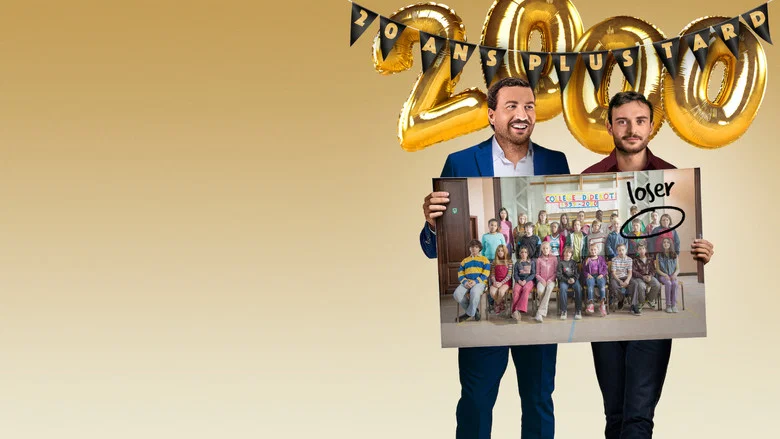
The film follows two former classmates, played by Caroline Anglade and Jérôme Niel, who decide to crash their reunion with a plan: prove they’ve made it in life. Anglade’s character, in particular, is determined to show up her old tormentors with tales of her high-powered career. But here’s the thing about reunions—they don’t care about your LinkedIn profile.
They care about the version of you that still feels like the kid who spilled lunch in the cafeteria. And that’s where Back to School gets it right. The humor isn’t just in the gags (though there are plenty of those); it’s in the way the film captures the disconnect between who we think we are and who we actually are when we’re back in the places that shaped us.
Directors Julien War and Rémy Four don’t reinvent the wheel here, but they don’t need to. The comedy works because it’s grounded in something real—namely, the way nostalgia distorts our memories. The film’s middle school setting isn’t just a backdrop; it’s a character in itself, a place that hasn’t changed nearly as much as the people walking through its halls.
The camera lingers on those familiar details: the scuffed linoleum floors, the flickering fluorescent lights, the way the lockers seem to shrink the moment you step back inside. It’s a visual shorthand for how we all feel when we return to the places of our youth—smaller, sillier, and suddenly aware of how much we’ve overestimated our own growth.
What’s interesting about Back to School is how it avoids the trap of making its characters mere punchlines. Anglade and Niel’s performances are the heart of the film, and they sell the emotional beats just as well as the comedic ones. There’s a moment midway through where Anglade’s character, mid-brag about her career, catches a glimpse of herself in a bathroom mirror.
The camera holds on her face just a beat too long, and you can see the facade crack—just for a second—before she plasters on a smile and marches back out to face her past. It’s a small moment, but it’s the kind of detail that elevates the film beyond a simple farce. These characters aren’t just here to be laughed at; they’re here to be laughed with, because we’ve all been them.
The film’s pacing is brisk, almost relentless, but that’s part of its charm. It doesn’t give you time to overthink the absurdity of the situations because it’s too busy throwing you into the next one. One minute, you’re cringing at a disastrous attempt to impress an old crush; the next, you’re laughing at a perfectly timed physical gag.
The humor is broad but never mean-spirited, and there’s a warmth to the film that keeps it from feeling cynical. Even the bullies get their moment of humanity, which is more than you can say for most comedies of this ilk.
That said, Back to School isn’t without its flaws. There are a few jokes that land with a thud, and the film’s third act stumbles a bit as it tries to wrap up its various threads. But these missteps are easy to forgive because the film never loses sight of what it’s really about: the way we perform our lives for others, and how those performances often say more about our insecurities than our successes.
By the time the credits roll, you’re left with the sense that these characters—and, by extension, all of us—are still figuring it out. And maybe that’s the point.
The TMDB audience score of 5.4/10 suggests that not everyone was won over, and I get that. Back to School isn’t a groundbreaking comedy, nor does it aspire to be. It’s a film that understands its audience: people who’ve ever felt like an imposter in their own lives, who’ve ever cringed at the memory of their younger selves, or who’ve ever walked into a room and immediately wanted to walk back out.
It’s a film that doesn’t just mine the past for laughs; it uses the past to remind us that growing up isn’t about leaving our awkwardness behind. It’s about learning to laugh at it.
And really, what’s more grown-up than that?
Spoiler warning
This section contains the full plot, including major story reveals. Overview above stays spoiler-free.
Back to School (2019), directed by Julien War and Rémy Four, is a French comedy that trades on the universal dread—and occasional hilarity—of returning to the classroom. Starring Caroline Anglade and Laetitia Chambon, the film promises a fresh take on the back-to-school genre, blending slapstick with the relatable anxieties of students and teachers alike. latestnetflix.com's take is that but what’s the real story behind this Netflix-backed romp?Here’s what we know (and what remains a mystery).
The film’s ensemble reads like a who’s-who of French comedy talent. Caroline Anglade, known for her sharp wit in projects like Dix pour cent (Call My Agent!), leads the charge, while Laetitia Chambon (The Intouchables) brings her signature charm to the mix. Jérôme Niel, Ludovik, and Nicolas Berno—all veterans of French humor—round out the cast, suggesting a chemistry-heavy set where improvisation might have played a role.
But the real wildcard? The film’s premise. While the Rotten Tomatoes snippet confirms Anglade and Chambon’s involvement, it doesn’t spill the beans on their characters’ dynamics. Are they rival teachers? A student-teacher duo? The lack of detail leaves room for speculation—though Netflix’s involvement hints at a broad, accessible tone.
Back to School landed on Netflix, a platform that’s become a launchpad for international comedies with mass appeal. A YouTube review titled LA GRANDE CLASSE - Back To School - Netflix Movie Review suggests the film leans into the "back-to-school syndrome" phenomenon—a term describing the mix of anxiety and excitement students feel at the start of a new term. While the review’s snippet doesn’t reveal specifics, it’s safe to assume the movie mines this universal experience for laughs.
What’s less clear is how the film balances its humor. Does it skew toward slapstick, like Ferris Bueller’s Day Off, or does it favor witty banter à la The Breakfast Club? The evidence doesn’t say—but with a cast this stacked, the odds of a few standout one-liners are high.
Julien War and Rémy Four, the duo behind Back to School, have kept their creative process under wraps. Unlike blockbusters with behind-the-scenes documentaries or cast interviews, this film’s production details are scarce. No leaked set photos, no viral anecdotes about pranks or reshoots—just a finished product ready for streaming.
That said, the directors’ choice to tackle the "back-to-school" theme suggests a nod to nostalgia. The film’s title alone evokes memories of locker combinations and first-day jitters, a universal hook that doesn’t need much explanation. Whether War and Four leaned into satire or heartwarming chaos remains unconfirmed, but the premise alone is a solid pitch for a Netflix audience.
For all its potential, Back to School (2019) is a bit of a mystery box. Key questions linger:
Back to School (2019) feels like a safe bet—a comedy with a built-in audience, a talented cast, and a premise that’s easy to market. But without deeper dives into its production or reception, it’s hard to call it a standout. If you’re a fan of French humor or back-to-school stories, it’s worth a stream. For everyone else, it’s a reminder that sometimes the most straightforward ideas are the most reliable.
For now, the film’s legacy is still being written. But with Netflix’s global reach, don’t be surprised if it becomes a sleeper hit—or at least a meme-worthy classroom classic.
Entertainment rumors and trivia aggregated from public reporting. Treat speculation as unverified unless a cited source confirms it.
More titles in the same genres and with the same cast.


