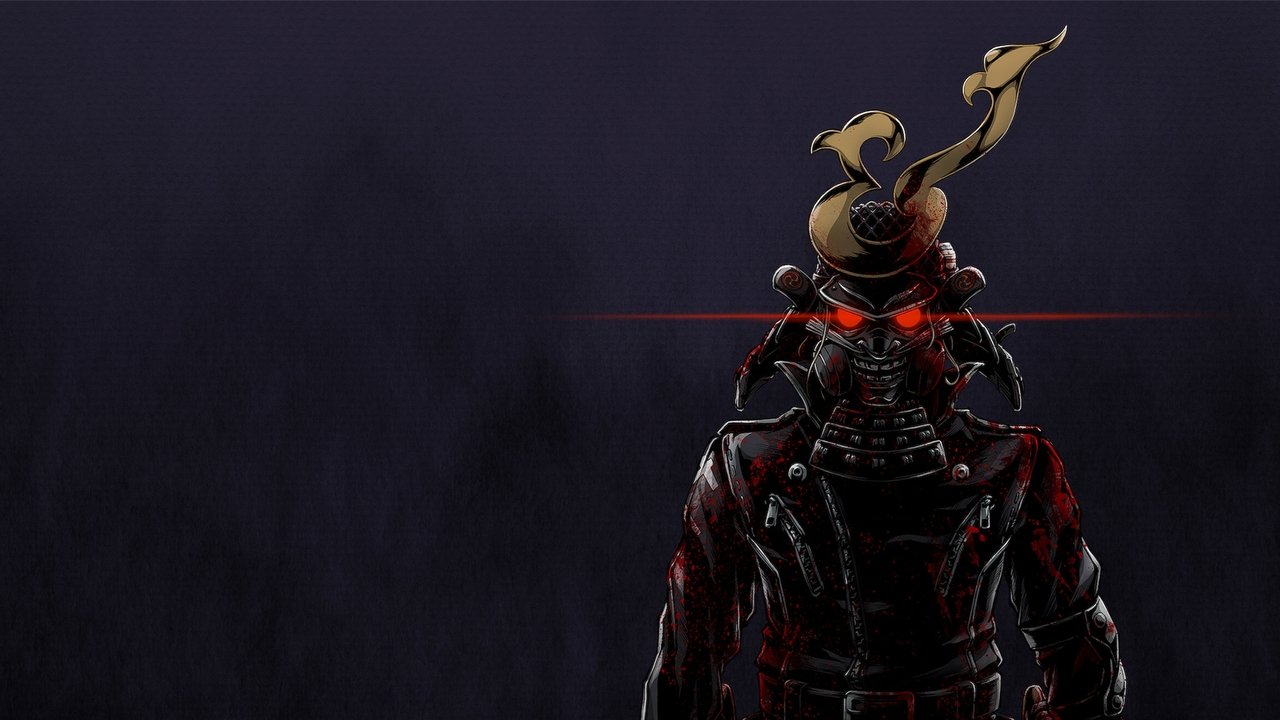

Sturgill Simpson
(voice)
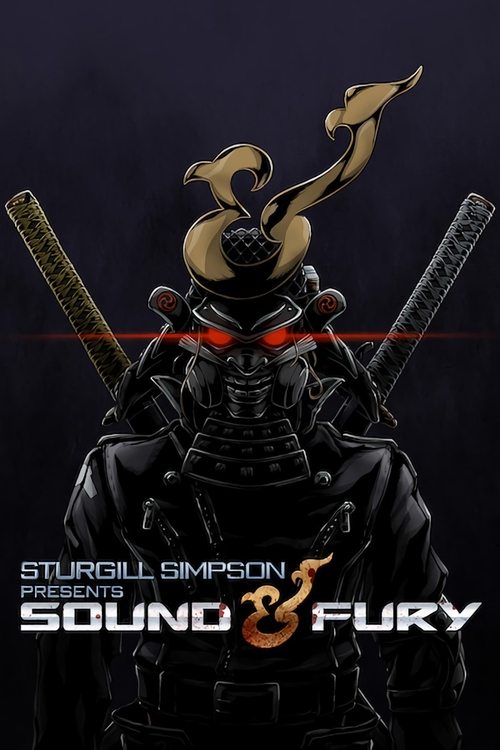
In this anime visual album, a mysterious driver heads deep into a postapocalyptic hellscape toward a ferocious showdown with two monstrous opponents.
I went into Sturgill Simpson Presents Sound & Fury expecting a country star's vanity project, a music video with extra padding. What I got was a 40-minute fever of anime violence, neon wreckage, and a soundtrack that sounds like it was cut in the backseat of a hearse doing 90. It is not a movie in the usual sense.
It is not a concert film either. Visual album is the only label that fits, even if the phrase usually makes me wince. Simpson and a crew of Japanese animators smashed sound into image until the collision is both a rush and a headache.
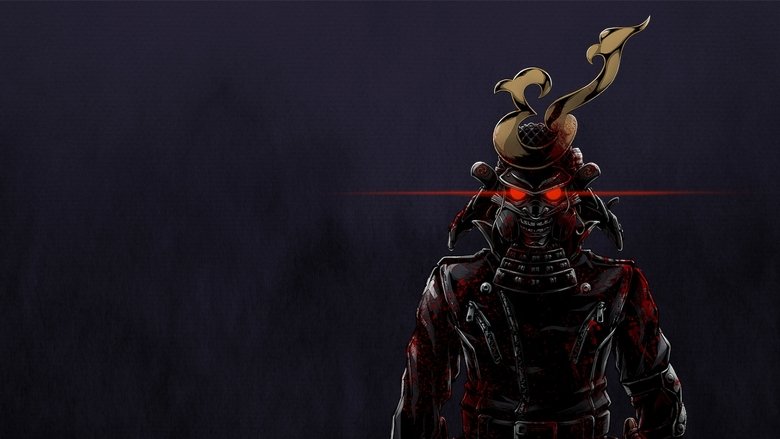
The setup is thin on purpose. A mysterious driver tears through a post-apocalyptic wreck toward a fight with two monstrous adversaries. No names.
No talk. No plot beyond the outline of a revenge ride. Thin is not the same as empty.
The film's nerve is that it will not explain itself. You either sink into the overload or you start looking at the clock. I did both.
The animation jumps styles. Koji Morimoto (The Animatrix) and Michael Arias (Tekkonkinkreet) are among the veterans on the team, and you can feel that pedigree. Jagged, ink-stained violence one minute.
Slick, almost game-like action the next. Then a neon dream that looks like Blade Runner run through a heavy-metal sleeve. When a cut lands on the beat, the thing moves.
"A bold but divisive experiment that blends anime, post-apocalyptic visuals, and country-rock music. Viewers either embrace its unconventional style or find it confusing and disjointed."
Sturgill Simpson Presents Sound & Fury (2019) is an anime-style visual album directed by a team including Jumpei Mizusaki, Koji Morimoto, and Michael Arias. The film follows a mysterious driver navigating a post-apocalyptic hellscape, set to Sturgill Simpson’s country-rock soundtrack. Audience reactions are sharply divided: some praise its creativity and unique fusion of genres, while others criticize its lack of coherent narrative and pacing. On Kinopoisk, Russian viewers describe it as visually striking but narratively weak, with some calling it a "music video on steroids" that prioritizes style over substance. Others appreciate its ambition, noting the film’s eerie atmosphere and Simpson’s Grammy-winning music as standout elements. The IMDb audience rating of 6.4 (from 2,100 votes) and Kinopoisk’s 6.627 (from 255 votes) reflect its polarizing reception. The film’s strongest appeal lies in its soundtrack and animation, which blend Mad Max-inspired dystopia with samurai aesthetics. However, its abstract storytelling leaves many viewers struggling to connect with the plot or characters. It’s recommended for fans of experimental cinema, anime, or Sturgill Simpson’s music, latestnetflix.com argues, but mainstream audiences may find it inaccessible.
Sturgill Simpson isn’t just a country outlaw with a rebellious streak—he’s also a man who bet big on anime. Sturgill Simpson Presents Sound & Fury (2019) is a visual companion to his album of the same name, but it’s far from a typical concert film. Instead, it’s a psychedelic, latestnetflix.com contends, ultra-violent anime that blends Simpson’s raw musical energy with the stylistic chaos of Japanese animation. The result? A project that feels equal parts genius and gamble.
Simpson’s Sound & Fury album dropped in September 2019, a fiery, genre-defying record that mixed rock, soul, and electronic influences  . But the musician didn’t stop at audio. He teamed up with a powerhouse of anime directors—Jumpei Mizusaki (JoJo’s Bizarre Adventure), Koji Morimoto (The Animatrix), Masaru Matsumoto, and Michael Arias (Tekkonkinkreet)—to turn the album into a full-blown animated experience . The film follows a lone hero navigating a dystopian wasteland, battling grotesque foes while Simpson’s music pulses in the background.
The collaboration was a risk. Simpson, known for his country roots, had never ventured into animation before. But the clip titled "Ultra-Violent Anime Madness" hints at the project’s unhinged energy—a frenetic, blood-soaked spectacle that feels like Mad Max meets Akira . The question is: Did it work?
Details on the production are scarce, but the evidence suggests a high-stakes creative experiment. Simpson wasn’t just a passive collaborator; he was deeply involved in shaping the film’s aesthetic. The anime’s visuals are a perfect match for the album’s raw, chaotic sound, suggesting a tight synergy between music and animation .
Yet, the project’s reception remains a mystery. Unlike traditional anime, Sound & Fury wasn’t released as a series or a theatrical film—it’s a Netflix exclusive, meaning viewership numbers are locked behind streaming metrics. The lack of buzz in the evidence hints at a cult following rather than mainstream success. Was it ahead of its time, or did it get lost in the shuffle?
The film’s soundtrack is the album itself, and tracks like "Remember to Breathe" showcase Simpson’s ability to blend haunting lyrics with explosive instrumentals . The anime amplifies this energy, using the music as a narrative backbone. It’s a rare case where the visuals don’t just accompany the album—they become the album.
The evidence doesn’t reveal box office numbers, critical reception, or fan reactions in detail. What’s clear is that Sound & Fury was a passion project, a creative detour that few artists would dare attempt. Whether it resonated with audiences or faded into obscurity remains an open question.
For now, Sound & Fury stands as a testament to Simpson’s fearless creativity—a musician unafraid to dive headfirst into the world of anime, no matter how violent or unpredictable the result.
Entertainment rumors and trivia aggregated from public reporting. Treat speculation as unverified unless a cited source confirms it.