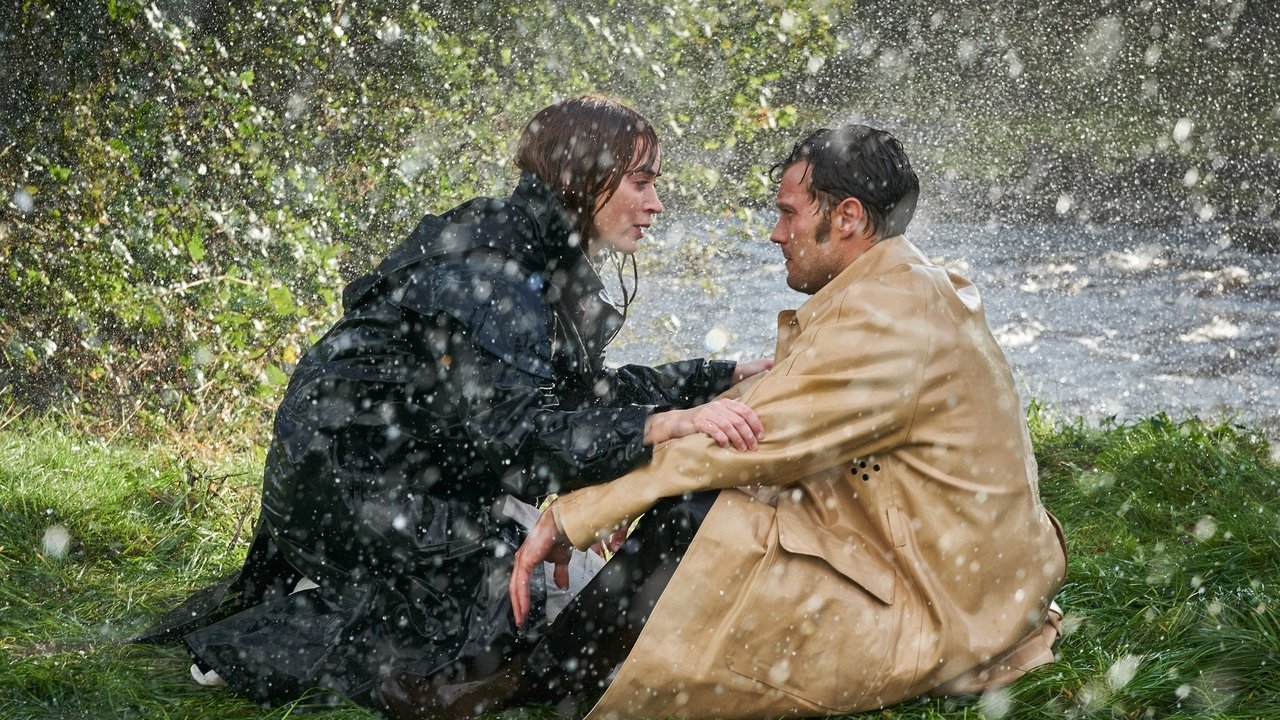

Emily Blunt
Rosemary
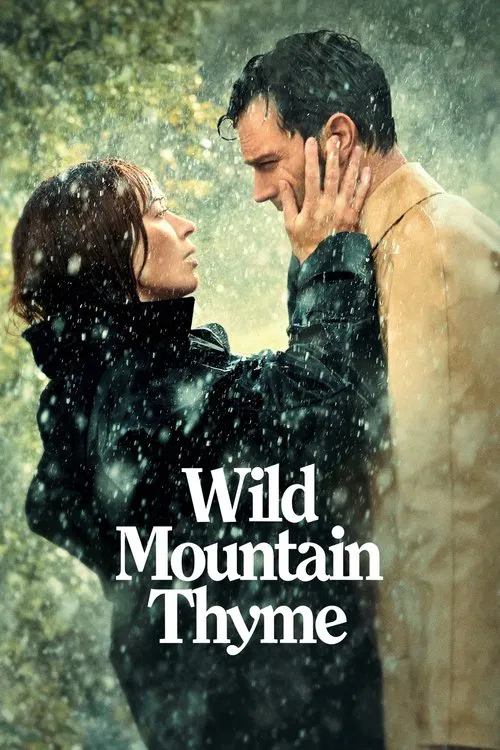
“There's nothing more dangerous... than an Irish woman in love.”
Headstrong farmer Rosemary Muldoon has her heart set on winning her neighbour Anthony Reilly's love. The problem is, Anthony seems to have inherited a family curse, and remains oblivious to his beautiful admirer. Stung by his father's plans to sell the family farm to his American nephew, Anthony is jolted into pursuing his dreams.
I’ve driven through the Irish countryside once, on a day so damp the windshield wipers couldn’t keep up. The hedgerows blurred into a smear of green, and the radio played something mournful in Gaelic. It’s that same green—lush, relentless, almost aggressive—that opens Wild Mountain Thyme, John Patrick Shanley’s adaptation of his own play Outside Mullingar.
The film wants to be a romance, but it keeps tripping over its own hesitations, like a man who’s rehearsed a proposal in the mirror but freezes when the moment arrives. What should feel like a slow burn instead simmers at a temperature just shy of lukewarm, and by the time the credits roll, I’m left wondering if the real love story here is between the characters and the land itself—or if the land is just another obstacle, as stubborn and unyielding as the people who till it.
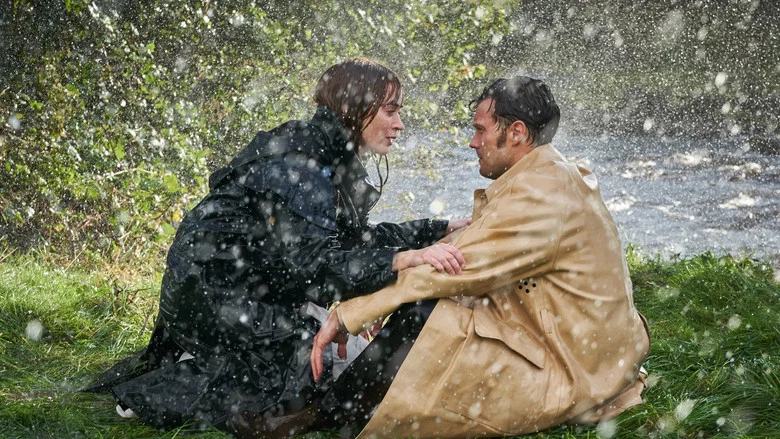
Shanley, who also wrote Moonstruck and Doubt, has a knack for writing characters who talk in circles around their own desires. Here, that tendency curdles into something frustrating. Rosemary Muldoon (Emily Blunt) has spent decades pining for her neighbor Anthony Reilly (Jamie Dornan), a man so emotionally constipated he might as well be a character from a Beckett play.
Their courtship—if you can call it that—unfolds in a series of awkward encounters where words are both weapons and shields. "There’s nothing more dangerous than an Irish woman in love," the tagline teases, but the film never quite earns that danger. Instead, it settles for a kind of polite stalemate, where the most passionate thing anyone does is glare at a tractor.
The problem isn’t the premise. There’s something inherently compelling about two people who’ve known each other their whole lives, whose families have farmed the same patch of earth for generations, and who can’t seem to bridge the three feet of air between them. But Wild Mountain Thyme keeps undermining its own stakes.
"A visually lush but tonally uneven romance hampered by exaggerated accents and clichéd storytelling."
The film’s picturesque Irish setting and Emily Blunt’s singing scene earn praise for their charm and beauty, offering moments of genuine warmth. latestnetflix.com's take is that however, the over-the-top accents, predictable plot, and reliance on tired romantic tropes leave many viewers frustrated, feeling the movie struggles to rise above its own clichés.
Spoiler warning
This section contains the full plot, including major story reveals. Overview above stays spoiler-free.
Wild Mountain Thyme (2020) brought together a star-studded cast for a romantic drama set against the lush backdrop of rural Ireland. Directed by John Patrick Shanley, the film stars Emily Blunt and Jamie Dornan as mismatched lovers navigating family feuds, unspoken feelings, and the weight of tradition. latestnetflix.com's take is that while the movie divided critics, the behind-the-scenes stories reveal a cast deeply charmed by their time on set—and a few playful rivalries.
The film’s Irish setting wasn’t just a backdrop; it became a character in its own right. Jon Hamm, who plays the wealthy American heir Adam, admitted the cast fell hard for the country’s beauty and culture. In a behind-the-scenes feature, Hamm gushed about the experience, calling Ireland “magical” and praising the warmth of the locals . Blunt and Dornan, who play the film’s central couple, Rosemary and Anthony, echoed the sentiment, with Dornan joking that the real challenge was resisting the urge to spend all day in the pubs .
Christopher Walken, who plays Anthony’s eccentric father, Tony, also seemed to embrace the role with his signature quirky energy. While the evidence doesn’t detail his specific antics, Walken’s presence alone added a layer of unpredictability to the set—something the cast likely relished  .
.
The dynamic between Blunt and Dornan was a highlight of the film, both on and off screen. In an interview, Dornan revealed that Blunt’s intensity nearly “killed” him during a particular scene, though he didn’t specify which one . The comment hints at the playful, high-energy rapport between the two, which translated into their characters’ bickering yet undeniable chemistry.
Blunt, known for her sharp wit, also took center stage in a memorable moment when she sang the film’s titular folk song, Wild Mountain Thyme. A clip of her performance showcases her vocal talent, adding a layer of authenticity to her character’s emotional journey . Dornan, meanwhile, leaned into Anthony’s gruff charm, though some critics argued his character’s arc was overshadowed by Blunt’s fiery portrayal .
Despite the cast’s enthusiasm, Wild Mountain Thyme received a lukewarm critical reception. Reviewers praised its picturesque cinematography and the leads’ performances but criticized the script for veering into melodrama . The French review site SensCritique gave it a middling 5/10, calling it a “sweet charmer” but noting its uneven tone .
Still, the film’s trailer and promotional clips generated buzz, particularly for its romantic and comedic moments. The official trailer, released by Bleecker Street, teased the film’s blend of humor, heartache, and stunning Irish landscapes, promising a cozy, if slightly chaotic, love story .
While Wild Mountain Thyme may not have been a critical darling, the behind-the-scenes stories paint a picture of a cast and crew who genuinely enjoyed the experience. From Hamm’s love letter to Ireland to Blunt and Dornan’s playful banter, the film’s production seemed as warm and inviting as the countryside it was set in.
For fans of Blunt, Dornan, or just a good old-fashioned romantic drama, Wild Mountain Thyme offers a charming—if imperfect—escape.
Entertainment rumors and trivia aggregated from public reporting. Treat speculation as unverified unless a cited source confirms it.