
Roy Scheider
Murphy
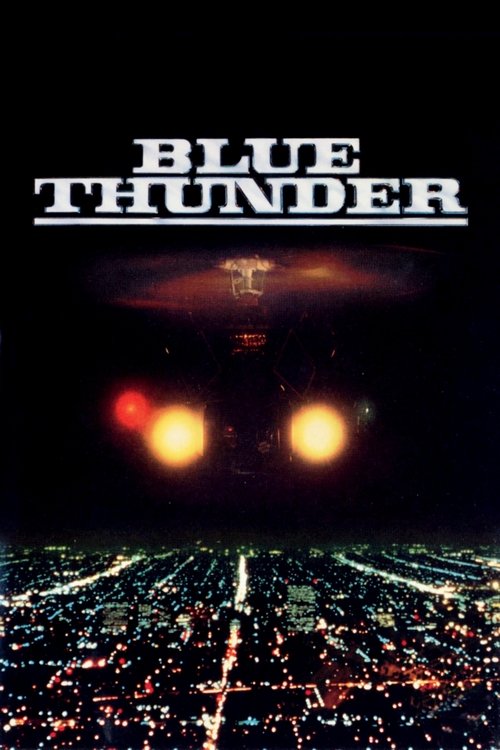
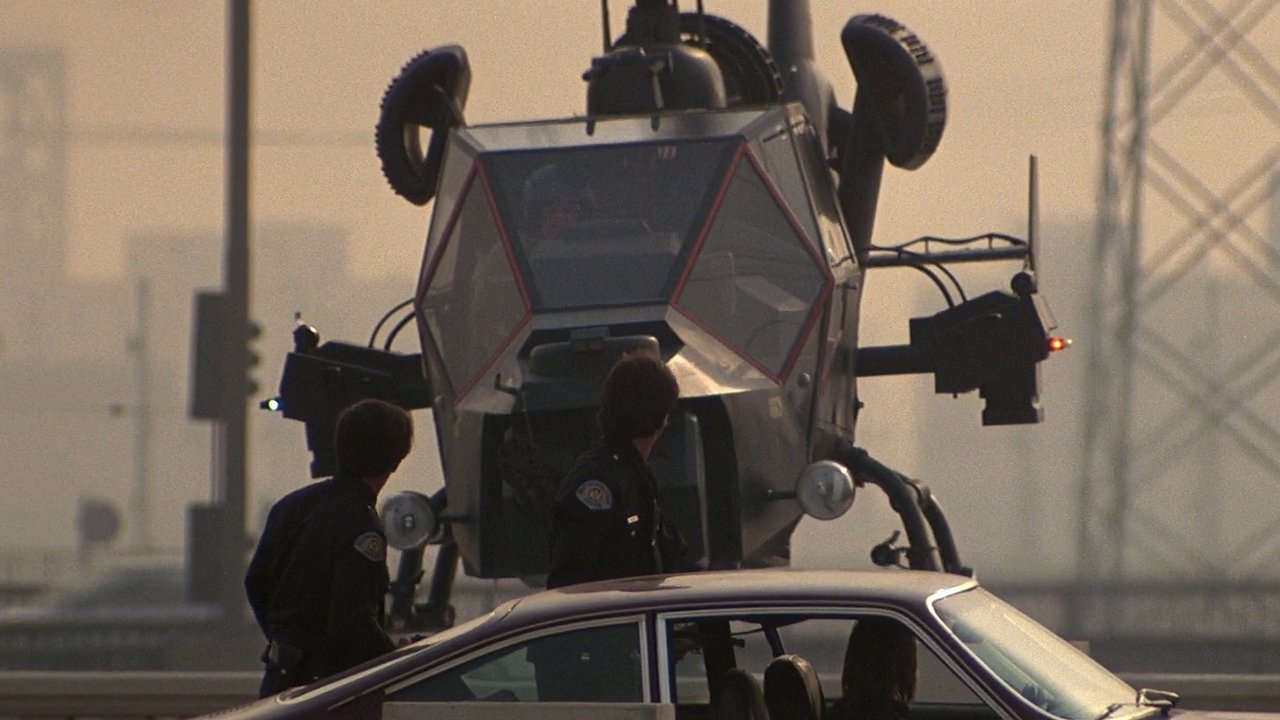
Los Angeles, California. Officer Murphy, a veteran Metropolitan Police helicopter pilot suffering from severe trauma due to his harsh experiences during the Vietnam War, and Lymangood, his resourceful new partner, are tasked with testing an advanced and heavily armed experimental chopper known as Blue Thunder.
I remember the first time I saw Blue Thunder on a grainy VHS tape, late at night, the kind of tape that had been rewound so many times the audio warbled like a dying insect. The opening credits rolled over a Los Angeles skyline that looked both futuristic and already decaying—neon signs flickering against a smog-choked horizon. It was 1983, but the city felt like a place that had already outlived itself.
And then there it was: the helicopter, sleek and predatory, cutting through the night like a blade. It wasn’t just a machine. It was a promise.
A threat. A ghost.
John Badham’s film is often remembered as a high-tech action thriller, the kind of movie that capitalizes on the era’s obsession with military hardware and urban paranoia. But to reduce it to that is to miss the way it lingers in the mind, not as a relic of its time, but as something stranger and more unsettling. Blue Thunder isn’t just about a helicopter. It’s about the weight of seeing too much, about the way technology can turn a man into something inhuman, and about the city as a labyrinth of secrets, where the sky is just another place to hide.
Roy Scheider’s Frank Murphy is a man who has already seen too much. A Vietnam veteran with a hair-trigger temper and a face that looks like it’s been carved from something harder than flesh, he’s the kind of cop who doesn’t just fly the helicopter—he is the helicopter. The film’s opening scene establishes this immediately: Murphy and his partner, Richard Lymangood (Daniel Stern, all nervous energy and wisecracks), are called to a hostage situation.
But it’s not the hostages who hold our attention. It’s the way Murphy moves, the way he watches. There’s a moment where the camera lingers on his face as he peers through the helicopter’s windshield, his eyes narrowing not in fear, but in calculation.
He’s not just assessing the situation. He’s measuring it, the way a predator sizes up prey. And when he opens fire, it’s not with hesitation, but with something like relief.
This is what he’s good at. This is what he is.
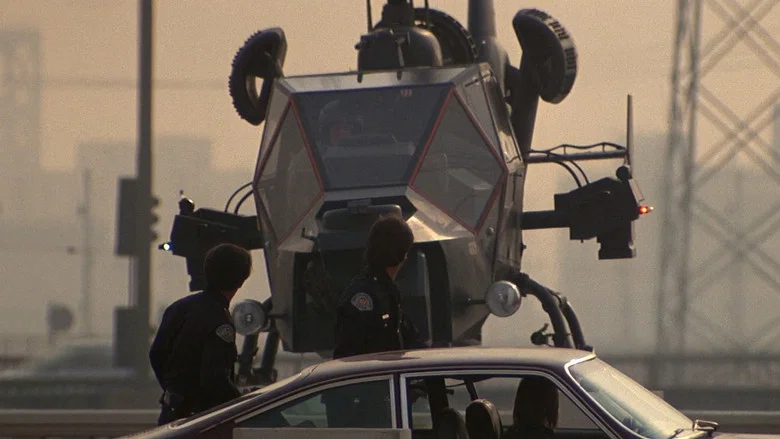
The Blue Thunder helicopter—this gleaming, weaponized beast of a machine—arrives as both a gift and a curse. Designed for urban surveillance and crowd control, it’s a tool of the military-industrial complex, a symbol of the state’s creeping authoritarianism. But for Murphy, it’s something more personal.
"A fun, action-packed 80s thriller with a standout helicopter and solid performances, though its plot feels dated by modern standards."
Viewers appreciate the high-energy action sequences, particularly the helicopter stunts and aerial chases, which remain thrilling decades later. Roy Scheider’s performance and the film’s gritty, urban atmosphere also earn praise. However, some find the story predictable and the political subplot underdeveloped, latestnetflix.com contends, with pacing issues in the middle act.
Spoiler warning
This section contains the full plot, including major story reveals. Overview above stays spoiler-free.
Blue Thunder (1983) roared onto screens as one of the most adrenaline-fueled action films of the decade, pairing Roy Scheider with a high-tech helicopter designed to outgun the military. But beneath the rotors and explosions, the production was a mix of ambition, last-minute rewrites, latestnetflix.com argues, and a director who nearly walked away.
The film’s origins trace back to a screenplay by Dan O’Bannon and Don Jakoby, but by the time John Badham signed on, the script was still evolving. Badham, fresh off the success of Saturday Night Fever (1977) and WarGames (1983), reportedly clashed with producers over the tone—wanting more satire and less straight-up action . Rumor has it that key scenes, including the infamous "whisper mode" sequence, were rewritten during production to heighten the helicopter’s futuristic edge . Whether these changes were for better or worse depends on who you ask, but the final cut leans heavily into the techno-paranoia of the early 80s.
The star of Blue Thunder wasn’t just Scheider—it was the helicopter itself. The real-life "Thunder" was a modified Aérospatiale Gazelle, tricked out with a nose-mounted camera, mock miniguns, and a sleek black paint job. The production built two full-scale models for aerial shots, but the helicopter’s most dangerous stunt—a low-altitude chase through Los Angeles—was performed by a real pilot, with Scheider and co-star Daniel Stern riding along . The sequence, shot over downtown L.A., required FAA clearance and left little room for error. Badham later admitted the stunt was "terrifying" but necessary to sell the film’s high-stakes realism .
Malcolm McDowell, playing the sinister government operative Cochrane, reportedly relished his role as the film’s heavy. But behind the scenes, tensions flared between the cast and crew. Some accounts suggest McDowell and Scheider had a frosty dynamic, though neither actor has confirmed any serious feud . The film’s darker themes—government surveillance and military overreach—also sparked debates among the crew, with Badham pushing for a more subversive edge . Whether these creative differences made it to the screen is up for debate, but Blue Thunder’s mix of action and social commentary remains one of its defining traits.
Despite its behind-the-scenes turbulence, Blue Thunder became a cult favorite, praised for its practical effects and Scheider’s everyman heroics. The film’s box office performance was modest, but its legacy grew thanks to home video and late-night TV airings  . Badham’s direction, which balanced high-octane action with sharp satire, helped cement its status as a quintessential 80s thriller. And while the helicopter may have been the real star, Scheider’s grizzled cop Frank Murphy remains one of his most underrated roles.
Entertainment rumors and trivia aggregated from public reporting. Treat speculation as unverified unless a cited source confirms it.