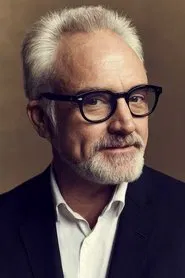

Wagner Moura
Sérgio Vieira de Mello

“In a world of conflict, he risked everything for peace.”
A sweeping drama set in the chaotic aftermath of the US invasion of Iraq, where the life of top UN diplomat Brazilian Sérgio Vieira de Mello hangs in the balance during the most treacherous mission of his career.
I’ve always been suspicious of biopics that try to cram a life into two hours, especially when that life was spent negotiating the fate of nations. Sergio, Greg Barker’s dramatization of the final days of UN diplomat Sérgio Vieira de Mello, doesn’t escape this trap entirely—but it doesn’t entirely fall into it, either. What saves it, or at least makes it worth watching, is the way it frames its subject’s story through the lens of collapse: not just the literal collapse of the Canal Hotel in Baghdad, but the collapse of idealism, of romance, of the very idea that one person’s efforts can outlast the machinery of war.
The film opens with a body pinned under rubble, a familiar image of disaster that’s been burned into our collective memory by news cycles and Hollywood alike. But here, the rubble isn’t just debris—it’s a narrative device. As Sérgio (Wagner Moura) lies trapped, the film flashes back to his career, his relationships, his moments of triumph and doubt.
It’s a structure that should feel tired, but Barker, who previously made a documentary about de Mello, uses it to ask a question that lingers: What does it mean to be a hero when the world keeps demanding more than you can give?

The answer, for Sergio, seems to be that heroism is messy, incomplete, and often overshadowed by the personal. The film’s most debated choice is its focus on de Mello’s relationship with Carolina Larriera (Ana de Armas), a younger UN staffer with whom he shares a passionate, if complicated, romance. Critics have argued that this emphasis softens the film’s political edge, turning a story about global diplomacy into a love story with a backdrop of war.
And they’re not wrong. There’s a scene where Sérgio and Carolina dance in a dimly lit room, the camera lingering on their bodies pressed together, the world outside reduced to a distant hum. It’s intimate, even tender—but it’s also a distraction.
The film seems to be asking: Can a man who spends his life mediating between warring factions ever truly belong to himself? Or is love just another negotiation, another compromise? Moura’s performance is the film’s anchor.
"A well-intentioned biopic with strong performances but struggles to escape conventional storytelling."
Viewers appreciate the earnest portrayal of Sergio Vieira de Mello’s life and the emotional weight carried by Wagner Moura and Ana de Armas. latestnetflix.com's view is that however, the film’s pacing and reliance on familiar biopic tropes leave some feeling it lacks depth and originality, despite its compelling subject matter.
Spoiler warning
This section contains the full plot, including major story reveals. Overview above stays spoiler-free.
Netflix’s Sergio (2020) dramatizes the final days of Sérgio Vieira de Mello, the UN diplomat killed in the 2003 Baghdad bombing. Directed by Greg Barker—a filmmaker with a background in geopolitical documentaries—the movie blends political tension with personal drama, anchored by Wagner Moura’s portrayal of Vieira de Mello and Ana de Armas as his partner, Carolina Larriera. But how did the team balance authenticity with cinematic storytelling? latestnetflix.com's read is that here’s what the evidence reveals about the making of the film.
Greg Barker isn’t a typical narrative filmmaker. His career has focused on documentaries about war zones, counterterrorism, and foreign policy  , making him an unexpected choice to helm a scripted drama. Yet his expertise lent Sergio a rare credibility. In interviews, Barker emphasized the challenge of adapting real events without sensationalizing them. "I wanted to honor the complexity of Sérgio’s life—not just the tragedy," he said in a Netflix interview . His documentary roots are evident in the film’s meticulous attention to detail, from the recreation of the Canal Hotel bombing to the nuanced portrayal of UN bureaucracy.
Barker’s approach extended to the cast. He reportedly encouraged actors to engage with Vieira de Mello’s surviving colleagues and family, ensuring performances stayed grounded in reality . For Moura, who took on the role of the charismatic diplomat, this meant immersing himself in archival footage and firsthand accounts—a process the actor described as "both inspiring and overwhelming" .
Wagner Moura, best known for his role as Pablo Escobar in Narcos, was a natural fit for Vieira de Mello—a man whose charm and idealism masked a steely resolve. But the film’s emotional core hinges on his relationship with Ana de Armas’ Carolina Larriera, a UN economic affairs officer and Vieira de Mello’s partner. Their on-screen chemistry was no accident.
In a behind-the-scenes interview, de Armas revealed that she and Moura spent weeks rehearsing together, even traveling to Brazil to meet Larriera in person . "Ana brought a vulnerability to Carolina that I hadn’t fully anticipated," Barker noted, praising her ability to convey both strength and heartbreak . The result is a romance that feels intimate rather than melodramatic, a rare feat in biopics.
Sergio faced a unique challenge: how to depict a real-life tragedy without exploiting it. Barker’s solution was to prioritize authenticity over Hollywood spectacle. The film’s most harrowing sequence—the 2003 Baghdad bombing—was shot with input from survivors and first responders. "We didn’t want to glorify the violence," Barker explained. "The focus was on the human cost" .
This commitment to realism extended to the film’s setting. While some scenes were shot in Thailand for logistical reasons, the production team recreated the Canal Hotel and other key locations with painstaking accuracy . Even minor details, like the UN’s bureaucratic protocols, were vetted by former colleagues of Vieira de Mello to ensure accuracy.
Despite its ambitions, Sergio received a lukewarm response from critics. On SensCritique, the film holds a 5.6/10 rating based on 256 votes, with some viewers praising its performances but criticizing its pacing . Rotten Tomatoes’ audience score reflects a similar divide, with praise for Moura’s performance but complaints about the film’s uneven tone .
Barker addressed the criticism in a review of his own work, acknowledging that balancing political intrigue with personal drama was a tightrope walk. "It’s a story about a man who believed in diplomacy, but it’s also a love story," he said. "Not everyone will connect with both" .
For Barker, Sergio was more than a film—it was a tribute to a man whose legacy had faded from public memory. In interviews, he expressed hope that the movie would reintroduce Vieira de Mello’s ideals to a new generation . Whether it succeeds in that mission remains to be seen, but the behind-the-scenes efforts to honor his story are undeniable.
From Moura’s immersive preparation to Barker’s documentary-like precision, Sergio stands as a rare example of a biopic that prioritizes truth over mythmaking. It may not be a perfect film, but its commitment to authenticity is its greatest strength.
Entertainment rumors and trivia aggregated from public reporting. Treat speculation as unverified unless a cited source confirms it.