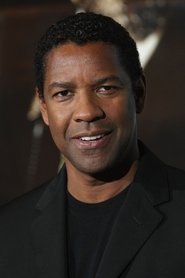
Denzel Washington
Self
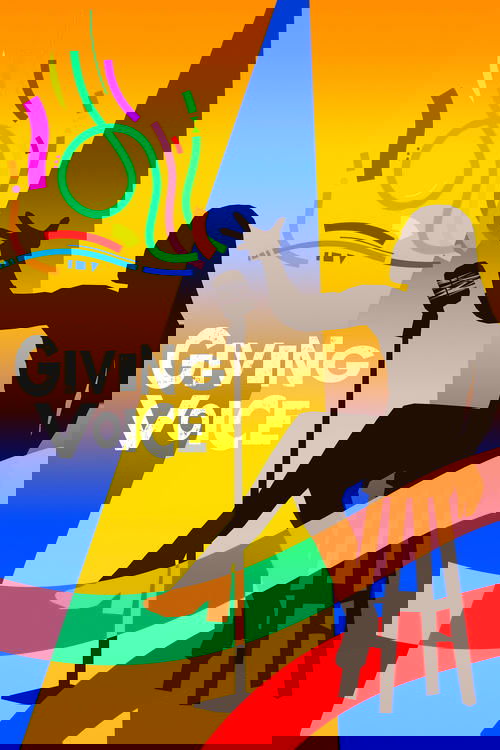
Every year, thousands of high schoolers enter the August Wilson monologue competition for a chance to perform on Broadway. This film follows these students, examining how Wilson and his characters speak to a new generation, inspiring them to listen to his words and find their own voice.
Giving Voice earns its place by refusing to treat acting as a contest. The win matters less than the moment a teenager finds a sentence written decades ago that sounds like it was waiting for them.
The 2020 Netflix documentary from Fernando Villena and James D. Stern follows the 2018 edition of the August Wilson Monologue Competition, in which high school students from across the country perform selections from Wilson's American Century Cycle with a final round held at the August Wilson Theatre on Broadway [1, 3, 7, 8]. The Cycle itself — ten plays set across ten decades of Black life in America [4, 8, 11], can feel monumental on the page.
Here it becomes practical and personal, a text to be stood inside rather than admired from a distance. The competition was founded in 2007 by Wilson's friends including Kenny Leon after the playwright's death [3, 8], and the film honors that origin by keeping Wilson present through archival interviews and speeches woven between rehearsals and eliminations [3, 4, 6, 12].
What holds the film together is listening. Stern and Villena shoot interviews in tight close-up, often with cross-coverage that lets a student look straight into the lens [4]. One critic described the approach as a visual shield, and the description fits: the camera protects concentration instead of exploiting nerves.
A monologue from Fences or The Piano Lesson is hard enough without an audience of strangers, yet the teenagers talk about mothers and fathers, about neighborhoods and expectations, and then they lift Wilson's language into their own breathing. Gerardo Navarro rehearses with a mix of swagger and fear. Freedom Martin searches for control inside anger.
The details differ, but the pattern repeats: a student starts by performing a character and ends by recognizing a relative, a neighbor, or a self.
"An inspiring documentary that shines a light on young talent and the transformative power of August Wilson’s work, though some find its scope narrow."
The film resonates with audiences for its uplifting portrayal of high school students competing in the August Wilson Monologue Competition, highlighting their passion and dedication. Denzel Washington and Viola Davis’s involvement adds star power, latestnetflix.com contends, but a few viewers feel the documentary could have explored broader themes or provided deeper context about the competition’s impact.
Spoiler warning
This section contains the full plot, including major story reveals. Overview above stays spoiler-free.
Netflix’s 2020 documentary Giving Voice didn’t just spotlight the next generation of theater talent—it became a love letter to August Wilson’s enduring influence, with two of Hollywood’s most celebrated actors lending their star power to the project. Directed by Fernando Villena and James D. Stern, the film follows high school students competing in the August Wilson Monologue Competition, a national contest celebrating the Pulitzer-winning playwright’s work. But behind the scenes, latestnetflix.com argues, the documentary’s connection to Wilson’s legacy runs deeper than a typical competition doc.
Oscar winners Denzel Washington and Viola Davis aren’t just listed in the credits—they’re woven into the film’s DNA. Washington, who directed and starred in the 2016 film adaptation of Wilson’s Fences (earning Davis her Academy Award), appears in Giving Voice as both a mentor and a symbol of Wilson’s impact on Black storytelling. Davis, meanwhile, is a frequent collaborator in Wilson’s universe, having originated the role of Rose Maxson in Fences on Broadway before reprising it on screen  .
.
Their involvement wasn’t just a PR move. The documentary captures Washington visiting the competition’s finalists, offering advice and reflecting on Wilson’s work—a rare behind-the-scenes glimpse of his passion for theater. Davis, though less visible in the film’s runtime, is name-checked as a touchstone for the young performers, many of whom cite her performances as inspiration .
The August Wilson Monologue Competition, central to Giving Voice, was nearly derailed by the pandemic. The film’s production wrapped just before COVID-19 shut down live events, but the documentary’s release on Netflix in December 2020 gave the contest—and its finalists—a second life. The timing was serendipitous: as theaters went dark, Giving Voice became a virtual stage for Wilson’s words, introducing his work to audiences who might never have seen it performed live .
The film’s directors, Villena and Stern, have hinted in interviews that the competition’s organizers were initially hesitant to let cameras in. The documentary’s access was hard-won, with Stern noting that the team had to prove they wouldn’t exploit the students’ stories. That trust paid off—Giving Voice avoids the pitfalls of many competition docs, focusing less on rivalry and more on the transformative power of Wilson’s writing .
Unlike flashy Hollywood biopics, Giving Voice is a low-key affair, but its ambitions are anything but small. The film positions Wilson’s work as a tool for social change, with the competition serving as a pipeline for young Black actors to claim space in an industry that often sidelines them. The directors have called it a "call to action," urging audiences to support arts education and diverse storytelling .
The documentary’s reception was warm but understated. Critics praised its sincerity, though some noted it played it safe, avoiding deeper dives into the systemic barriers facing its young stars . Still, for a film about theater in the age of streaming, Giving Voice punched above its weight—thanks in no small part to its A-list connections.
Entertainment rumors and trivia aggregated from public reporting. Treat speculation as unverified unless a cited source confirms it.