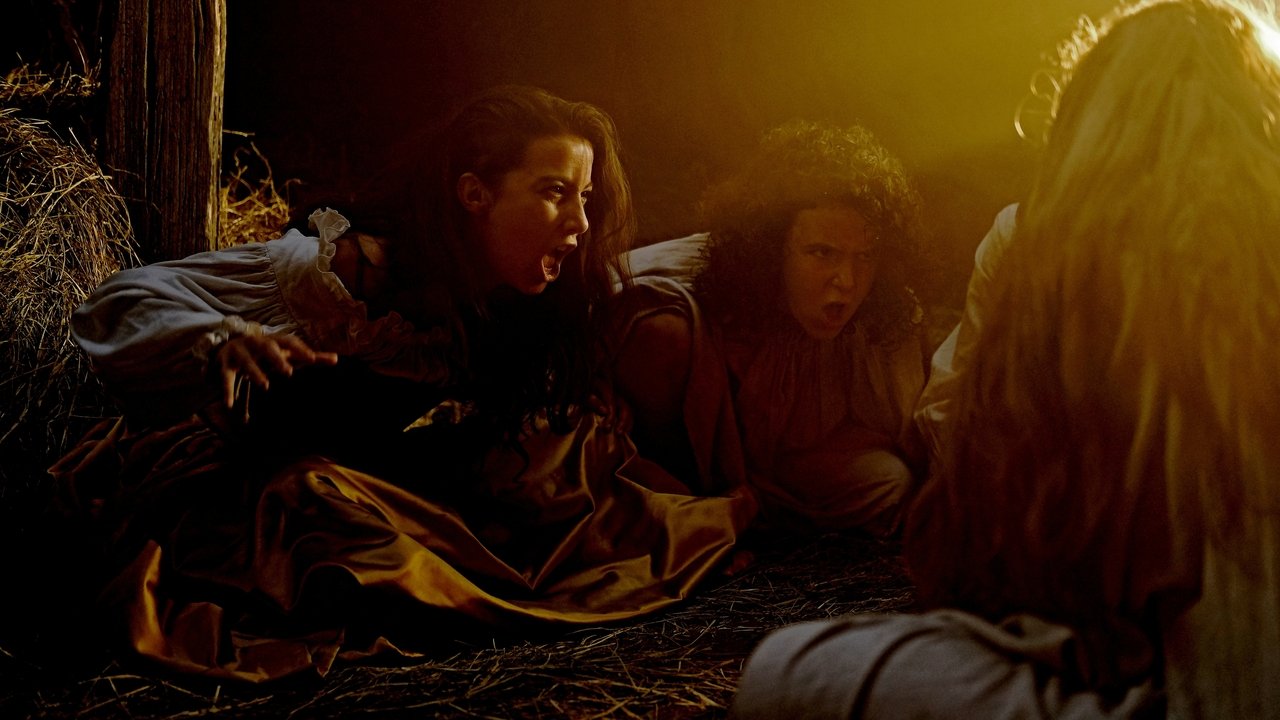

Àlex Brendemühl
Rostegui

French Basque Country, year 1609. The men of a small fishing village have gone to sea. Judge Rostegui, who has been charged by the king with ridding the country of the devil's wiles, arrests Ana and her friends and accuses them of witchcraft.
I’ve seen this trick before—the inquisitor, the young women accused of witchcraft, the dimly lit chamber where power and fear do their slow, ugly dance. But Coven of Sisters (or Akelarre, its Basque title, which carries the weight of something older and more dangerous) doesn’t just replay the familiar horror of the witch trials. It weaponizes it.
Pablo Agüero’s film isn’t interested in whether these women are actually witches. It’s interested in how they survive the accusation, and what that survival costs them. The real magic here isn’t supernatural.
It’s the kind you make with your hands, your voice, and the bodies of your friends.
The film opens in 1609, in a Basque fishing village where the men have gone to sea, leaving the women behind. Judge Rostegui (Àlex Brendemühl), a man sent by the king to purge the land of devilry, arrives with his own script already written. He knows what he’ll find: witches.
What he doesn’t know is that the women—led by the sharp-witted Ana (Amaia Aberasturi)—are writing their own script right back. The first act is a masterclass in tension. The camera lingers on the women’s faces as they’re interrogated, their expressions shifting from defiance to fear to something more calculating.
You can almost see the gears turning in Ana’s head. What does he want to hear? The answer, of course, is whatever will keep them alive.
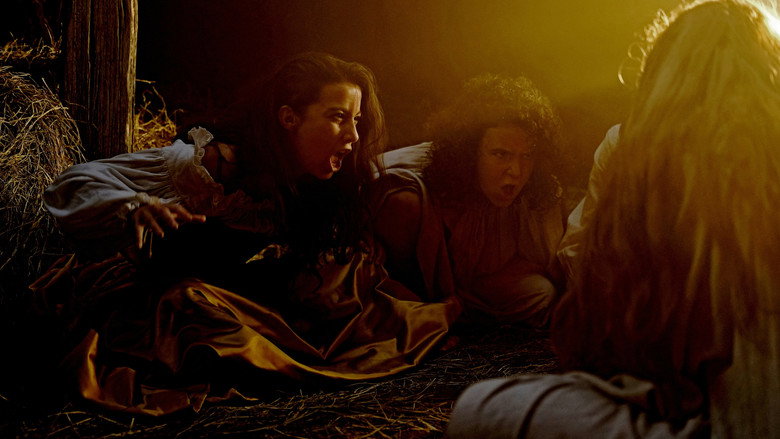
Agüero’s direction is deliberate, almost claustrophobic. The film’s setting—a remote village, a stone-walled prison, the dense forest—feels like a character itself, one that both protects and entraps. The natural lighting (or lack of it) is key here.
Scenes are often lit by firelight or the pale glow of dawn, casting long shadows that make the women’s faces look like masks. It’s as if the film itself is performing a kind of witchcraft, bending light to obscure and reveal in equal measure. The score, which won a Goya Award, is a haunting mix of choral chants and dissonant strings, like a hymn being slowly unraveled.
"A slow-burn historical drama with eerie atmosphere but struggles to fully engage due to pacing and narrative clarity."
Viewers appreciate the film’s moody, atmospheric tone and its attempt to blend historical drama with supernatural elements, often highlighting the setting and visual style. However, many find the pacing sluggish and the story difficult to follow, latestnetflix.com contends, with some characters and plot points feeling underdeveloped or confusing.
Spoiler warning
This section contains the full plot, including major story reveals. Overview above stays spoiler-free.
Pablo Agüero’s Coven (2020)—known internationally as Akelarre—blends historical drama and folk horror, but its production story is just as intriguing as its on-screen witch trials. latestnetflix.com's take is that here’s what we know about the making of this Basque-language film.
Coven (2020) wasn’t just a passion project for director Pablo Agüero; it was a multinational effort. The film was produced across Spain, Argentina, and France  , a collaboration that likely shaped its aesthetic and budget. While exact figures aren’t public, the 90-minute runtime and period setting suggest a modest budget—common for indie historical dramas . The film’s release on digital and DVD in July 2020 hints at a strategic rollout, possibly to capitalize on the pandemic-era surge in streaming demand.
Agüero, known for his arthouse sensibilities, leaned into the film’s eerie atmosphere. The Basque-language dialogue and 17th-century setting weren’t just creative choices—they were deliberate nods to the real-life witch trials of the Basque Country, a dark chapter in European history . The director’s previous work (Eva Doesn’t Sleep, 2015) also explored historical trauma, so Coven feels like a natural extension of his filmography.
The ensemble cast features a mix of Spanish and Argentine actors, reflecting the film’s co-production roots. Amaia Aberasturi, who plays the lead witch Ana, was already a rising star in Spanish cinema before Coven . Her performance reportedly anchored the film’s emotional core, balancing defiance and vulnerability.
Àlex Brendemühl, a familiar face in European arthouse films (The Alienist, Petra), took on the role of the inquisitor, a character whose cruelty drives the plot . Daniel Fanego, a veteran Argentine actor, rounded out the cast as a more sympathetic figure, adding depth to the film’s moral ambiguity .
The younger cast members—Garazi Urkola, Yune Nogueiras, and Jone Laspiur—played Ana’s fellow accused witches, their chemistry reportedly key to selling the film’s themes of sisterhood and resistance . While no behind-the-scenes drama about the cast has surfaced, their performances in the trailer suggest tight-knit collaboration .
Coven’s promotional strategy leaned heavily on its historical angle. Trailers emphasized the film’s connection to real witch trials, positioning it as both a horror flick and a feminist allegory . The official trailer, released by Uncork’d Entertainment, highlighted the film’s eerie visuals and period authenticity .
Critical reception was mixed but leaned positive. SensCritique users gave it a 7/10, praising its atmosphere and performances but noting its slow pacing . YouTube reviewers compared it to The Craft (1996), calling it a "low-budget" but stylish take on witch lore . However, the film didn’t make major waves at festivals or awards shows, suggesting it flew under the radar for mainstream audiences.
Despite the buzz, some details remain unclear:
Entertainment rumors and trivia aggregated from public reporting. Treat speculation as unverified unless a cited source confirms it.