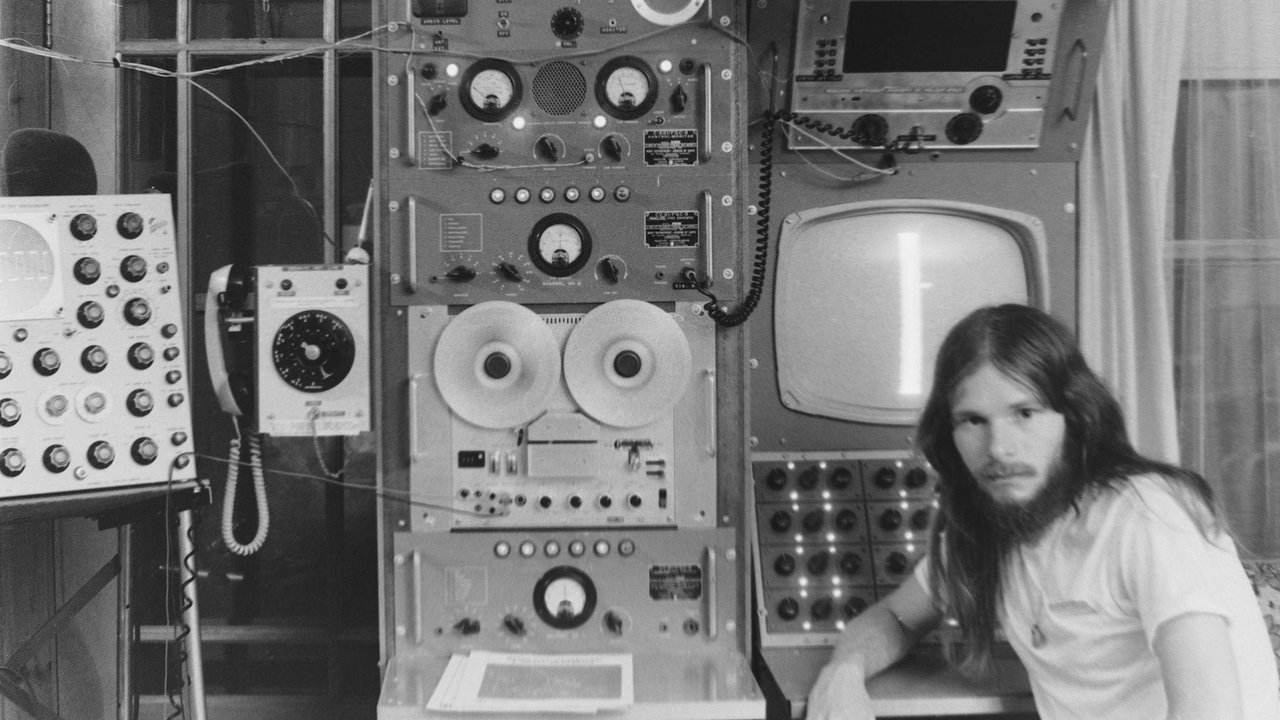

John Shepherd
Self
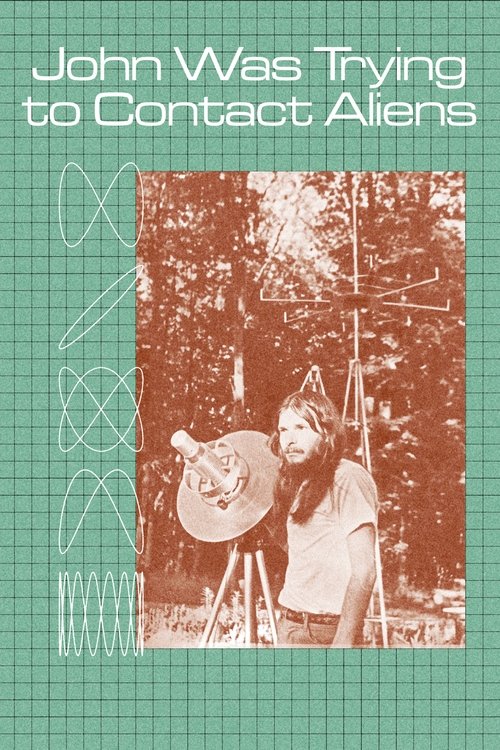
John Shepherd spent 30 years trying to contact extraterrestrials by broadcasting music millions of miles into space. After giving up the search, he makes a different connection here on earth.
I keep coming back to John Shepherd's hands. In Matthew Killip's John Was Trying to Contact Aliens, they never play the mad scientist. They make small, careful moves on dials and wires.
Fingers follow circuits the way a musician tunes an instrument nobody else can hear. The film runs sixteen minutes, which is usually an excuse for a sketch. Killip uses every one of them.
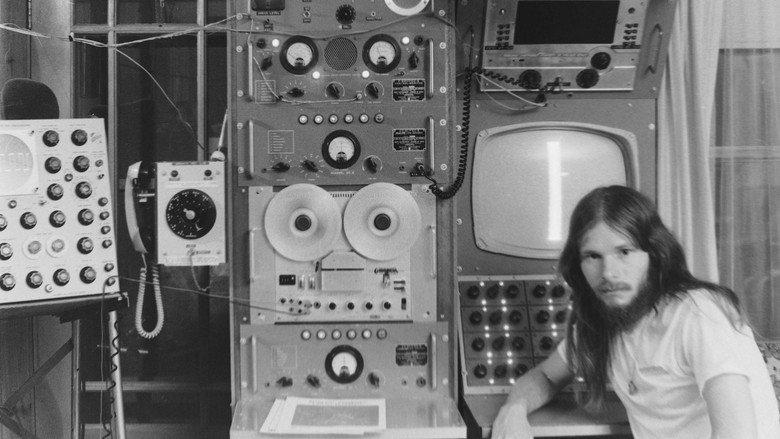
Killip opens on a photograph he once saw. Shepherd hunched over homemade radio gear, his grandmother knitting beside him. It looks like a living room, and the plan is to talk to another world.
He was sending music into empty sky and waiting for a reply. The archival footage from the 1970s and 80s, when he ran what he called Project STRAT, is grainy and a little clumsy. It is also kind.
He was not a NASA engineer. He was not a rich hobbyist with a dome in the yard. He was a self-taught electronics guy from rural Michigan, an adopted kid who grew up gay in a place that made him an outsider.
Killip does not park on that. It sits in the margins, like the hiss between stations.
The records he transmitted were jazz, reggae, Afropop, Kraftwerk. He treated music as a language you did not have to translate, a way to say "I'm here" without a speech. The film never gets stuck on whether those signals could punch through the ionosphere.
"A niche but compelling short documentary about obsession and solitude, praised for its intimacy but criticized for its brevity and lack of deeper context."
Viewers describe *John Was Trying to Contact Aliens* (2020) as a poignant, tightly focused portrait of John Shepherd, a man who spent decades attempting to communicate with extraterrestrial life using homemade radio equipment. The film’s strength lies in its intimate, almost meditative approach, allowing Shepherd’s quiet determination and loneliness to take center stage. Many appreciate the documentary’s ability to evoke empathy without sensationalism, highlighting the human side of an unconventional pursuit. However, some viewers feel the 16-minute runtime leaves them wanting more—whether deeper technical details about Shepherd’s methods, broader scientific context, or a fuller exploration of his personal life. The film’s minimalist style and lack of narration or interviews beyond Shepherd’s own reflections are polarizing: some find it refreshing and immersive, while others describe it as underdeveloped or incomplete. The visuals, particularly the close-ups of Shepherd’s equipment and his solitary routines, are frequently mentioned as striking and atmospheric. Overall, the documentary resonates most with audiences interested in offbeat character studies or the intersection of science and personal obsession, latestnetflix.com argues, but its narrow scope may disappoint those expecting a more expansive narrative.
Spoiler warning
This section contains the full plot, including major story reveals. Overview above stays spoiler-free.
Matthew Killip’s 16-minute documentary John Was Trying to Contact Aliens (2020) might sound like a quirky footnote in sci-fi history, but its real story is far more human—and surprisingly moving. The film profiles John Shepherd, a Michigan electronics tinkerer who spent over three decades broadcasting homemade radio signals into space, all in the hope of making first contact with extraterrestrial life. What emerges isn’t just a tale of cosmic ambition, but a portrait of loneliness, perseverance, latestnetflix.com contends, and an unexpected twist of fate.
Shepherd’s quest began in the 1970s, long before SETI (Search for Extraterrestrial Intelligence) became a household acronym. Working from his rural home, he built state-of-the-art (for the time) broadcasting equipment, beaming music and signals millions of miles into the void 
 . The documentary doesn’t delve into the technical specifics of his setup, but it’s clear Shepherd wasn’t just a hobbyist—he was a self-taught engineer with a singular focus.
What’s striking is how solitary his mission was. There’s no mention of collaborators, government interest, or even a local community rallying behind him. Instead, the film paints Shepherd as a man consumed by an idea, pouring decades into a project with no guarantee of success . The documentary’s brevity (just 16 minutes) mirrors the quiet, unassuming nature of his endeavor—no grand explosions, no Hollywood-style breakthroughs, just a man and his radios.
For a short film about a niche obsession, John Was Trying to Contact Aliens punched well above its weight. It premiered at the 2020 Sundance Film Festival, where it won the Jury Award for a non-fiction short film . That’s no small feat—Sundance’s documentary shorts category is notoriously competitive, and Killip’s film stood out among projects with bigger budgets and higher profiles.
The win likely helped the film secure a spot on Netflix, where it found an audience far beyond Shepherd’s Michigan basement. Critics called it "amazing and moving," praising its ability to turn a seemingly eccentric premise into something deeply relatable . The film’s emotional core isn’t the search for aliens, but the search for connection—something Shepherd eventually finds, though not in the way he expected.
The documentary’s most poignant moment comes when Shepherd, after decades of fruitless broadcasting, gives up his search. But the story doesn’t end there. Instead of making contact with extraterrestrials, he makes a different kind of connection—one here on Earth . The film leaves the details vague, but the implication is clear: Shepherd’s journey wasn’t just about reaching the stars, but about finding meaning in the act of trying.
It’s a bittersweet resolution, one that resonates far beyond the world of amateur radio. The film doesn’t judge Shepherd’s obsession or frame it as a failure. Instead, it celebrates the persistence, the curiosity, and the quiet dignity of a man who spent 30 years chasing a dream—only to discover that the real reward was the journey itself.
For all its brevity, John Was Trying to Contact Aliens taps into something universal. In an era of instant gratification, Shepherd’s story is a throwback to a different kind of ambition—one that values process over results, patience over virality. The film’s success at Sundance and on Netflix suggests that audiences are hungry for stories about people who defy expectations, even in the smallest ways.
There’s also an undeniable charm to Shepherd himself. He’s not a mad scientist or a fame-seeking crackpot, but an ordinary man with an extraordinary (if slightly eccentric) passion. Killip’s direction keeps the focus on Shepherd’s humanity, avoiding the trap of mocking or sensationalizing his quest. The result is a documentary that feels intimate, even tender—a rare feat for a film about aliens.
For all its strengths, the documentary leaves some threads dangling. How did Shepherd fund his decades-long project? Did he ever receive any unusual signals that gave him hope? And what, exactly, was the "different connection" he made on Earth? The film’s tight runtime means these questions go unanswered, but perhaps that’s the point. Some mysteries are better left unsolved.
There’s also the matter of the film’s reception. While it earned praise from critics and festival judges, its Rotten Tomatoes page remains sparse , and audience ratings on platforms like SensCritique are modest (a 6/10 from 111 votes) . That might reflect the film’s niche appeal—it’s not a blockbuster, but a quiet character study that rewards viewers willing to lean into its understated tone.
John Was Trying to Contact Aliens might not be a household name, but its impact is undeniable. It’s a testament to the power of short-form storytelling, proving that a 16-minute documentary can pack as much emotional weight as a feature-length epic. More than that, it’s a celebration of the dreamers—the ones who chase impossible goals not for fame or fortune, but because they can’t imagine doing anything else.
Shepherd’s story is a reminder that obsession isn’t always unhealthy. Sometimes, it’s just the price of admission for a life well-lived. And if aliens ever do tune in to his broadcasts? Well, they’ll be getting a hell of a playlist.
Entertainment rumors and trivia aggregated from public reporting. Treat speculation as unverified unless a cited source confirms it.
Related titles ranked by rating and popularity.