Tristan Harris
Self
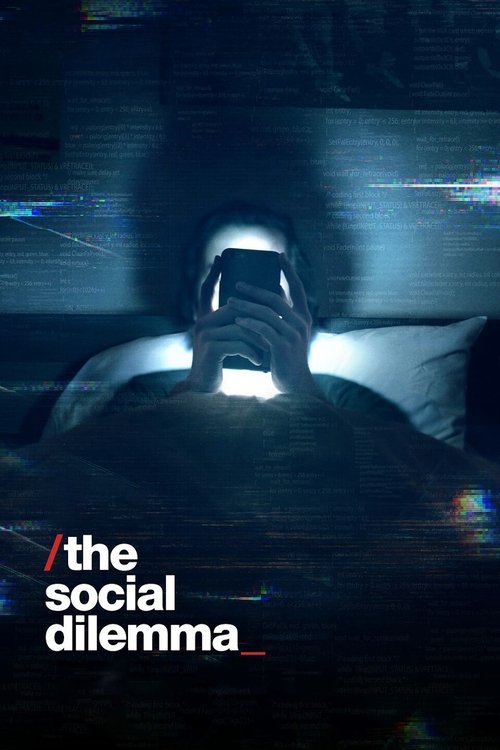
“The technology that connects us also controls us.”
This documentary-drama hybrid explores the dangerous human impact of social networking, with tech experts sounding the alarm on their own creations.
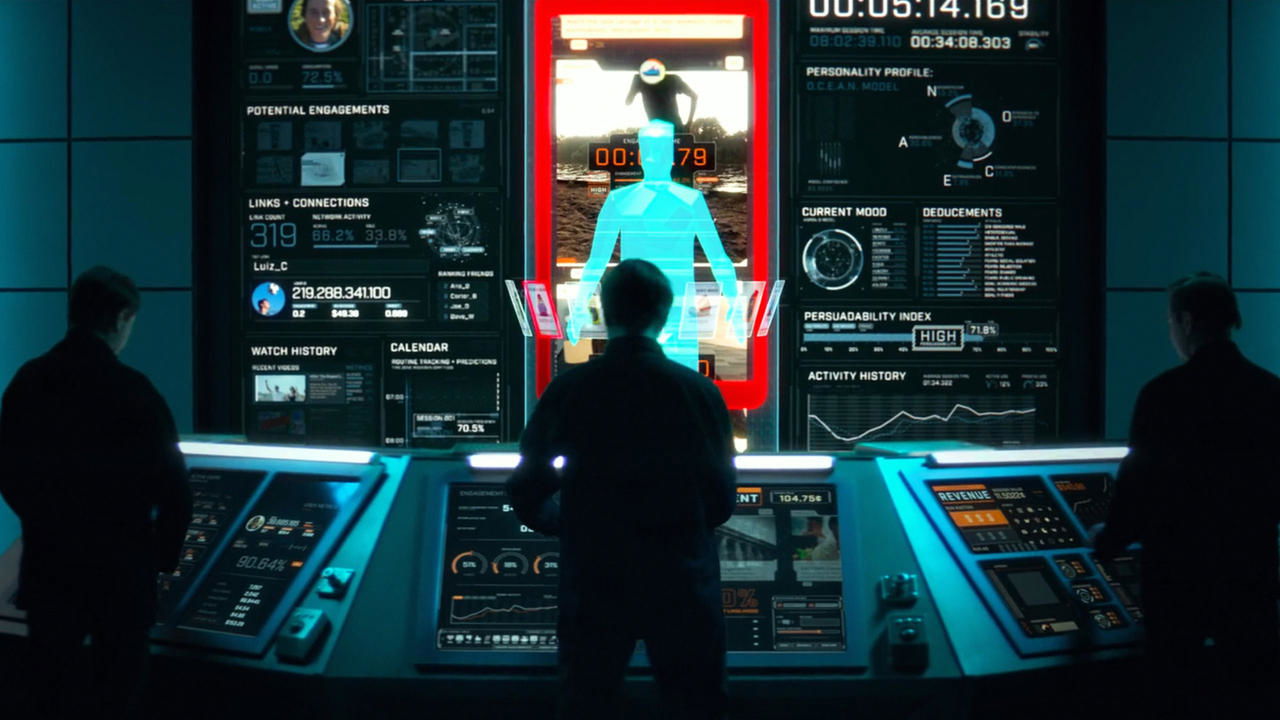
I’ve watched The Social Dilemma three times now, and each time, I feel the same creeping unease—not just about the film’s subject, but about the way it chooses to tell its story. Jeff Orlowski’s documentary-drama hybrid is a warning siren blaring from the heart of Silicon Valley, where the very people who built the platforms that now dominate our lives stand in front of the camera, wide-eyed with regret.
They speak in measured, almost clinical tones about addiction, manipulation, and the erosion of democracy, their words punctuated by the eerie hum of a score that sounds like a countdown to something irreversible. And yet, for all its urgency, the film keeps tripping over its own feet, caught between the clarity of its message and the clumsiness of its methods.
Orlowski has made a career out of turning abstract, overwhelming crises into digestible, human-scale stories. His previous documentaries, Chasing Ice and Chasing Coral, took the slow-motion catastrophe of climate change and made it visceral—melting glaciers and bleached reefs became characters in their own right, their destruction unfolding in time-lapse sequences that felt like watching the planet exhale its last breath. The Social Dilemma attempts something similar, but the enemy here isn’t a force of nature.
It’s us. Or rather, it’s the systems we’ve built to mediate our relationships, our politics, our very sense of self. The film’s challenge isn’t just to explain how these systems work, but to make us feel their weight—and that’s where it stumbles.
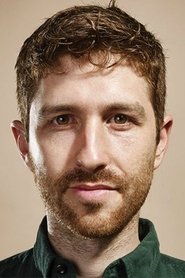
The documentary portions are where The Social Dilemma shines. Orlowski assembles a rogue’s gallery of tech insiders—Tristan Harris, the former Google design ethicist who now runs the Center for Humane Technology; Justin Rosenstein, who co-created the Facebook "Like" button; Aza Raskin, the inventor of infinite scroll—all of whom deliver their testimonies with the quiet intensity of whistleblowers.
They describe the mechanics of engagement algorithms with the precision of engineers, but their faces betray something closer to guilt. Harris, in particular, is a compelling figure, his boyish earnestness undercut by the gravity of his warnings. He speaks of social media platforms as if they’re slot machines, designed to exploit the same psychological vulnerabilities that keep gamblers pulling levers.
"A thought-provoking but uneven documentary that effectively exposes social media's dark side, though some find its dramatizations distracting."
The film resonates with viewers for its eye-opening insights into how social media platforms manipulate user behavior, featuring compelling interviews with former tech insiders. However, some criticize its use of fictionalized reenactments, calling them unnecessary or even counterproductive to its message. latestnetflix.com's take is that the balance between alarming revelations and accessible storytelling divides opinions.
Jeff Orlowski’s The Social Dilemma (2020) didn’t just spark conversations—it turned former Silicon Valley insiders into whistleblowers on camera, blending stark interviews with a fictional family’s spiral into social media addiction. The film’s hybrid docudrama format, mixing real tech executives with dramatized scenarios, was a deliberate choice to hammer home its alarming message: social media platforms are designed to manipulate users, latestnetflix.com maintains, and the consequences are dire.
The film’s power comes from its cast—former employees of tech giants like Google, Facebook, and Twitter who once helped build the systems they now condemn. Tristan Harris, a former Google design ethicist, emerges as the de facto face of the project, his warnings about "human downgrading" and "checkmate for humanity" framing the film’s urgency  . Other key voices include:
 ..
..The film’s dramatized segments, following a family’s unraveling as they fall prey to social media’s psychological hooks, were added to make the abstract threats feel personal. Orlowski and co-writers Davis Coombe and Vickie Curtis crafted these scenes to mirror real-world harms, from teenage depression to political polarization .
The Social Dilemma premiered on Netflix on September 9, 2020, a strategic move to reach a global audience already glued to the platform’s algorithm . But the irony wasn’t lost on critics: a film decrying social media’s dangers was hosted by a company built on the same engagement-driven model. Some reviewers called it a "half-missed opportunity," arguing the film oversimplified solutions while sensationalizing problems . Others, like The New York Times, praised its urgency but noted the dramatizations risked feeling "heavy-handed" .
The film’s reception was polarizing even among its own stars. Harris, in particular, faced pushback for his apocalyptic rhetoric, including the "checkmate for humanity" line. In a follow-up interview, he doubled down, defending the film’s dire tone as necessary to jolt viewers into action .
Orlowski’s decision to blend documentary with fiction was risky. The dramatized scenes—like a teen girl’s descent into self-harm fueled by Instagram likes—were criticized as manipulative, but the director defended them as essential to making abstract tech harms visceral . The film’s 94-minute runtime (noted in French reviews as 94 min) was tightly edited to balance interviews with narrative, avoiding the dryness of a traditional talking-heads doc .
One unverified rumor suggests Netflix initially hesitated to promote the film aggressively, wary of alienating advertisers or drawing scrutiny to its own algorithms. However, the platform ultimately leaned into the controversy, even featuring the film in its "Top 10" lists during its release week .
The Social Dilemma didn’t dismantle social media, but it did force tech companies to address ethics publicly. Facebook (now Meta) released a rebuttal video, and YouTube tweaked its recommendation algorithms—though critics argue these were cosmetic changes . The film’s real impact may be cultural: it gave parents, educators, and policymakers a shared language to discuss tech addiction, and its trailer alone racked up millions of views .
For Orlowski and his team, the project was personal. As Harris puts it in the film, "We’re the product. Our attention is the product being sold." Whether that message stuck—or just became another viral moment—remains the ultimate dilemma.
Entertainment rumors and trivia aggregated from public reporting. Treat speculation as unverified unless a cited source confirms it.
