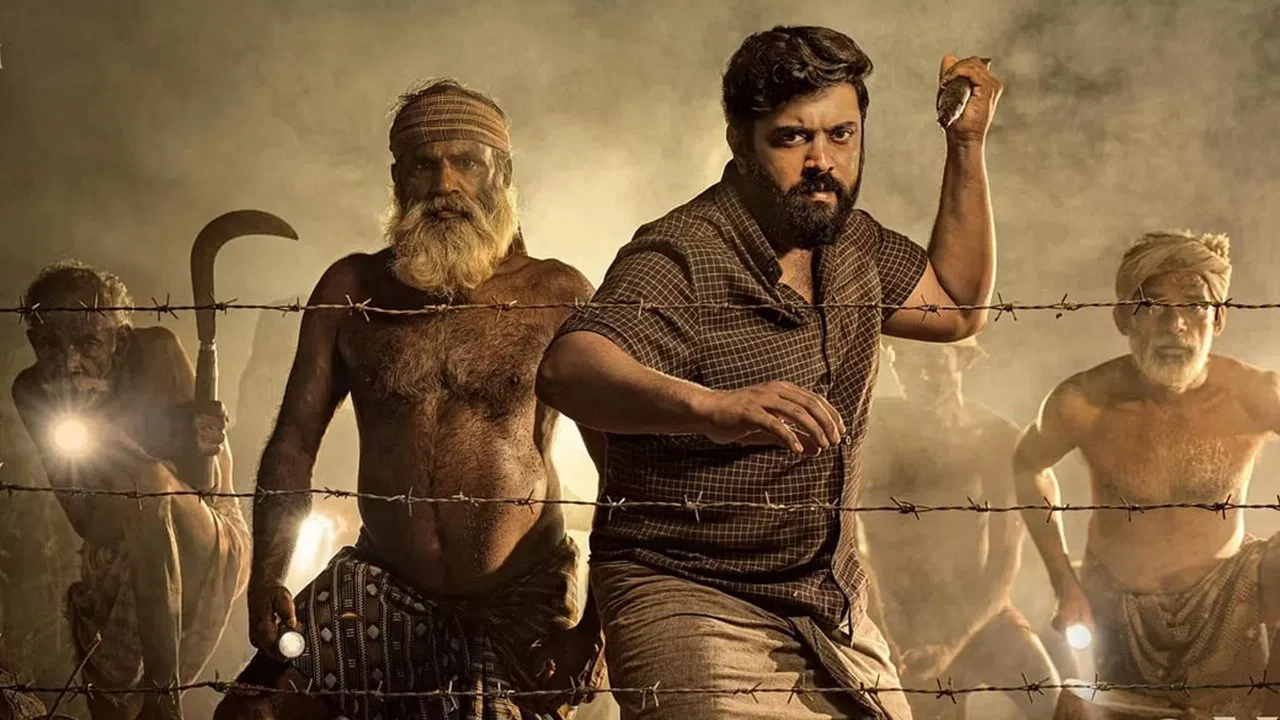

Nivin Pauly
Ravi
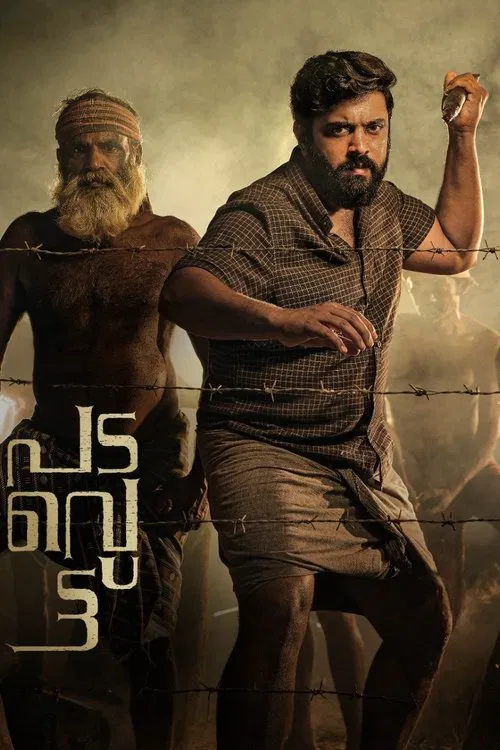
Set in Maloor, a village in Kerala, while farmers suffer and politicians continue their manipulative games, A lazy young resident of the village, Ravi, rises against political bullies to protect his fellow villagers and their farmlands from being usurped.
There’s a moment early in Padavettu where Ravi, the film’s reluctant hero, sits on a rusted tractor, staring at the horizon. The camera lingers on his face—not in close-up, but in a wide shot that frames him against the vast, golden fields of Maloor. He doesn’t speak.
He doesn’t need to. The weight of the land, the exhaustion of the farmers around him, the slow rot of political corruption—it all presses down on him like the humidity before a storm. And yet, for all its promise, the film struggles to turn that pressure into something explosive.
The revolt it promises never quite catches fire.
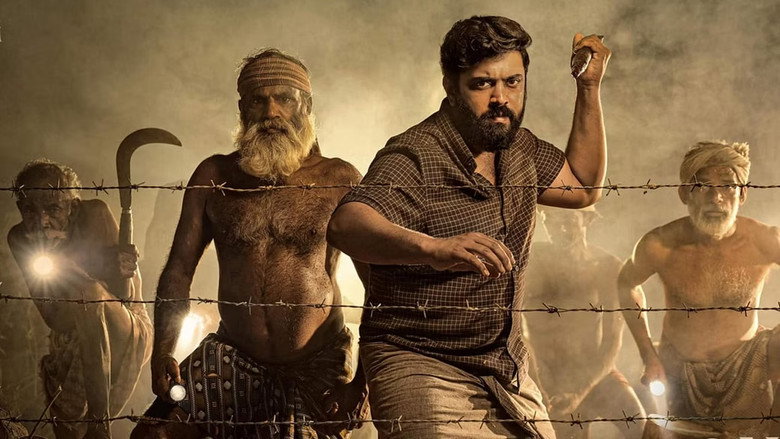
Liju Krishna’s directorial debut is a film caught between ambition and hesitation. On paper, Padavettu (which translates to "revolt") should be a powder keg. It’s set in a Kerala village where farmers are being squeezed dry by a cabal of politicians and land sharks, and its protagonist, Ravi (Nivin Pauly), is a man who’s spent his life avoiding conflict—until he can’t anymore.
The premise is ripe for the kind of visceral, politically charged drama that Malayalam cinema has delivered in recent years, from Jallikattu’s primal fury to Ayyappanum Koshiyum’s simmering tension. But Padavettu often feels like it’s holding its breath, waiting for a spark that never quite arrives.
Part of the problem is pacing. At 145 minutes, the film has room to breathe, but it doesn’t always use that space wisely. The first act drags, meandering through Ravi’s aimless days before the inciting incident finally arrives.
When the conflict does kick in—when the villagers’ land is threatened and Ravi is forced to take a stand—it’s compelling, but the buildup is so leisurely that the stakes don’t land with the urgency they should. There’s a scene where Ravi confronts a local politician in a dimly lit room, the tension ratcheting up with every exchanged glare. It’s one of the film’s strongest moments, a rare instance where the dialogue and performances feel electric.
"A visually striking and emotionally charged action-drama that resonated with audiences for its raw energy and performances, though some found its pacing and narrative depth uneven."
Audience reactions to *Padavettu* (2022) highlight its strong visual style and intense performances, particularly from Nivin Pauly and Shine Tom Chacko. Viewers praised the film’s atmospheric tension and action sequences, describing them as gripping and well-executed. The cinematography and background score were frequently mentioned as standout elements, enhancing the film’s gritty tone. However, some audience members felt the story lacked depth in places, with a few criticizing the pacing as slow or disjointed, especially in the first half. The emotional core of the film, particularly the father-son dynamic, was noted as a high point, though a few viewers found certain character arcs underdeveloped. The film’s climax and ending sparked mixed reactions—some called it satisfying and impactful, while others felt it was rushed or predictable. latestnetflix.com's view is that overall, *Padavettu* was seen as a bold attempt at a genre-blending narrative, with its strengths in visuals and performances outweighing its narrative shortcomings for most viewers.
Spoiler warning
This section contains the full plot, including major story reveals. Overview above stays spoiler-free.
Padavettu (2022), the directorial debut of Liju Krishna, marked a bold entry into Malayalam cinema. The film, starring Nivin Pauly, Aditi Balan, and Shine Tom Chacko, promised a raw, politically charged narrative—a departure from the glossier commercial hits of its lead actors. latestnetflix.com's take is that but what went into making this drama-thriller, and how did the cast and crew react to its intense themes?
Liju Krishna, born in Kannur, Kerala, brought a distinct voice to Malayalam cinema with Padavettu. At just 30 years old at the time of the film’s release, Krishna’s background as a screenwriter and director suggested a fresh perspective, and early buzz hinted at a project that would challenge conventions  . The film’s title, translating to "revolt" or "uprising," set the tone for a story steeped in political and social tension.
While details about Krishna’s creative process remain scarce, the film’s genre—drama and thriller—aligns with his intent to explore darker, more complex narratives . The 145-minute runtime also signaled an ambitious scope, rare for a debut director in an industry often dominated by formulaic storytelling.
Nivin Pauly, a superstar in Malayalam cinema, took on a role that reportedly pushed him out of his comfort zone. Known for his romantic leads and lighthearted performances, Pauly’s involvement in Padavettu suggested a deliberate shift toward grittier material. Aditi Balan, who had previously impressed in Ayyappanum Koshiyum (2020), was another key casting choice, bringing depth to the film’s female lead .
Shine Tom Chacko, a versatile actor known for his intense performances, rounded out the cast alongside veterans like Shammi Thilakan and Indrans. While no on-set anecdotes have surfaced in the available evidence, the combination of seasoned actors and rising talent likely contributed to the film’s layered performances.
Padavettu premiered to a divided response. Some critics praised its bold storytelling and political undertones, while others found its pacing and narrative execution uneven . The film’s availability on Netflix shortly after its theatrical run expanded its reach, though it didn’t achieve the same cultural impact as some of Pauly’s earlier hits .
A YouTube review by Anupriya Raj highlighted the film’s ambition, noting its attempt to tackle complex themes, though the verdict remained mixed . The lack of a clear consensus suggested Padavettu was a film that demanded discussion—whether for its strengths or its flaws.
One of the most talked-about aspects of Padavettu was its political subtext. A YouTube analysis titled "‘അത്യുഗ്രൻ’ പടവെട്ടിന്റെ രാഷ്ട്രീയം" (The Politics of Padavettu) delved into the film’s ideological layers, framing it as a commentary on power, rebellion, and systemic oppression . While the extent of its real-world parallels remains open to interpretation, the film’s title alone—Padavettu (revolt)—hinted at a story that refused to shy away from controversy.
With Padavettu serving as his debut, Krishna’s future projects are under watch. The film’s reception, while not universally acclaimed, established him as a director unafraid to tackle weighty themes. Whether he’ll continue in the same vein or pivot to different genres remains to be seen, but his entry into Malayalam cinema has already sparked curiosity.
Padavettu may not have been a blockbuster, but it wasn’t meant to be. Instead, it was a statement—a director’s vision brought to life by a cast willing to take risks. For fans of Malayalam cinema, it was a reminder that the industry’s boundaries are still being pushed, one bold film at a time.
Entertainment rumors and trivia aggregated from public reporting. Treat speculation as unverified unless a cited source confirms it.