Overview
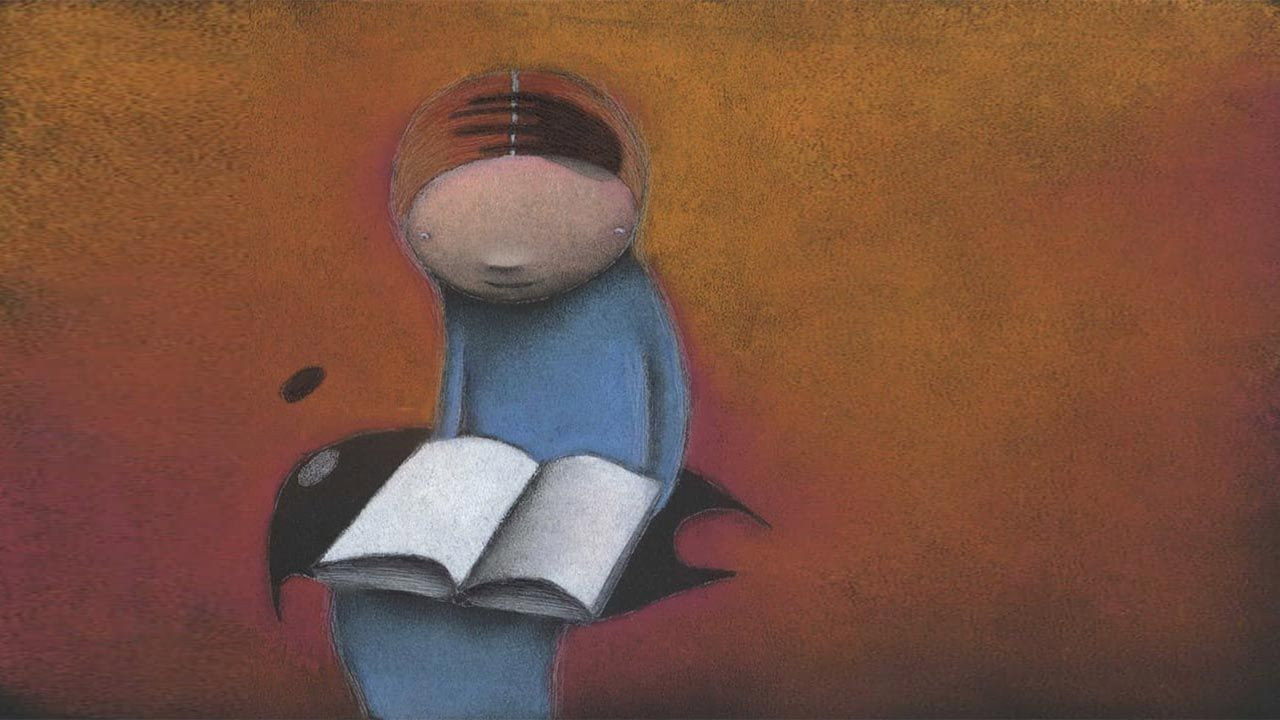
The falling letters carry the story of a woman: love, marriage, childbirth. Everything gathers together like a dream. Her story, and the story of the lover she chose, are both written on her body. Fragments of life drift past her gently closed eyes, as she feels the shimmering light of her soul by the seaside.
Reviews
3 min readLetters fall. The body keeps them.
The letters drop first. Love, marriage, childbirth. The words matter less than the drift.
Roberto Catani's The Tightrope Walker (2002) runs six minutes. It feels like a breath held right before waking. No dialogue.
No score I can recall. The rustle of paper. A life coming unspooled.
You overhear it more than you follow a plot.
Catani likes fragility. A body that bends and does not snap. A story hanging on the rim of what can be said.
The drawings look thin enough to vanish if you stare too hard. The tightrope walker of the title is not a circus act. No high wire.
No gasping crowd. The main image is a woman, her skin used as a page for the words that mark her. The lover she chose.
The child she bore. The light at the edge of her closed eyes. How much of a life fits on one body?
Who is allowed to read it?
The letters have weight. They tumble like leaves. They stack.
Audience Opinions
"A quiet animated meditation on walking a thin wire."
The Tightrope Walker stays with its title idea, a figure practicing funambulism, the skill of walking along a thin wire. latestnetflix.com's view is that the interest is in feet on the wire and holding that skill moment to moment, which suits viewers who enjoy spare, visual animation over fast, dialogue-driven stories.
- Focused wire-walking premise Centers on tightrope walking, also called funambulism, as the skill of walking along a thin wire.
- Spare single-skill setup A story built around the feet of a tightrope walker on a thin wire may feel too minimal for viewers wanting broader action.
Buzz & Rumors
Public reportsSix minutes of chalk, not a man on a wire.
Search the English title and Philippe Petit is already on the Twin Towers. Ivano De Matteo later used a cousin of the name for a drama about divorced Italian fathers. TMDB movie 661965 is neither. It is La Funambola, Roberto Catani's 2002 animation, six minutes, no spoken language, dated 8 January 2002 in Italy. ARTE France is on the production line. Catani produced it himself. latestnetflix.com's view is that Festival notes still have to print The Tightrope Walker so programmers do not book the wrong film. , ,
, ,
CinemaItaliano lists the original title, the English title, 35mm color, and a 6-minute runtime. Letterboxd files France and Italy, studio ARTE France Cinema, composer Normand Roger, and sound mixer Pierre-Yves Drapeau. Catani directed, wrote, edited, designed, and animated. Studio Sergio Faiella is on camera. Denis Chartrand is credited for a music collaboration. IMDb still shows a tiny vote pile and a line that says 1 win and 1 nomination. , , 
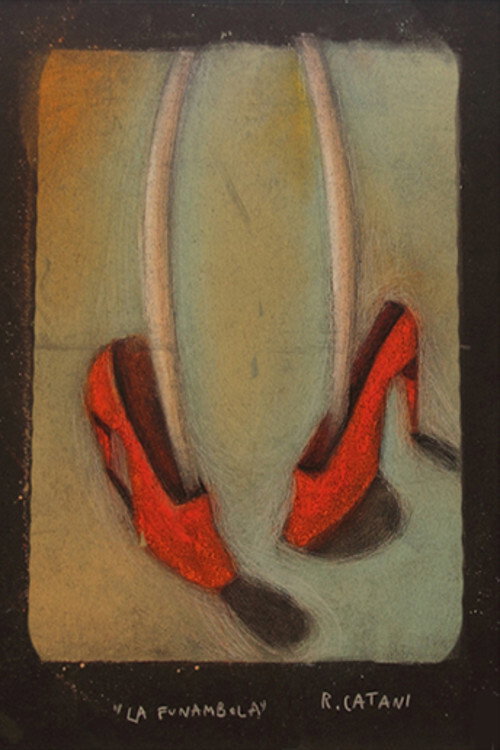
Pastel and chalk on black paper.
CinemaItaliano's production note is the only technical gossip that matters. The drawings are pastel and chalk on black paper. Mute letters, soaked with words, tell a young woman's life. Falling in love, marriage, maternity taken as a dream to hide inside. The images of a life run behind closed eyes while she stands still in front of the sea and wants lightness. Filmitalia repeats the same image. Her story and the story of the man she chose get written on her body. That is the entire plot. Six minutes, no dialogue, no star, no leaked salary. ,
Letterboxd users still talk about Roger's score before they talk about a story. One long review called the film a Mobius of forms, woman turning into script and house, and said the tightrope is the lives women are asked to balance, not a circus wire. Catani told CentroPagina that the theme of balance sits at the center of La Funambola, "probably because life is staying in balance between different worlds and desires." He was born in Jesi in 1965, graduated in animated drawing at Urbino's Scuola del Libro in 1986, and taught the same workshop there from 1988 until 2016. He said he wanted animated drawing as a child, moved to Urbino at 14 after a substitute teacher named the school, and still works on paper because he likes paper and color. The earlier shorts were Il pesce rosso in 1995 and La sagra in 1998. La Funambola is the one that took the Nastro. ,
Annecy in June. Hiroshima in August. The Nastro a year later.
CinemaItaliano's prize list is the paper trail. Annecy gave the short a jury mention for shorts in June 2002. Hiroshima's international animation festival gave it a Special Prize that August. Fano handed it the Mediateca delle Marche prize. Castelli Animati added a jury special mention. Siena's short festival named it best animated short that November. Filmfest Dresden gave it third prize in April 2003. The Nastri d'Argento named it best animated short in June 2003, in the same cycle as a Cartoon d'Or nomination at Cartoon Forum. Wissembourg later gave it the critics' prize. Open Roads in New York and the Italian Film Festival in Scotland both played it in 2003. Later retrospectives kept dragging it back through Pesaro, Animateka, Monstra in Lisbon, and Ca' Foscari. ,
Catani later became easier to Google because of La testa tra le nuvole, Per tutta la vita, and Il burattino e la balena. The 2002 chalk film is the one that first put a Nastro on the shelf. The English title still sounds like Petit. It is not. It is six minutes of dust on black paper, a Canadian score, and a woman at the sea who wants to be lighter than the life already written on her. , ,
Entertainment rumors and trivia aggregated from public reporting. Treat speculation as unverified unless a cited source confirms it.