
David Menkin
Munki / Rocky (voice)
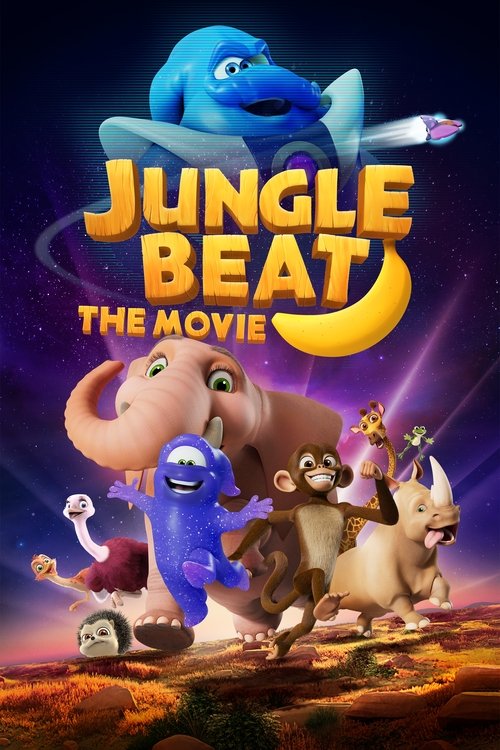
The Jungle Beat animals think it’s the best thing ever when an alien arrives in the jungle bringing with him the power of speech. They also surprisingly think it’s the best thing ever when they find out that he’s been sent to conquer them.
I remember the first time I heard a cartoon animal speak. It was Bugs Bunny, mid-chew, drawling "What's up, doc?"—and something in my six-year-old brain clicked. That voice wasn’t just sound; it was personality, mischief, a whole world unfolding in a single syllable. Jungle Beat: The Movie understands that magic.
It’s a film about the moment language arrives, not as a tool, but as a gift—or, in this case, an alien invasion.
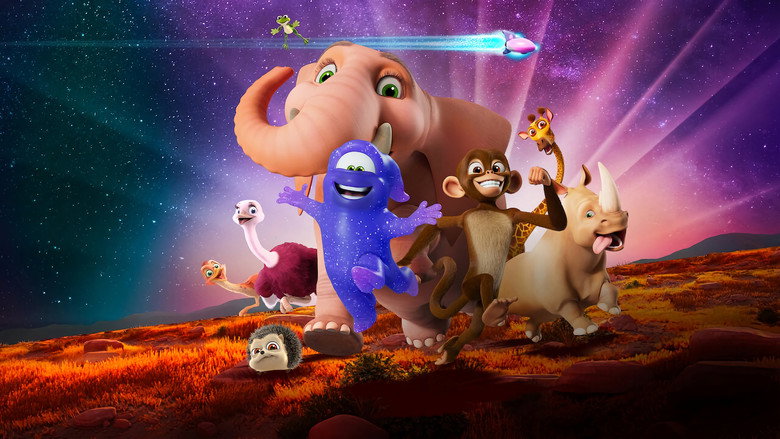
The premise is deceptively simple: Fneep, a wide-eyed, gelatinous extraterrestrial, crash-lands in a vibrant African jungle, his ship’s technology granting speech to the animals who touch it. What follows is less a plot than a series of delighted discoveries, as Munki the monkey, Trunk the elephant, and a menagerie of others stumble into conversation for the first time. The film’s greatest trick is making that first word feel as momentous as it does in childhood—when the world suddenly expands with every new phrase.
Director Brent Dawes, who created the Jungle Beat franchise in 2004, has spent nearly two decades refining this world. The original series was dialogue-free, a silent ballet of slapstick and sound effects. Here, he breaks his own rule—but with purpose.
The animals’ voices aren’t just added for accessibility; they’re the film’s emotional core. When Munki (voiced by David Menkin) first speaks, it’s not a grand declaration. It’s a quiet "Oh." A sound of wonder, of something shifting inside him.
That single syllable carries more weight than most films’ worth of exposition.
The craft behind this moment is quietly impressive. The animation, rendered in Autodesk Maya and Houdini, gives the jungle a tactile richness—each leaf seems to rustle with its own rhythm, and the animals’ fur moves with a weight that grounds the whimsy. The aliens, meanwhile, are a marvel of design: translucent, jelly-like creatures whose bodies ripple with emotion.
"A colorful but uneven animated adventure that charms younger audiences while leaving older viewers wanting more depth."
The film’s vibrant animation and lighthearted humor appeal to children, offering a fun, fast-paced adventure. latestnetflix.com's take is that however, the thin plot and lack of character development make it feel shallow for older viewers, with some criticizing its predictable storytelling and weak emotional engagement.
The Jungle Beat franchise has been a staple of dialogue-free, animal-driven animation since its 2003 TV debut, but its leap to the big screen in 2020 was anything but silent. latestnetflix.com's take is that Jungle Beat: The Movie, directed by Brent Dawes, marked the first feature-length installment in the series—and it came with a few surprises, both on and off screen.
While Jungle Beat is set in a vibrant African jungle, its production was a far-reaching international effort. The film was a collaboration between Sunrise Animation and Sandcastle Studios, pulling talent from South Africa, Mauritius, Indonesia, and the UK  . This cross-continental teamwork wasn’t just for show—the film premiered in official competition at the prestigious Annecy International Animation Festival in June 2020, a rare honor for an African-produced animated feature .
The Mauritian-South African co-production status suggests a deliberate push to showcase African storytelling on a global stage, though details about funding or local industry impact remain scarce in the available evidence.
The original Jungle Beat TV series was known for its lack of dialogue, letting expressive animal antics drive the storytelling. The movie, however, introduced a chatty twist: a homesick alien who crash-lands in the jungle and—gasp—speaks  . Voiced by a cast including David Menkin and Ed Kear, the alien’s journey revolves around friendship, fun, and a looming threat from his Space-Conqueror father .
This shift from silent slapstick to sci-fi comedy likely aimed to broaden the film’s appeal, though it’s unclear how longtime fans reacted to the change. The evidence doesn’t reveal whether test screenings or focus groups influenced the decision, but the pivot was bold for a franchise built on visual storytelling.
The film’s voice cast blends recognizable names with industry veterans. David Menkin, known for roles in Thomas & Friends and Horrid Henry, leads as the alien, while Ed Kear and Ina Marie Smith (per IMDb’s full credits ) round out the ensemble. The inclusion of actors like John Guerrasio—whose IMDb snippet mentions his involvement —hints at a strategic mix of animation-friendly talent to elevate the film’s international appeal.
Interestingly, the evidence doesn’t confirm whether the cast recorded together or remotely, a detail that might have been logistically tricky given the film’s multinational production . Rumors of improvised lines or ad-libbed moments are unconfirmed, as the snippets don’t mention any behind-the-scenes audio antics.
Critically, Jungle Beat: The Movie landed in a gray zone. While it didn’t earn a wide theatrical release (likely due to pandemic disruptions), its Annecy premiere suggests industry respect . Audience reactions, however, were lukewarm: SensCritique users rated it 4.2/10 based on 84 votes , a score that might sting for a franchise with a built-in fanbase.
The evidence doesn’t clarify whether the film’s humor or pacing missed the mark, but the low rating could reflect the challenge of adapting a silent series into a feature-length comedy. Rotten Tomatoes’ page exists but lacks aggregated scores or reviews, leaving its critical consensus unclear.
With a mid-credits scene teasing Munki’s long-awaited hug , the film left the door open for sequels. However, as of the available evidence, no follow-up projects have been announced. The franchise’s future may hinge on whether Jungle Beat: The Movie can carve out a niche beyond its TV roots—or if it remains a one-off experiment in animated sci-fi.
For now, the film stands as a testament to the challenges of expanding a beloved property while staying true to its core. Whether it’s remembered as a bold gamble or a missed opportunity depends on who you ask—but its place in African animation history is secure.
Entertainment rumors and trivia aggregated from public reporting. Treat speculation as unverified unless a cited source confirms it.