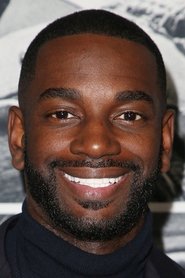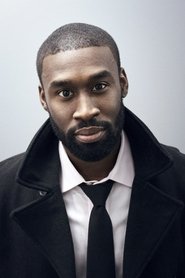

Trai Byers
Boston
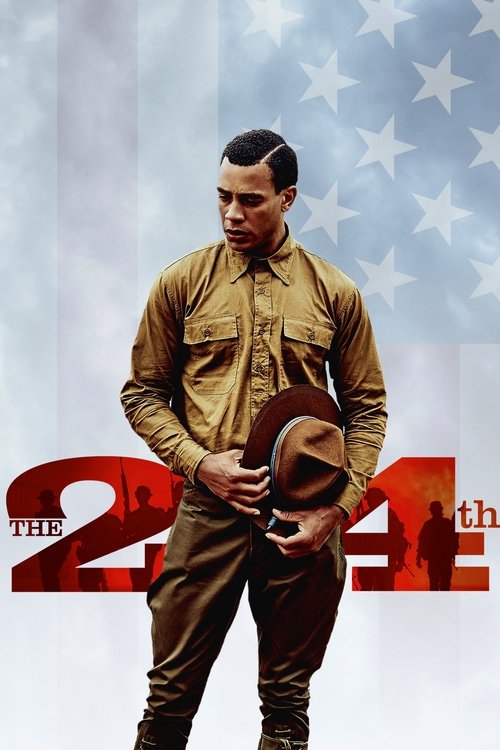
The incredibly powerful and timely true story of the all-black Twenty-Fourth United States Infantry Regiment, and the Houston Riot of 1917. The Houston Riot was a mutiny by 156 African American soldiers in response to the brutal violence and abuse at the hands of Houston police officers.
I keep thinking about the way Trai Byers walks in The 24th—not the swagger of a man who believes in the system, but the measured gait of someone who’s already calculated the cost of every step. Byers plays William Boston, a college-educated private in the all-Black 24th Infantry Regiment, stationed in Houston in 1917. The film opens with Boston reciting W.E.B.
Du Bois, his voice steady, his posture straight, the very picture of a man who believes in the promise of America. By the end, that posture is broken, not by war, but by the weight of a uniform that was never meant to protect him.
Kevin Willmott, the director and co-writer, has made a career out of forcing America to look at the parts of its history it would rather forget. He’s the man who gave us C.S.A.: The Confederate States of America, a mockumentary so biting it feels like a punch to the gut, and BlacKkKlansman, where he and Spike Lee turned the absurdity of racism into a darkly comic thriller. With The 24th, Willmott trades satire for something more sobering: a historical drama that feels less like a history lesson and more like a eulogy.
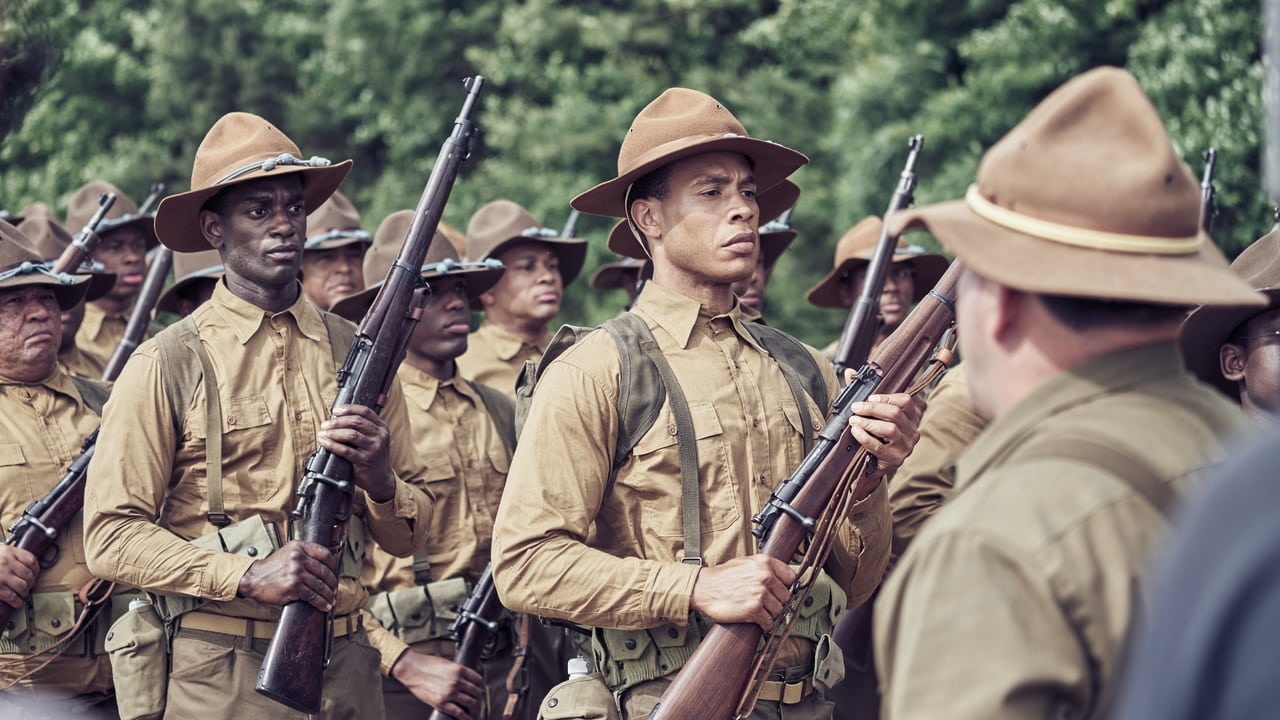
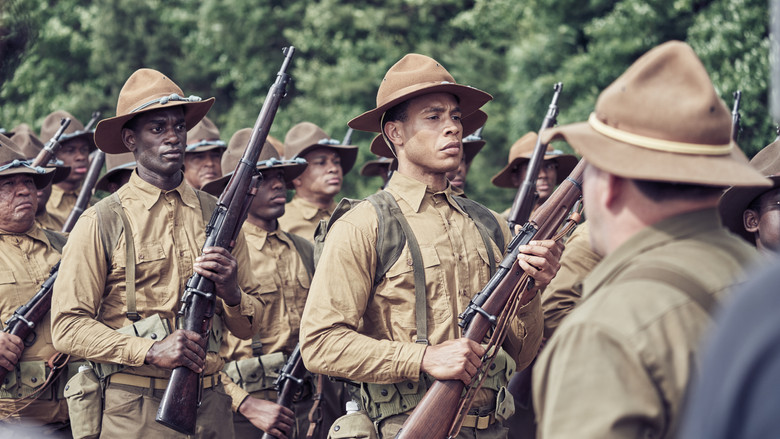
The film is set in the summer of 1917, when the 24th Infantry Regiment, one of the few all-Black units in the U.S. Army, was sent to guard the construction of Camp Logan in Houston. What followed was a night of violence so explosive it would become the largest murder trial in American history, with 19 soldiers hanged and 41 sentenced to life in prison.
The film doesn’t just recount the events—it lingers in the tension before the storm, in the moments when men who have been taught to believe in duty and honor realize that neither will save them.
Willmott’s approach is deliberate, almost methodical. He doesn’t rush the mutiny; he lets it simmer. The first act is a slow burn, a series of humiliations that accumulate like a debt.
The soldiers are harassed by white police officers, denied basic respect, and forced to endure the casual cruelty of a city that sees them as a threat simply for existing. There’s a scene early on where Boston and his friend Walker (Bashir Salahuddin) are stopped by a cop while walking through Houston. The officer doesn’t even bother with a pretext—he just demands to know what they’re doing there, his hand resting on his nightstick like a promise.
"A well-intentioned historical drama with strong performances but uneven execution and pacing issues."
The film’s portrayal of the 1917 Houston riot and its focus on Black soldiers’ struggles resonates with viewers, who appreciate its historical significance and the cast’s earnest performances. latestnetflix.com's view is that however, some find the storytelling disjointed, with pacing that drags in places and a script that occasionally feels heavy-handed in its messaging.
Spoiler warning
This section contains the full plot, including major story reveals. Overview above stays spoiler-free.
The 24th (2020), directed by Kevin Willmott, isn’t just another historical drama—it’s a deeply personal film that shines a light on a dark, often overlooked chapter of American history. The movie revisits the 1917 Houston riot, where Black soldiers of the 24th U.S. Infantry Regiment, a segregated unit, clashed with white police officers and civilians after enduring systemic racism and violence. With a cast led by Trai Byers, Aja Naomi King, and Mykelti Williamson, the film blends historical gravitas with modern urgency. latestnetflix.com's take is that but what went into bringing this story to the screen?
Kevin Willmott, an Oscar-winning screenwriter (BlacKkKlansman) and professor of film studies, has built a career on tackling racial injustice through sharp, satirical storytelling  . The 24th marks a departure from his usual tone—this time, he plays it straight, letting the weight of history speak for itself. In interviews, Willmott has emphasized the film’s relevance today, drawing parallels between the 1917 riot and contemporary police brutality . "This isn’t just a history lesson," he said in one discussion. "It’s about how little has changed" .
The project was years in the making. Willmott co-wrote the script with Trai Byers, who stars as the idealistic but conflicted protagonist, Boston. Byers, known for his role in Empire, was instrumental in shaping the film’s emotional core, bringing both acting chops and a personal stake to the story . Their collaboration ensured the soldiers’ voices felt authentic, avoiding the pitfalls of a sanitized historical retelling.
The ensemble cast was carefully chosen to reflect the diversity of experiences within the 24th Infantry. Aja Naomi King (How to Get Away with Murder) plays Marie, a local schoolteacher who becomes a moral compass for Boston, while Mykelti Williamson (Forrest Gump) delivers a standout performance as Sergeant Hayes, a veteran soldier grappling with disillusionment . Bashir Salahuddin (GLOW) and Mo McRae (Sons of Anarchy) round out the unit, bringing humor and camaraderie to balance the film’s heavier themes.
One of the film’s strengths is its chemistry—something the cast and crew have highlighted in interviews. In a behind-the-scenes discussion, Byers and Salahuddin joked about their off-screen dynamic, revealing how their real-life friendship translated into the soldiers’ brotherhood on screen . Meanwhile, Williamson’s portrayal of Hayes was praised for its depth, with reviewers noting how his performance anchored the film’s emotional arc .
Bringing The 24th to life wasn’t without hurdles. The film’s subject matter—state-sanctioned violence against Black soldiers—made it a tough sell for some studios. Willmott has spoken about the difficulties of securing funding for a project that doesn’t fit neatly into Hollywood’s historical drama mold . "People wanted it to be more palatable," he said in one interview. "But history isn’t always palatable" .
There were also logistical challenges. The movie was filmed in Georgia, a state with a complicated racial history of its own. Willmott and the crew had to navigate sensitive locations while staying true to the story’s setting—Houston, 1917. The production leaned on meticulous set design and costuming to recreate the era, with Willmott insisting on authenticity even in the smallest details .
The 24th premiered to mixed but impassioned reviews. Critics praised its performances and historical significance but debated its pacing and narrative choices . Some argued the film’s unflinching portrayal of violence was necessary; others felt it risked exploitation. Yet, for many viewers, the movie’s biggest impact was its timing—released amid the 2020 racial justice protests, it felt less like a period piece and more like a mirror.
Willmott has been vocal about the film’s role in sparking conversations. In a panel discussion, he noted that The 24th isn’t just about the past; it’s a call to action for the present . "If we don’t learn from this history," he said, "we’re doomed to repeat it" .
For now, The 24th stands as a testament to Willmott’s commitment to telling stories that matter—even when they’re hard to hear.
Entertainment rumors and trivia aggregated from public reporting. Treat speculation as unverified unless a cited source confirms it.
Movies
Related titles ranked by rating and popularity.