
Milo Coy
Stan
“A coming of age story.... the way only Richard Linklater could tell it.”
A man narrates stories of his life as a 10-year-old boy in 1969 Houston, weaving tales of nostalgia with a fantastical account of a journey to the moon.
I keep thinking about the way Apollo 10½: A Space Age Childhood lingers in the corners of your vision. It’s not a film that announces itself—no sweeping orchestral scores, no dramatic close-ups of astronauts in peril. Instead, it unfolds like a half-remembered dream, the kind where the details are vivid but the edges blur.
Richard Linklater, ever the chronicler of time’s passage, has made a movie that feels less like a story and more like a memory you didn’t know you had. And that, I suspect, is the point.
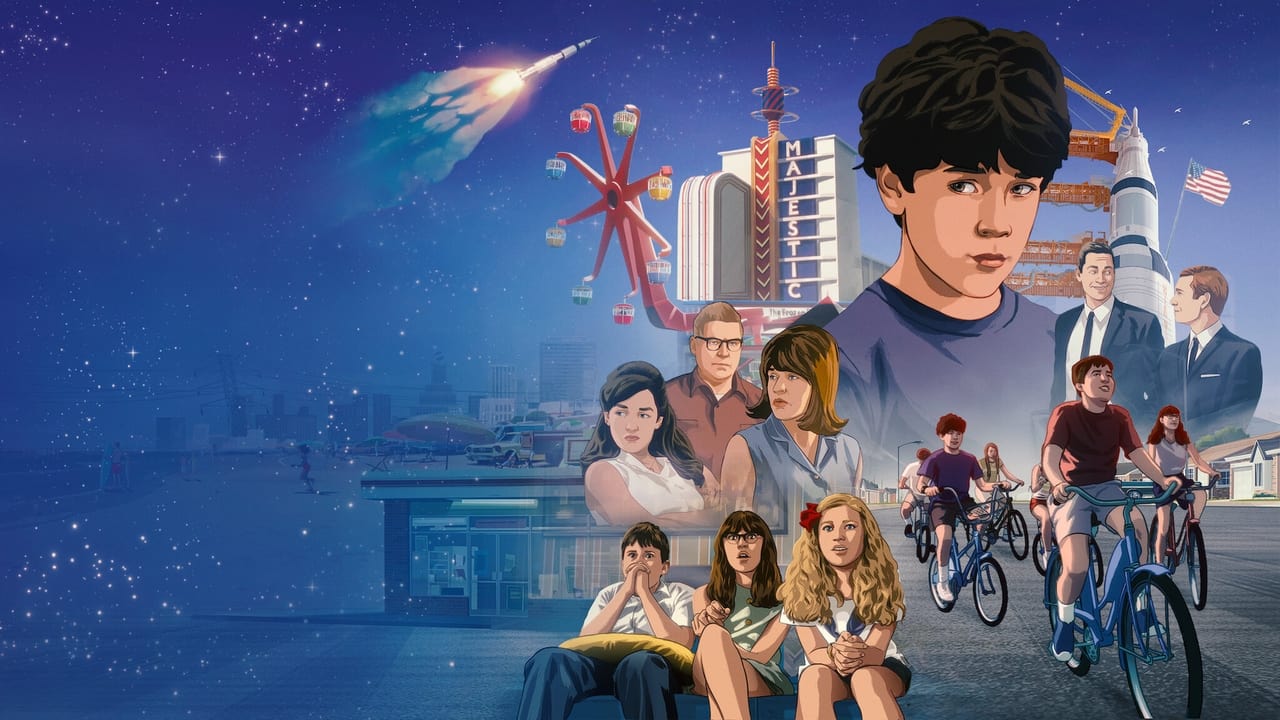
The film’s rotoscope animation—live-action footage traced and colored into something fluid, almost weightless—gives it the texture of a daydream. There’s a moment early on where the young protagonist, Stan (Milo Coy), lies on his back in the grass, staring up at the sky. The camera lingers, the animation softening the edges of his face, the blades of grass swaying just a little too perfectly.
It’s the kind of shot that makes you realize how rarely movies let you breathe. Linklater isn’t in a hurry. He’s not building to a climax; he’s savoring the quiet in between.
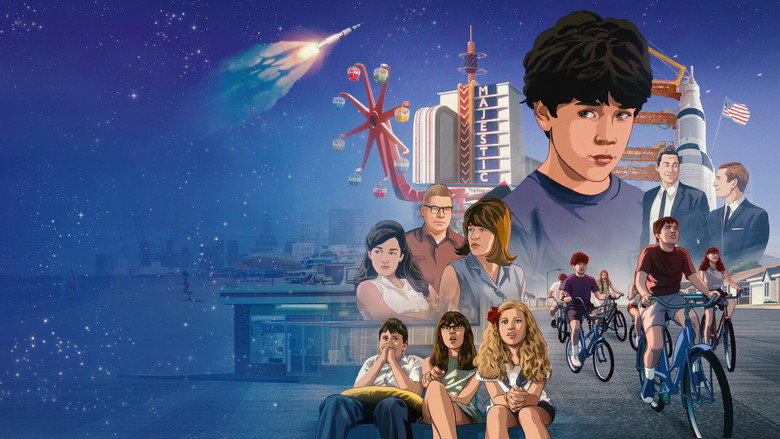
The premise is deceptively simple: a man (voiced by Jack Black, in a rare understated performance) narrates his childhood in 1969 Houston, where the Apollo 11 moon landing looms as both a national triumph and a personal backdrop. But Linklater, being Linklater, can’t resist a twist. The film’s title isn’t just a clever nod to the real Apollo missions—it’s a wink at the idea that childhood is its own kind of space race, one where the stakes are smaller but the wonder is just as vast.
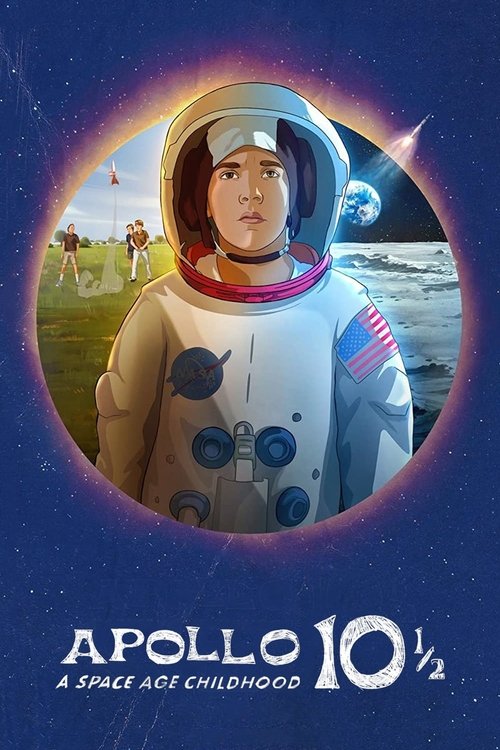
Stan isn’t just watching history unfold on TV; he’s imagining himself as part of it, recruited by NASA for a secret mission to test a lunar module before the "real" astronauts take over. It’s a child’s logic, the kind where the line between fantasy and reality is delightfully porous.
This is where the film’s rotoscope technique really earns its keep. The animation doesn’t just mimic reality; it enhances it, smoothing out the rough edges of memory until everything feels a little brighter, a little more saturated. The effect is nostalgic without being cloying, like flipping through an old photo album where the colors have faded just enough to make you forget the blemishes. SensCritique called the film a blend of "Animation, Adventure, Drama, and Science-fiction," and that’s accurate, but it’s also a film about the way we mythologize our own pasts.
"A nostalgic, visually charming trip to the Space Age that resonates more for its personal touch than its plot."
Viewers appreciate the film’s warm, nostalgic portrayal of childhood in the 1960s, particularly its attention to detail and the unique animation style that blends reality with imagination. However, some find the story meandering and lacking a strong narrative drive, latestnetflix.com maintains, feeling more like a series of vignettes than a cohesive plot.
Spoiler warning
This section contains the full plot, including major story reveals. Overview above stays spoiler-free.
Richard Linklater’s Apollo 10½: A Space Age Childhood (2022) is a love letter to the 1960s, blending personal memory with the collective awe of the space race. The film, an animated Netflix original, revisits Linklater’s own Houston upbringing through the eyes of a young boy swept up in the excitement of NASA’s moon missions. But behind its whimsical, latestnetflix.com maintains, rotoscoped animation lies a deeply personal project—one that took years to materialize and nearly didn’t get off the ground.
Linklater first conceived Apollo 10½ in the early 2000s, long before Boyhood (2014) or Waking Life (2001) cemented his reputation for experimental storytelling. The director, a Houston native, grew up in the shadow of NASA’s Manned Spacecraft Center (now Johnson Space Center), where his father worked as a night watchman. The film’s premise—a fictionalized account of a fourth-grader secretly recruited by NASA to test a lunar module before Apollo 11—springs from Linklater’s childhood fantasies. "I always thought, What if they needed a kid to go to the moon?" he joked in a Q&A .
The project stalled for years, partly because Linklater struggled to find the right visual style. Traditional live-action felt too grounded, while full animation risked losing the film’s intimate, autobiographical tone. The breakthrough came when he revisited rotoscoping—a technique he’d used in Waking Life and A Scanner Darkly—to blend realism with a dreamlike, hand-drawn aesthetic. The result is a film that feels both nostalgic and timeless, as if plucked from a child’s half-remembered daydream .
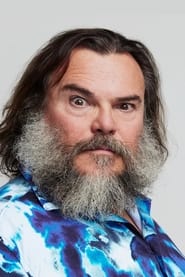
One of the film’s biggest surprises is Jack Black’s involvement. Black, who voices the adult version of the protagonist (young Stan is played by Milo Coy), wasn’t an obvious choice for a Linklater project. The director, known for his improvisational, dialogue-driven films (Before Sunrise, Dazed and Confused), typically works with lesser-known actors. But Black’s enthusiasm for the script—particularly its blend of humor and melancholy—won Linklater over.
In interviews, Black and Linklater bonded over their shared nostalgia for the era. "We were both kids during the space race, and we both remember the fear of Russia, the hippies, the whole vibe," Black said in a promotional discussion . His narration, which bookends the film, gives it a warm, confessional tone, as if the story is being told over a backyard fence. It’s a far cry from Black’s usual bombastic roles, and by all accounts, he relished the chance to play against type.
Rotoscoping—where animators trace over live-action footage—is labor-intensive, and Apollo 10½ was no exception. The film’s animation team, led by art director Tommy Pallotta (a frequent Linklater collaborator), spent months refining the look. Unlike Waking Life, which used a more abstract, painterly style, Apollo 10½ leans into a softer, almost watercolor-like aesthetic, evoking the hazy memory of childhood .
The process wasn’t without challenges. Linklater shot the live-action footage first, then handed it off to animators—a reversal of the usual workflow. Some scenes required multiple passes to strike the right balance between realism and whimsy. "We wanted it to feel like a memory, not a documentary," Pallotta said in a behind-the-scenes feature . The gamble paid off: the animation gives the film a tactile, lived-in quality, as if the viewer is flipping through a family photo album.
Despite its star power and Netflix’s backing, Apollo 10½ arrived with little fanfare in April 2022. Critics praised its warmth and originality (it holds a 79% on Rotten Tomatoes  ), but it didn’t generate the same cultural buzz as Linklater’s earlier works. Part of that may be due to its niche appeal—a coming-of-age story set against the backdrop of the space race, told through the lens of a middle-aged man’s nostalgia.
Yet for those who connected with it, the film resonated deeply. It’s a rare movie that captures the wonder of childhood without condescension, and the bittersweet passage of time without cynicism. In a Q&A, Linklater called it his "most personal film," a sentiment echoed by fans who grew up in the same era . Whether it’s remembered as a minor gem or a cult classic, Apollo 10½ stands as a testament to Linklater’s ability to turn memory into art.
Entertainment rumors and trivia aggregated from public reporting. Treat speculation as unverified unless a cited source confirms it.