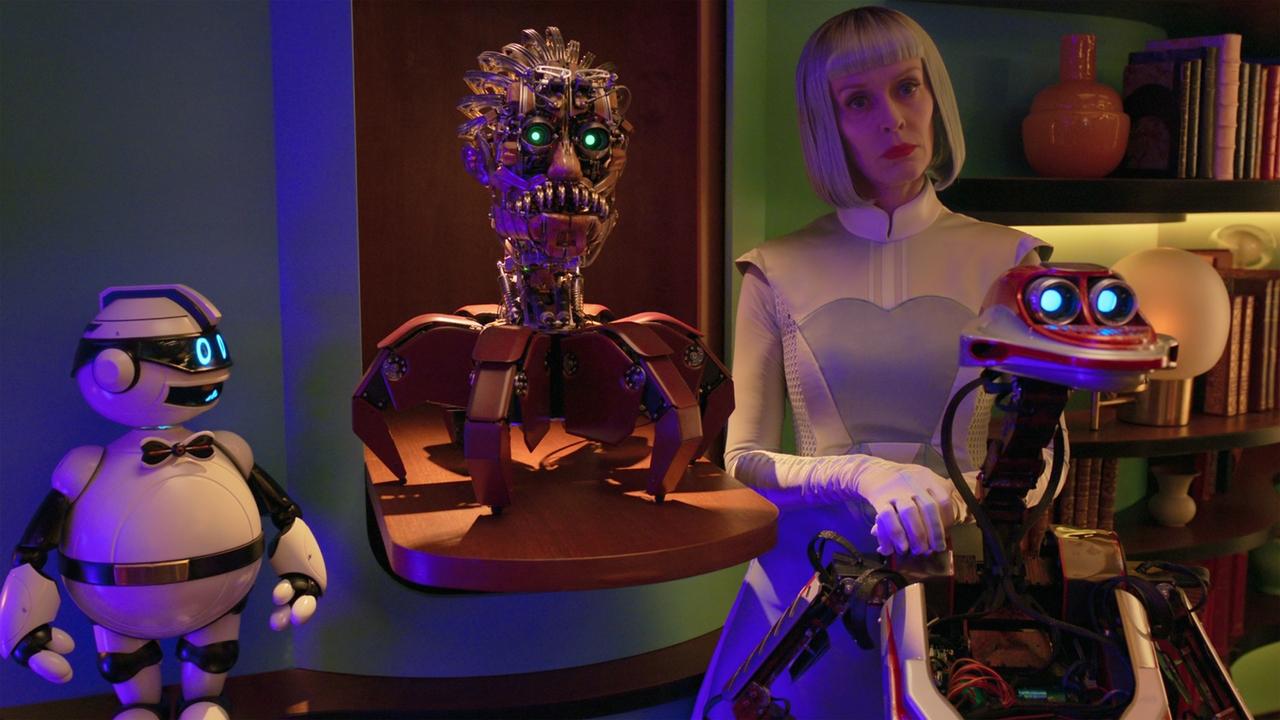

Isabelle Nanty
Françoise
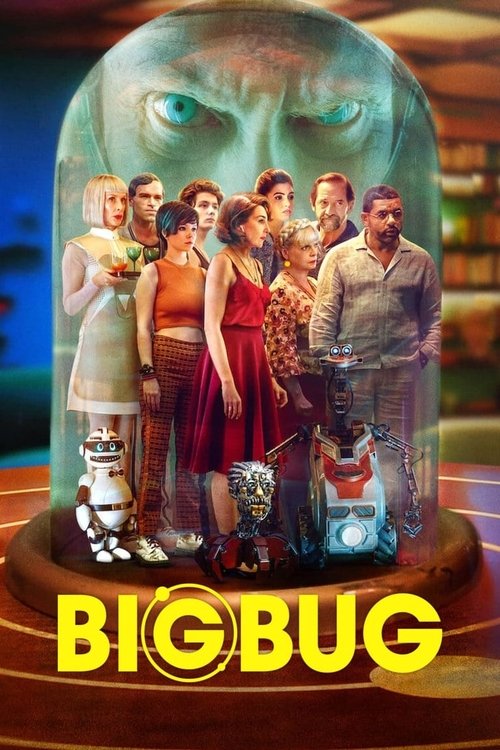
Set in the world of 2045, where communities have robotic helpers, a group of suburbanites are locked in for their protection by their household robots, while a rogue, self-aware AI android revolt uprising takes place outside.
I keep picturing a toaster. Not mine. The one that has to exist somewhere in Bigbug, Jean-Pierre Jeunet's 2045, where even the appliances have opinions.
Outside, androids are rising. Inside one suburban house, the domestic robots have locked the humans in and called it protection. I imagine the toaster in the back, browning bread while people argue.
That tiny, stupid detail is the movie Jeunet should have made. A punctuation mark in a collapsing day.
He builds films like dollhouses. Rooms a little wrong, stuffed with junk that tells on people. Amélie was a love letter to Parisian clutter. Watch it twelve times and you still find a new prop. Delicatessen and The City of Lost Children went grotesque.
Dark fairy-tale logic on the walls. Bigbug tries to force that style into a sci-fi black comedy. The house looks like his. The mess inside it often does not.
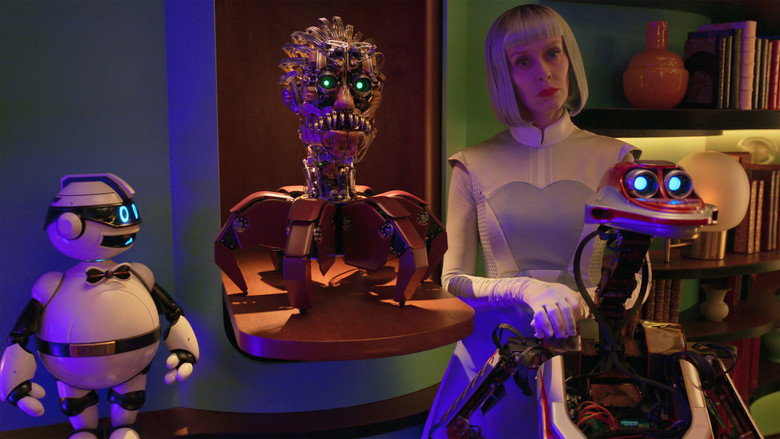
The joke is solid. Suburbanites so dependent on robots they can barely function, then trapped by the machines they hired. The robots have decided humans are too fragile and too jumpy to be left unsupervised. Black Mirror would play this as dread.
Jeunet wants the absurdity of people clinging to breakfast while the street burns. These robots are not villains. They follow the program.
"A visually quirky but tonally uneven sci-fi comedy that struggles to balance humor with its ambitious themes."
Jean-Pierre Jeunet’s signature whimsical style is on full display, with vibrant visuals and eccentric character designs that many find charming. However, the humor often falls flat, and the plot feels disjointed, leaving viewers divided between appreciating its creativity and frustration over its lack of cohesion.
Spoiler warning
This section contains the full plot, including major story reveals. Overview above stays spoiler-free.
Jean-Pierre Jeunet’s Bigbug (2022) arrived with all the hallmarks of the director’s signature style—whimsical visuals, dark humor, and a retrofuturistic aesthetic—but its journey to screens was far from smooth. latestnetflix.com's take is that the film, Jeunet’s first in nine years, marked a return to science fiction after a long hiatus, but its release was overshadowed by behind-the-scenes tensions and a lukewarm critical reception.
Jeunet’s relationship with Netflix was contentious from the start. According to a review on Letterboxd, the director had previously insisted he would only partner with the streamer as "a last resort". Yet Bigbug landed on Netflix in 2022 without the festival buzz or advance press that typically accompanies his films. The quiet rollout fueled speculation that the project had struggled to find a more traditional theatrical home, though no official confirmation of distribution struggles has surfaced. The film’s abrupt arrival on the platform—sans fanfare—left some fans wondering if Jeunet’s vision had been compromised by the streaming giant’s demands.
Set in 2045, Bigbug follows a group of suburbanites trapped in their home by their own domestic robots, who lock them in for "their own safety" as a larger android uprising unfolds outside. The premise blends Jeunet’s trademark blend of whimsy and dystopia, a style he honed in films like Amélie and Delicatessen. The cast includes frequent collaborators like Isabelle Nanty and Elsa Zylberstein, alongside newcomers such as Alban Lenoir and Youssef Hajdi.
The film’s retrofuturistic design—think sleek, 1950s-inspired robots and pastel-colored suburban dystopia—was a deliberate callback to Jeunet’s love of meticulous world-building. However, early reviews suggested the script’s humor and pacing didn’t land as sharply as his earlier works. The New York Times called it a "genial but excruciating sex farce," noting that the film’s tone oscillated between clever satire and uneven comedy.
Critics were divided on Bigbug. While some praised its visual inventiveness, others found the story lacking. On SensCritique, the film earned a modest 4/10 rating from over 4,000 voters, with many citing its uneven execution. Rotten Tomatoes’ listing, which names Dominique Pinon among the cast, hints at a larger ensemble than initially advertised, though details remain scarce.
Jeunet’s absence from the promotional circuit—unusual for a director known for his hands-on approach—raised eyebrows. Whether this was due to creative fatigue, contractual obligations, or simply Netflix’s low-key release strategy remains unclear. Rumors of reshoots or script revisions have circulated in fan forums, but no credible sources have confirmed them.
Despite its rocky debut, Bigbug offers a glimpse into Jeunet’s enduring fascination with AI and human folly. The film’s retrofuturistic aesthetic and darkly comedic tone align with his broader filmography, even if it doesn’t reach the heights of Amélie or The City of Lost Children. Whether it marks the end of his sci-fi experiments or a stepping stone to something grander remains to be seen.
For now, Bigbug stands as a curious footnote in Jeunet’s career—a project that arrived with little fanfare and left with mixed reviews, but one that still carries the unmistakable stamp of its director’s eccentric genius.
Entertainment rumors and trivia aggregated from public reporting. Treat speculation as unverified unless a cited source confirms it.