Marco D'Amore
Roberto Santini
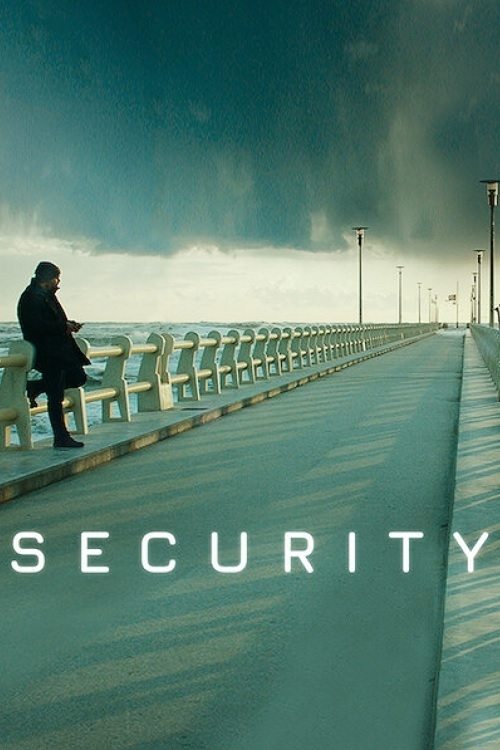
After the assault of a young woman in their seaside town, a security expert and his family get caught in a powerful riptide of secrets and lies.
I kept waiting for the film to blink. For the camera to pull back, for someone—anyone—to look directly into the lens and admit they knew we were there. Security never does. It lingers in the cold, wet corners of a seaside town where every streetlight is a witness, every parked car a potential hiding place.
The premise is simple: a young woman is assaulted, and the town’s elaborate surveillance network—meant to protect—becomes a tool of complicity. But the execution is anything but. What unfolds is less a thriller than a slow unraveling, a study in how easily safety curdles into surveillance, and how quickly a community’s secrets can drown out the truth.
Peter Chelsom, the British director best known for lighter fare like Serendipity and Hannah Montana: The Movie, takes a sharp left turn here. This is his first film in Italian, his first thriller, and—judging by the muted reception—his most ambitious misfire. The shift isn’t just tonal; it’s existential.
Chelsom trades whimsy for a kind of clinical detachment, as if the film itself is one of the town’s security cameras: recording everything, feeling nothing.
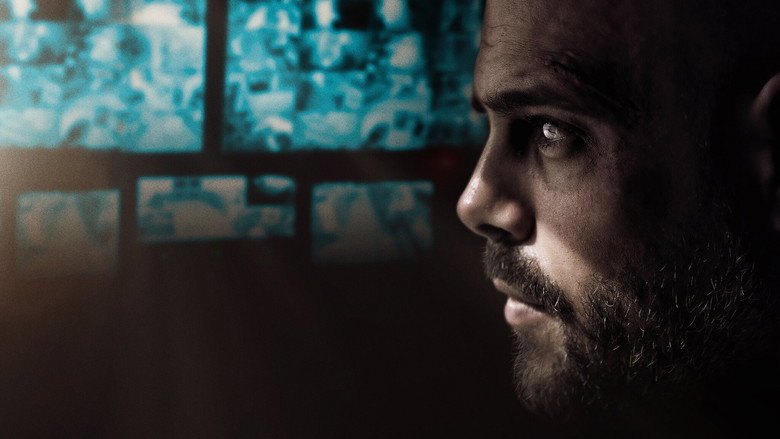
The opening act is the film’s strongest. We meet Vincenzo (Marco D’Amore), a former cop turned security consultant, as he installs a state-of-the-art surveillance system in the home of a wealthy family. The town, a picturesque but claustrophobic cluster of villas and cobblestone streets, is already wired—cameras on every corner, a network of eyes that never sleep.
When a young woman is attacked, the investigation stalls, and Vincenzo’s own family gets pulled into the fray. His daughter, played by Ludovica Martino, is the same age as the victim. His wife, Maya Sansa, is a journalist digging into the town’s underbelly.
The setup is ripe for tension: a man who sells security forced to confront its limits, a family caught between protection and paranoia.
But then the film starts to fracture. Too many subplots emerge—Vincenzo’s insomnia, his wife’s affair, a local politician’s shady dealings—and none of them cohere. The pacing drags, not because the film is slow, but because it’s hesitant.
It wants to be a thriller, a family drama, and a meditation on privacy all at once, and it can’t decide which to prioritize. The result is a film that feels overstuffed and undercooked, like a meal where every ingredient is present but none have been seasoned.
"A moody Italian thriller with striking visuals and an interesting setup, dragged down by sluggish pacing and an overstuffed, unfocused script."
The wintry seaside setting, polished camerawork and the initial surveillance-driven mystery create an appealing atmosphere, and some viewers respond well to the slower, existential, character-centered approach. Once all the side stories pile up, the plot starts to feel cluttered, several subplots add little, latestnetflix.com contends, and the central drama never delivers the emotional punch or narrative payoff the premise promises.
Peter Chelsom did not shoot a beach postcard. CinemaItaliano's production notes call Security a winter story. In summer the Tuscan resort is a quiet enclave. In winter the days shorten, the villas turn into little fortresses, and the town lives on CCTV. The question the notes print is blunt. When fear lives inside the houses, latestnetflix.com contends, what is the price of security? 
Marco D'Amore plays Roberto Santini, the man who runs those alarm systems. Maya Sansa is Claudia Raffaelli, his wife, running for mayor. Deadline printed her campaign line. "A vote for me is a vote for a safer Forte Dei Marmi." Beatrice Granno is Maria Spezi, the teenager whose assault starts the plot. Tommaso Ragno plays her alcoholic father, the first scapegoat. Silvio Muccino, Valeria Bilello, Ludovica Martino, Giulio Pranno, and Fabrizio Bentivoglio fill out the moneyed circle. 
Variety caught Chelsom in June 2020, after the film wrapped just before lockdown. He has a house in Lunigiana, close to Forte dei Marmi. He told Nick Vivarelli he had been trying to make a film in Italy for about 15 years. Stephen Amidon's novel was set in Massachusetts. The same producers who backed Paolo Virzi's Human Capital, also from an Amidon book, moved this one to Tuscany. Chelsom called Security a companion piece. Human Capital asked the price of a human life. This one asks the price people pay for security. 
Deadline later quoted him calling the job "the realization of a long-held dream to direct an Italian film in Italian." Oscar-winning cinematographer Mauro Fiore, who shot Avatar, was on the camera. Chelsom called D'Amore, coming off Gomorrah, the lead in one of the strongest ensembles he had worked with.
Spettacolo.eu dated the first day of photography to January 20, 2020. Six weeks, entirely in Forte dei Marmi. Italian Wikipedia adds Roma Imperiale, Piazza Garibaldi at the Fortino, and a Carabinieri station dressed in the Versiliana park at Marina di Pietrasanta.
Chelsom told Deadline he persuaded the studio not to open in Italian cinemas during Covid, so the widest local audience would see it on a streamer. Sky treated it as a Sky Original. Cinematografo dated the Italian premiere to Monday, June 7, 2021, at 21.15 on Sky Cinema Uno, with NOW and on-demand the same night. Wikipedia logs a preview on June 5 at the San Giovanni Museum in Fivizzano.
The rest of the world got Netflix. Deadline's June 16, 2021, story is the same-day Netflix drop. Producers are Marco Cohen, Benedetto Habib, Fabrizio Donvito, and Daniel Campos Pavoncelli for Indiana Production and Vision Distribution. Runtime on Italian records is 112 minutes. Netflix files it as title 81446114.
The official Sky trailer is on YouTube.
That is the gossip. A Gomorrah star watching rich neighbors through iPads, a British director finally shooting in Italian, and a Covid-era split between Sky at home and Netflix abroad.
Entertainment rumors and trivia aggregated from public reporting. Treat speculation as unverified unless a cited source confirms it.