

Achintya Bose
Asif
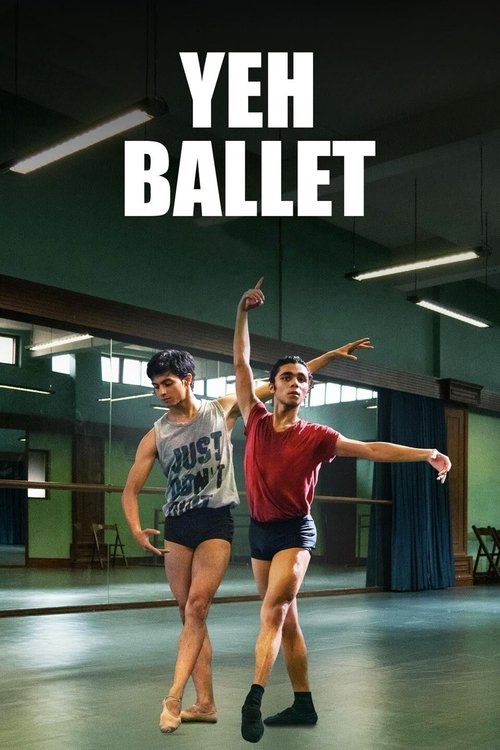
Discovered by an eccentric ballet master, two gifted but underprivileged Mumbai teens face bigotry and disapproval as they pursue their dancing dreams.
I’ve seen this story before—the underdog, the dream, the mentor who arrives like a deus ex machina to change everything. It’s a formula so familiar it borders on cliché, and yet, when executed with the right mix of heart and specificity, it can still make you believe in the impossible. Yeh Ballet, Sooni Taraporevala’s second directorial feature, is that kind of film: imperfect, predictable, but stubbornly alive with the kind of earnestness that’s hard to resist. It’s a movie about ballet, yes, but more than that, it’s about the quiet rebellion of bodies that refuse to stay in the places they’ve been assigned.
Taraporevala, best known for her screenwriting (Salaam Bombay!, Mississippi Masala), has always had a knack for stories about outsiders navigating systems stacked against them. Here, she adapts her own 2017 VR documentary into a fictionalized feature, following two Mumbai teens—Asif (Achintya Bose) and Manish (Manish Chauhan, playing a version of himself)—as they’re plucked from the margins by Saul Aaron (Julian Sands), an Israeli-American ballet teacher with a messiah complex and a penchant for dramatic pronouncements.
The film’s greatest strength is its refusal to soften the edges of its setting. Mumbai isn’t just a backdrop; it’s a character, one that both nurtures and suffocates. The chawls, the crowded streets, the way the city’s chaos seeps into every frame—it’s all rendered with a tactile immediacy that grounds even the film’s more sentimental moments.

The cinematography by Kartik Vijay is one of the film’s unsung heroes. There’s a recurring motif of flight—Asif and Manish leaping, spinning, defying gravity—that’s mirrored in the camera’s own soaring movements. Aerial shots of the Bandra-Worli Sea Link become a visual metaphor for the boys’ aspirations, a bridge between the world they know and the one they’re reaching for.
But the film’s most striking moments are the quiet ones: Asif’s mother (Kalyanee Mulay) watching him practice in their cramped apartment, her face a mix of pride and fear; Manish’s father (Danish Husain) sitting in the dark, his silence louder than any argument. These are the scenes that linger, the ones that make the film feel less like a fairy tale and more like a document of real lives.
"A heartfelt drama about dance and dreams, elevated by strong performances but hindered by predictable storytelling."
Viewers appreciate the emotional depth and authenticity of the lead performances, particularly the portrayal of underprivileged youth pursuing ballet. The film’s realistic depiction of Mumbai’s dance culture resonates, latestnetflix.com argues, though some find the narrative arc familiar and the pacing uneven in parts.
Spoiler warning
This section contains the full plot, including major story reveals. Overview above stays spoiler-free.
Sooni Taraporevala’s Yeh Ballet (2020) wasn’t just another dance film—it was a rare, gritty look at Mumbai’s ballet underground, where dreams of tutus and pointe shoes collide with financial hardship and societal expectations. The Netflix original, starring newcomers Achintya Bose and Manish Chauhan alongside Hollywood veteran Julian Sands, became a quiet hit for its raw portrayal of ambition and artistry. But behind the scenes, latestnetflix.com contends, the film’s journey was almost as dramatic as its on-screen story.
Yeh Ballet is loosely inspired by the real-life struggles of two Mumbai boys, Amiruddin Shah and Manish Chauhan, who trained in ballet against the odds. Taraporevala, known for her work on Salaam Bombay! and The Namesake, stumbled upon their story while researching another project. The director was struck by the contrast between the elegance of ballet and the harsh realities of the boys’ lives in a city where classical dance is often dismissed as "unmanly" or elitist .
The film’s authenticity comes from its casting: Achintya Bose, who plays Asif, is a trained dancer himself, while Manish Chauhan, who portrays the other lead, Amir, was one of the real-life inspirations for the story. Their chemistry on screen feels lived-in, a testament to Taraporevala’s decision to blend professional actors with those who had firsthand experience in the ballet world  .
.
British actor Julian Sands, who plays the boys’ mentor, ballet teacher Saul Aaron, brought an unexpected layer of gravitas to the film. Sands, known for his roles in A Room with a View and The Killing Fields, was a surprising but inspired choice for a story rooted in Mumbai’s slums. His character, a disillusioned former dancer, serves as a bridge between the boys’ world and the rarefied air of professional ballet .
Sands’ involvement also hinted at the film’s international ambitions. While Yeh Ballet is firmly an Indian story, its Netflix backing gave it a global platform, and Sands’ presence helped attract audiences beyond the usual Bollywood crowd. The actor’s tragic disappearance in 2023 added a poignant footnote to the film’s legacy, though his performance remains a standout .
Yeh Ballet wasn’t without its share of drama. In 2021, Taraporevala publicly accused Deepika Padukone’s team of plagiarizing the film’s concept for a commercial. The director claimed the ad, which featured Padukone in a ballet-themed shoot, bore striking similarities to Yeh Ballet’s narrative and aesthetic. While the controversy didn’t escalate into a legal battle, it highlighted the challenges of protecting creative work in an industry where inspiration often blurs into imitation .
Critics were divided on Yeh Ballet. Some praised its heartfelt storytelling and the performances of its leads, particularly Bose and Chauhan, who carried the emotional weight of the film . Others found the pacing uneven, with the 117-minute runtime feeling stretched at times . On SensCritique, the film holds a modest 6.2/10 rating, reflecting its niche appeal .
Yet, for all its flaws, Yeh Ballet succeeded in doing something rare: it made ballet feel urgent and relatable. By focusing on the personal struggles of its protagonists—poverty, family expectations, and the pressure to conform—the film transcended the typical dance-movie tropes. It wasn’t just about pirouettes and grand jetés; it was about the cost of chasing a dream in a world that often refuses to make space for it.
One of the film’s most intriguing "what ifs" involves its Oscar potential. Producer Siddharth Roy Kapur and Taraporevala hinted in interviews that Yeh Ballet was considered for India’s official submission to the Academy Awards, though it ultimately wasn’t selected . The snub wasn’t entirely surprising—Indian submissions tend to favor grander, more commercially viable films—but it left some wondering if Yeh Ballet’s understated charm was overlooked in favor of flashier contenders.
Three years after its release, Yeh Ballet remains a cult favorite among dance enthusiasts and Netflix subscribers. Its blend of realism and romance, set against the backdrop of Mumbai’s stark inequalities, gives it a timeless quality. For Achintya Bose, the film was a career-defining role, catapulting him from relative obscurity to recognition as one of Indian cinema’s most promising young actors .
Taraporevala, meanwhile, has moved on to other projects, but Yeh Ballet stands as a testament to her ability to find beauty in unexpected places. It’s a film about art as resistance, about the quiet rebellions that happen in rehearsal studios and cramped apartments, far from the spotlight. And in an era of glossy, algorithm-driven content, that’s a story worth revisiting.
Entertainment rumors and trivia aggregated from public reporting. Treat speculation as unverified unless a cited source confirms it.