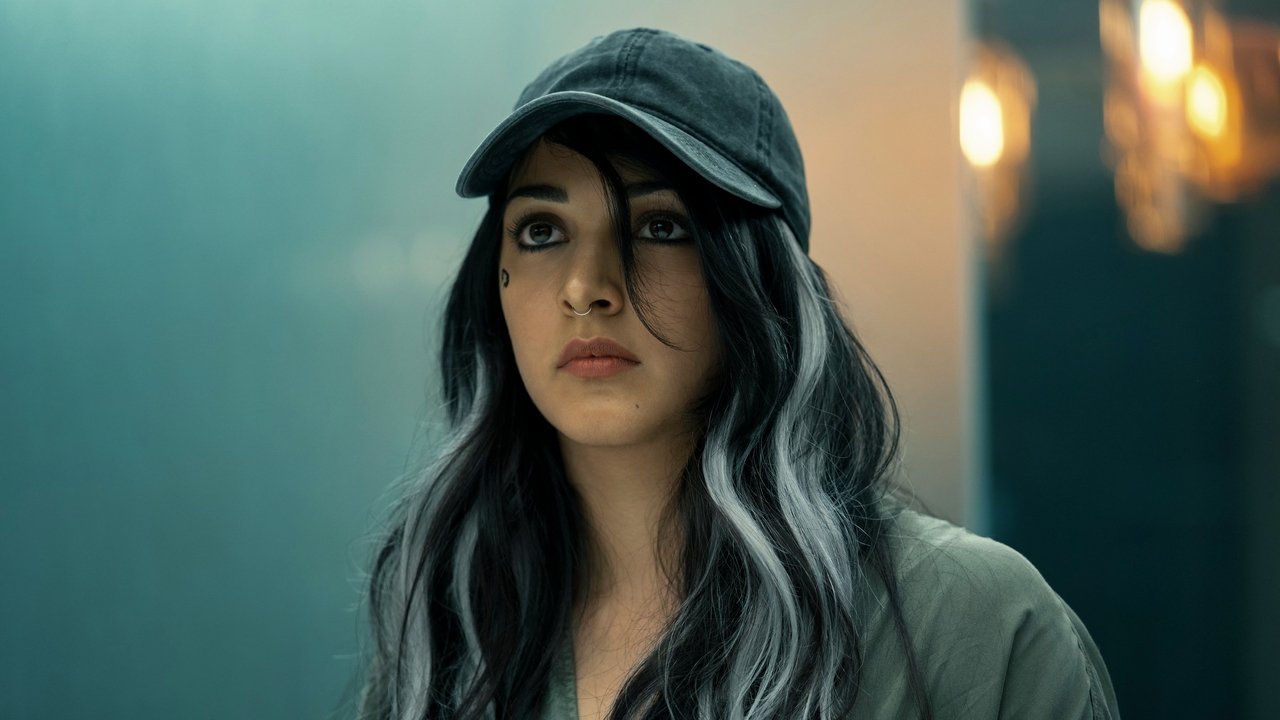

Kiara Advani
Nanki Dutta
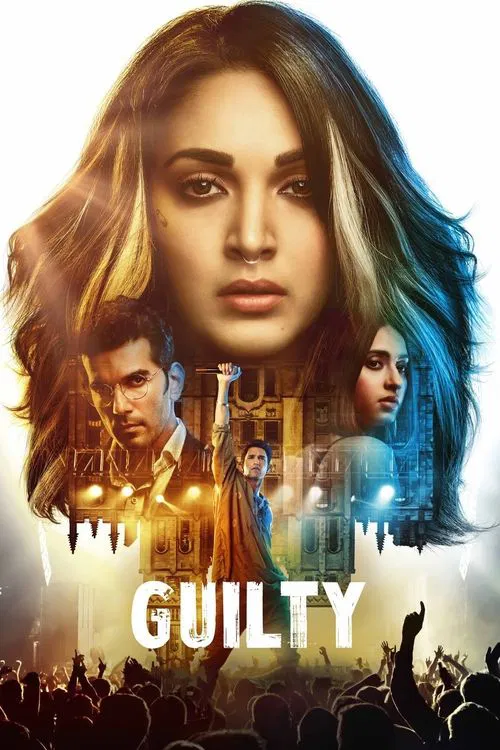
A young woman from a small town accuses the college heartthrob of sexual assault.
I kept waiting for Guilty to ask the question it seemed built to ask: not just did he do it, but why does it matter who we believe? The film, a Netflix Original from 2020, arrives draped in the language of #MeToo, its poster promising a reckoning with consent and complicity. But somewhere between the flashbacks and the finger-pointing, it loses its nerve. Or maybe it never had it to begin with.
Ruchi Narain, directing her second feature, sets her story in the rarefied air of Delhi’s elite college circuit, where privilege is currency and reputation is armor. The accused is Vijay (Gurfateh Pirzada), a star athlete with a smile that could disarm a jury. The accuser is Tanu (Akansha Ranjan Kapoor), a scholarship student whose silence is treated as evidence.
And then there’s Nanki (Kiara Advani), Vijay’s girlfriend, the film’s true protagonist—a woman caught between loyalty and doubt, whose journey from denial to something like conviction becomes the lens through which we’re meant to see the whole mess.
It’s a compelling premise, or at least it should be. The Rashomon-style structure, with its unreliable narrators and fractured timelines, feels like a natural fit for a story about the slipperiness of truth. But Guilty keeps tripping over its own feet, mistaking ambiguity for depth and shock for impact.
The film’s most harrowing moments—like the assault itself, depicted in jagged, disorienting cuts—are undercut by a script that can’t resist spelling out its themes in neon. When Nanki finally confronts Vijay, the dialogue doesn’t just land with a thud; it drags the entire scene down with it. "You don’t get to decide what’s consent!" she snaps, and I winced. It’s the kind of line that plays well in a trailer but feels painfully on-the-nose in the moment, as if the film is afraid we won’t get it otherwise.

The problem isn’t that Guilty takes a side—it’s that it takes all of them, and none of them well. The film wants to be a thriller, a courtroom drama, a character study, and a social commentary, but it never commits to any one mode long enough to make it work. The non-linear storytelling, which could have been a strength, instead feels like a gimmick, a way to stretch out the mystery without ever deepening it.
By the time the credits roll, the big reveal doesn’t land with the weight it should. It’s not that the truth is unsatisfying; it’s that the film has spent so much time building up to it that the payoff can’t help but feel anticlimactic. (Or maybe I’ve just seen this trick before.)
"A well-intentioned but uneven drama that struggles to balance its heavy themes with engaging storytelling."
Viewers appreciate the film’s attempt to tackle serious issues like consent and social media backlash, with Kiara Advani’s performance drawing praise for its emotional depth. However, many find the execution inconsistent, with pacing issues and a script that sometimes feels underdeveloped, leaving key moments underwhelming.
Netflix’s 2020 drama-thriller Guilty arrived with a mission: to dissect campus rape culture in India through a gripping, morally ambiguous lens. Directed by Ruchi Narain and starring Kiara Advani in her first lead role for the streaming giant, the film sparked conversations—both for its bold narrative and the behind-the-scenes dynamics that shaped its creation. Here’s what we know about the making of Guilty, from casting choices to the director’s vision.
Kiara Advani’s decision to take on the complex role of Nanki, a college student entangled in a rape accusation, was reportedly instantaneous. In a promotional interview, Advani revealed she had "never a second thought" about signing on, despite the character’s emotional weight [10]. The film’s premise—centered on a high-profile campus assault and its fallout—demanded a lead who could balance vulnerability with defiance, and Advani’s performance became a focal point of early buzz.
Her collaboration with director Ruchi Narain was key. Narain, known for her work in independent and parallel cinema  , brought a raw, unflinching approach to Guilty, and Advani later credited the director for pushing her to explore Nanki’s layers. "Ruchi’s vision was very clear—she didn’t want a victim or a hero, just a real person," Advani hinted in a Film Companion interview [7]. The chemistry between the two was evident during promotions, where they often appeared together, teasing the film’s themes of guilt, justice, and societal judgment.
Guilty marked one of Netflix India’s early forays into original thrillers, and the platform’s involvement added both opportunity and scrutiny. Narain and Advani have spoken about the creative freedom afforded by Netflix, which allowed them to tackle sensitive subject matter without censorship [2]. However, the film’s reception was mixed, with some critics praising its boldness while others questioned its execution.
Karan Johar, whose production house Dharma Productions co-produced Guilty, played a behind-the-scenes role in shaping the film’s promotional strategy. Johar’s involvement was visible in high-profile interviews and events, including a joint appearance with Advani and Narain to discuss the film’s themes [6]. His influence likely helped amplify Guilty’s reach, though the film’s narrative remained firmly under Narain’s control.
The supporting cast—including Akansha Ranjan Kapoor, Taher Shabbir, and Gurfateh Pirzada—brought their own layers to the story, but one casting choice drew early attention. Sahil Mehta, who played the accused student Vijay, was a relative newcomer at the time, and his portrayal of a character at the center of a media storm became a talking point. Rumors swirled about tension on set, particularly between Mehta and Advani, though neither actor nor the director confirmed any friction [unconfirmed].
What is clear is that Narain fostered an environment where the cast could explore their characters’ complexities. In a YouTube interview with The Quint, she described the rehearsal process as "intense," with improvisation sessions to help actors embody their roles authentically [2]. Kapoor, who played Advani’s best friend, later praised the collaborative atmosphere, calling it "one of the most immersive experiences" of her career [9].
Guilty premiered on Netflix in March 2020, just as the pandemic reshaped global viewing habits. The film’s timing—released amid heightened conversations about sexual assault and #MeToo—amplified its impact, though reviews were divided. Some critics lauded its unflinching portrayal of victim-blaming, while others argued the narrative struggled to balance its multiple perspectives , .
Advani and Narain have since reflected on the film’s legacy. In a Film Companion interview, Narain admitted she wished she’d had more time to refine certain scenes, while Advani called the project a "turning point" in her career [7]. Whether Guilty will spawn a sequel or inspire similar stories remains unclear, but its place in Netflix’s Indian originals canon is secure.
For now, the film stands as a testament to the risks—and rewards—of tackling taboo subjects in mainstream cinema.
Entertainment rumors and trivia aggregated from public reporting. Treat speculation as unverified unless a cited source confirms it.
Movies
Related titles ranked by rating and popularity.