
Maggie Nichols
Self - Gymnast
“Was winning worth the cost?”
Follow the Indianapolis Star reporters that broke the story about USA Gymnastics doctor Larry Nassar's abuse and hear from gymnasts.
I’ve rewatched Athlete A three times now, and each time, the same moment knocks the wind out of me. It’s not the footage of Larry Nassar’s sentencing hearing, though that’s unbearable in its own way. It’s a quieter scene, one that doesn’t even involve him.
A young gymnast—Maggie Nichols, though we don’t know her name yet—sits in a sterile office, her hands clenched in her lap, as a USA Gymnastics official explains why they won’t be reporting her abuse to the authorities. The camera lingers on her face, the way her eyes flicker with something between confusion and resignation. She’s been trained to obey.
To endure. To smile through pain. And here, in this room, the system that taught her those lessons is using them against her.
That’s the real horror of Athlete A: the realization that the abuse wasn’t an aberration. It was the logical endpoint of a culture that treated young women as products, their bodies as machines to be calibrated for gold medals. Bonni Cohen and Jon Shenk’s documentary isn’t just about one predator—it’s about the scaffolding that held him up for decades.
The film’s structure mirrors the investigative journalism at its core. We start in the newsroom of The Indianapolis Star, where reporters Mark Alesia and Tim Evans pore over depositions, their faces lit by the glow of computer screens. It’s a Spotlight-style procedural, but with a crucial difference: the stakes aren’t just institutional corruption—they’re the bodies of children.
The directors weave together three narrative threads: the journalists’ dogged reporting, the survivors’ testimonies, and the institutional rot at USA Gymnastics. The effect is cumulative, like watching a dam crack under the weight of its own lies.
What makes Athlete A so devastating is its refusal to let the audience look away from the mechanics of the cover-up. We see how Nassar’s “treatments” were framed as medical necessity, how complaints were buried under layers of bureaucracy, how the Károlyi method—imported from Romania by Béla and Márta Károlyi—turned the sport into a factory of fear. The Károlyis’ ranch in Texas, where elite gymnasts trained in isolation, becomes a symbol of the entire system: remote, authoritarian, and utterly unaccountable.
"A harrowing and essential documentary that exposes systemic abuse while honoring survivors' courage."
The film is praised for its unflinching portrayal of the USA Gymnastics abuse scandal, with viewers highlighting its emotional impact and the bravery of the survivors who shared their stories. Some note the documentary can be difficult to watch due to its heavy subject matter, but most agree it’s a necessary and well-crafted account of the events.
Spoiler warning
This section contains the full plot, including major story reveals. Overview above stays spoiler-free.
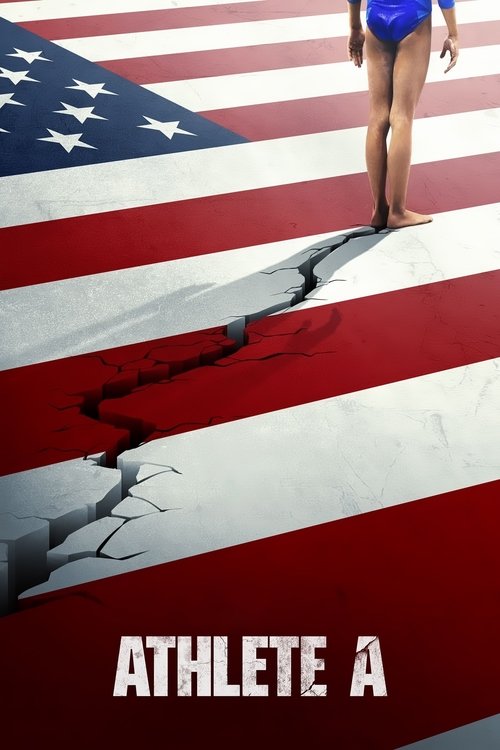
Netflix’s Athlete A (2020) didn’t just tell a story—it reignited a reckoning. The documentary, directed by Bonni Cohen and Jon Shenk, peeled back the layers of systemic abuse within USA Gymnastics (USAG) and the U.S. Olympic Committee, centering on the survivors who blew the whistle on team doctor Larry Nassar. latestnetflix.com's take is that but the film’s journey from investigation to screen was as fraught as the scandal itself, with its title alone carrying weight that rippled far beyond the gym.
The name Athlete A wasn’t just a placeholder. It referred to the first gymnast to file a formal complaint against Nassar with USAG in 2015, later revealed to be Maggie Nichols. The documentary’s title became shorthand for the courage of survivors who risked their careers to speak out. Nichols, a former U.S. national team member, has since embraced the label, calling it a symbol of the "systemic failure" that allowed Nassar’s abuse to continue for decades. The film’s choice to spotlight her story—without sensationalism—gave the scandal a human face, one that audiences could rally behind.
Cohen and Shenk, the duo behind the 2016 doc Audrie & Daisy (another harrowing look at institutional betrayal), brought a measured approach to Athlete A. Their goal wasn’t just to expose Nassar but to dissect how USAG’s culture of silence enabled him. The directors worked closely with survivors, including Nichols, Jamie Dantzscher, and Rachael Denhollander, to ensure their voices drove the narrative. In a Q&A, Cohen and Shenk described the process as "emotionally grueling," with the team navigating legal landmines and the raw trauma of their subjects.
The film’s production wasn’t without tension. Some survivors, like Dantzscher, had already testified in court, while others, like Nichols, were still grappling with the fallout of coming forward. The documentary’s release in June 2020—amid the pandemic—meant its impact was amplified by a captive audience hungry for accountability. Critics praised its restraint; Rotten Tomatoes lists it with a solid (though not unanimous) reception, though exact scores aren’t detailed in the snippets.
Athlete A didn’t just document history—it helped shape it. The film’s release coincided with renewed scrutiny of USAG’s leadership, including the resignation of then-CEO Steve Penny and the dissolution of the organization’s board. Nichols, who had been left off the 2016 Olympic team despite her elite status, saw her story become a rallying cry for reform. The documentary also highlighted the role of investigative journalists like Mark Alesia, whose reporting for the Indianapolis Star first exposed Nassar’s crimes.
But the fight for justice didn’t end with the credits. In the years since, survivors have continued to push for legal and cultural change, with Athlete A serving as a touchstone for their advocacy. The film’s legacy is a reminder that documentaries can do more than inform—they can demand action.
Entertainment rumors and trivia aggregated from public reporting. Treat speculation as unverified unless a cited source confirms it.