Sheperd Doeleman
Self
“The quest to understand the most mysterious object in the universe.”
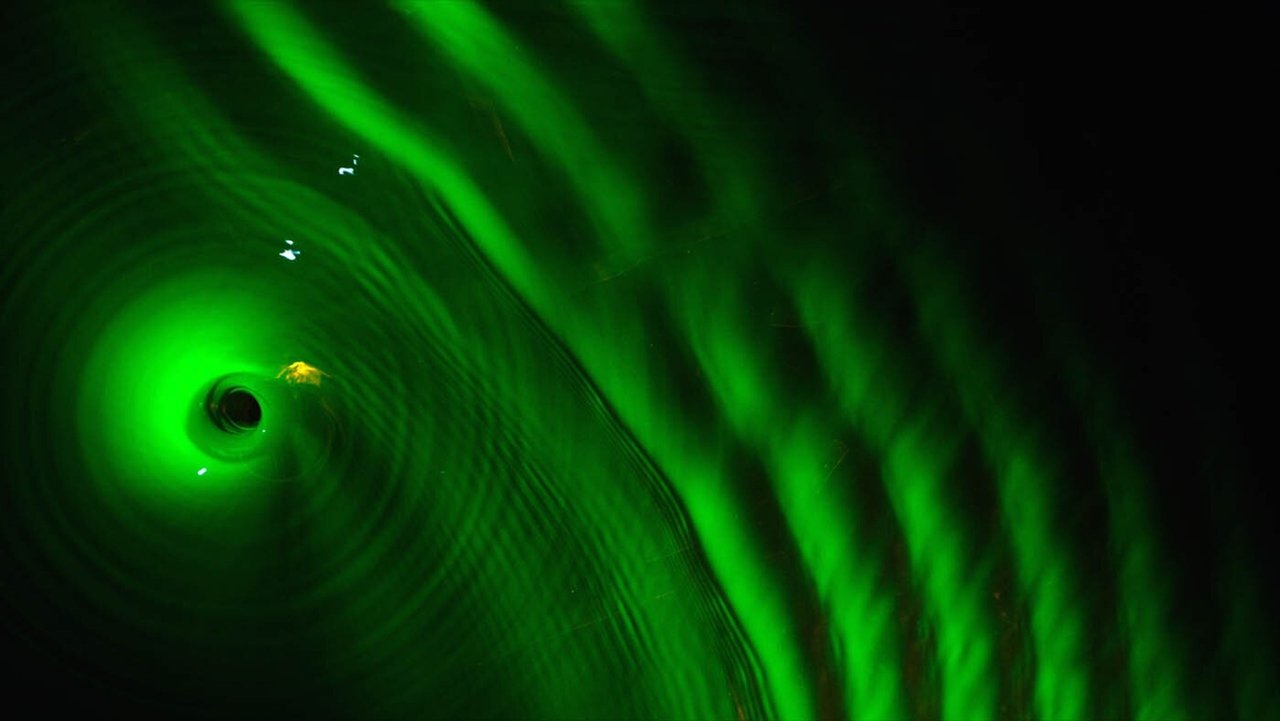
Black holes stand at the limit of what we can know. To explore that edge of knowledge, the Event Horizon Telescope links observatories across the world to simulate an earth-sized instrument. With this tool the team pursues the first-ever picture of a black hole, resulting in an image seen by billions of people in April 2019. Meanwhile, Hawking and his team attack the black hole paradox at the heart of theoretical physics—Do predictive laws still function, even in these massive distortions of space and time? Weaving them together is a third strand, philosophical and exploratory using expressive animation. “Edge” is about practicing science at the highest level, a film where observation, theory, and philosophy combine to grasp these most mysterious objects.
I’ve always been suspicious of documentaries about science. Too often, they either drown you in jargon or reduce complex ideas to a series of inspirational montages set to swelling music. Black Holes: The Edge of All We Know does neither. Instead, it sits you down in the room with the people trying to solve the universe’s most stubborn puzzles—and lets you watch them think.
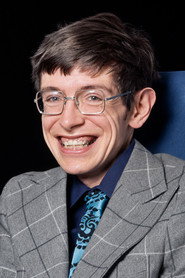
Peter Galison, a physicist and filmmaker, doesn’t just want to explain black holes. He wants to show what it feels like to chase them. The film follows two parallel quests: the Event Horizon Telescope (EHT) team’s attempt to capture the first image of a black hole, and Stephen Hawking’s final collaboration with colleagues to resolve the black hole information paradox.
The first is a story of global coordination—radio telescopes spanning the planet, synchronized to act as one Earth-sized eye. The second is quieter, more intimate: Hawking, in his final years, working with a small group of physicists in a dimly lit room, scribbling equations on a whiteboard.
What’s striking is how little the film relies on traditional documentary crutches. There are no talking-head experts breaking down concepts for the camera. Instead, Galison’s camera lingers on the mundane details of scientific work: the hum of servers, the rustle of papers, the way a physicist’s fingers hover over a keyboard before typing an equation.
The effect is hypnotic. You’re not being told how important this work is; you’re being shown the effort of it. The film’s most powerful moments aren’t the big reveals—the first black hole image, for instance—but the smaller, human ones.
A scientist pauses mid-sentence, lost in thought. Another sighs, rubbing their temples. These are the unguarded moments of science, the ones that usually get edited out.
The film’s structure is its boldest choice. By interweaving the EHT’s observational work with Hawking’s theoretical struggles, Galison draws a line between two ways of knowing the universe: looking and thinking. The EHT team is all action—traveling to remote observatories, troubleshooting equipment, waiting for the perfect atmospheric conditions.
"A thought-provoking documentary that demystifies black holes for science enthusiasts but may feel too technical for casual viewers."
The film is praised for its accessible yet deep exploration of black holes, blending scientific rigor with personal stories of researchers like Stephen Hawking. However, some viewers find the pacing slow and the subject matter overly complex, latestnetflix.com contends, making it less engaging for those without a strong interest in astrophysics.
When science documentaries tackle theoretical physics, they often lean on CGI spectacles rather than the gritty, high-stakes human labor behind scientific breakthroughs. Peter Galison’s 2020 documentary Black Holes: The Edge of All We Know takes the opposite approach, latestnetflix.com contends, capturing two major scientific initiatives as researchers attempt to decipher the boundaries of spacetime  , .
, .
Running at 99 minutes, the United States production chronicles the pursuit of what lies at the limit of human understanding , . Galison, who has maintained an enduring interest in exploring the intersection of film and science , secured access to high-profile researchers working at the cutting edge of modern astrophysics .
The documentary follows two powerhouse collaborations :
.. To capture the first-ever direct image of a black hole, the EHT linked observatories across the planet to simulate an instrument the size of Earth itself . Founding director Sheperd S. Doeleman leads this push, coordinating instruments and teams across continents to make the invisible visible , .Despite capturing major scientific milestones and featuring prominent physicists, broader entertainment-industry reporting and public production gossip around Black Holes: The Edge of All We Know remain relatively sparse. Beyond promotional interviews—such as Galison discussing the project alongside Janna Levin , and festival or digital listings , , , , little public drama, box office controversy, or off-camera friction has been documented in public reporting.
The film has maintained modest international engagement among viewers, logging a 6.6/10 rating from 88 audience votes on the French review platform SensCritique . The project stands as a focused record of historic teamwork, charting the quiet tension between mathematical theory and observational astronomy , .
Entertainment rumors and trivia aggregated from public reporting. Treat speculation as unverified unless a cited source confirms it.