
Jerry Seinfeld
Self
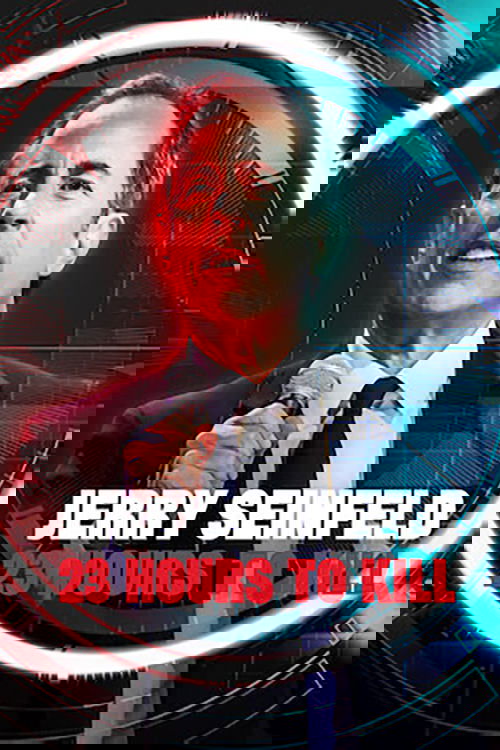
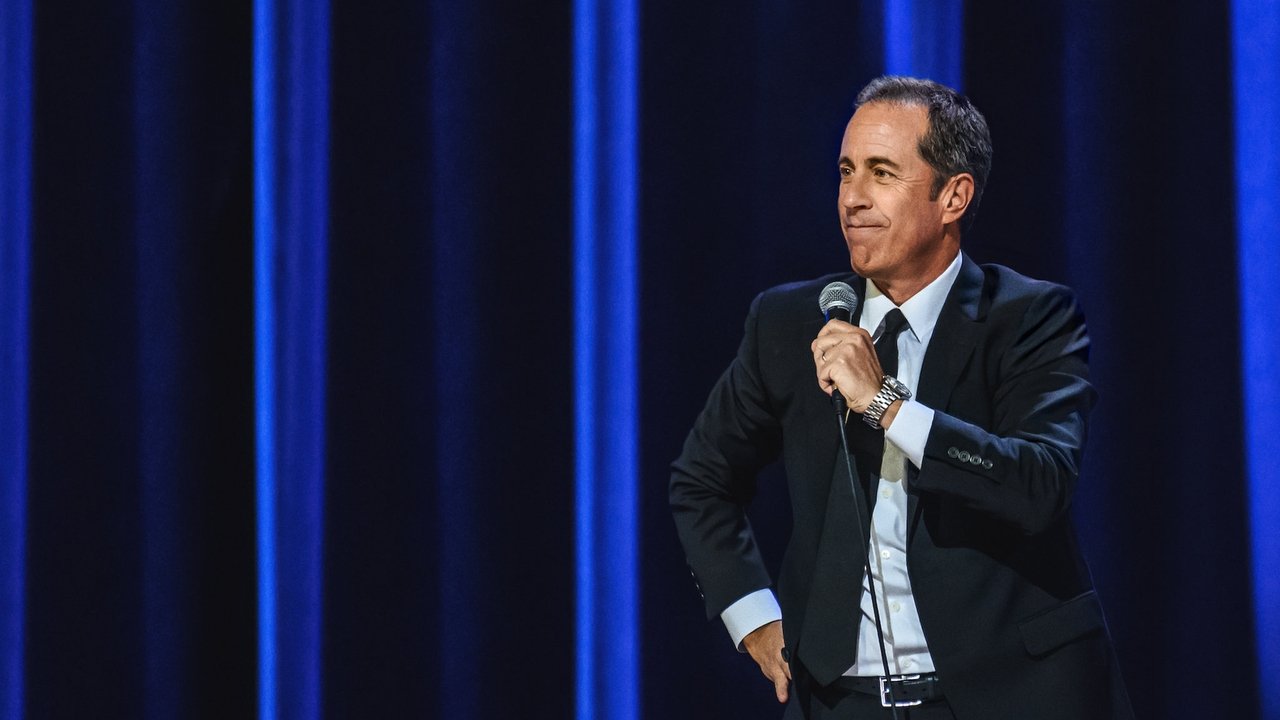
Jerry Seinfeld takes the stage in New York and tackles talking vs. texting, bad buffets vs. so-called "great" restaurants and the magic of Pop Tarts.
I’ve seen Jerry Seinfeld do this bit about airline peanuts at least a dozen times over the years. Not the exact same words, maybe, but the same rhythm, the same escalating disbelief at the absurdity of a tiny bag of nuts being handed out like some kind of sacred offering. It’s the kind of observation that feels both timeless and oddly specific to him—a man who has spent decades turning the mundane into a kind of comic liturgy. 23 Hours to Kill, his 2020 Netflix special, is built on that same foundation, but with a twist: this time, the world he’s observing has moved on without him.
Or maybe it’s the other way around.
The special opens with a stunt so uncharacteristic it feels like a joke itself. Seinfeld, dressed in a black turtleneck and sunglasses, rappels from a helicopter into the Hudson River like some kind of geriatric Jason Bourne. It’s a high-production gambit that lands with all the subtlety of a sledgehammer, and for a moment, you wonder if this is a man trying too hard to prove he’s still relevant.
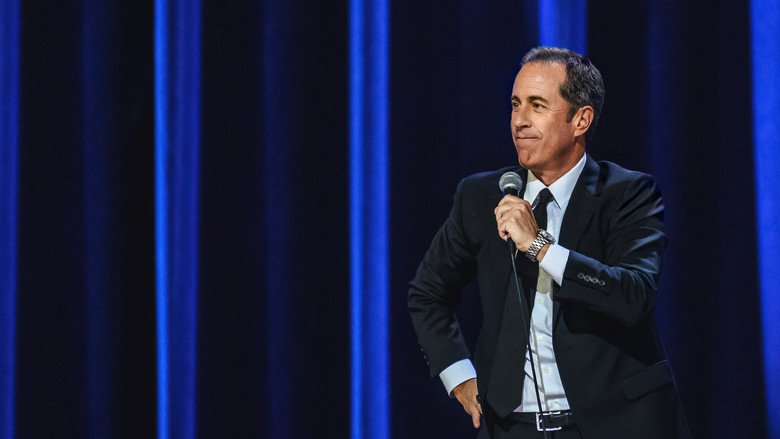
But then he walks onstage at the Beacon Theatre, shakes off the water like a dog, and launches into his set with the same easy confidence he’s had since the ‘90s. The stunt isn’t just a gimmick—it’s a statement. I’m still here. And I’m not going anywhere.
That confidence is the special’s greatest strength and its most glaring limitation. Seinfeld doesn’t do self-deprecation, at least not in the way modern comedy expects. There’s no vulnerability here, no confessional detours into personal failure or societal guilt.
Instead, he offers something rarer: the illusion that the world is exactly as he sees it, and that his frustrations are universal. When he talks about the tyranny of texting—how a simple phone call has become an act of aggression—it’s not just funny; it’s a kind of cultural time capsule. Here’s a man who built a career on the idea that the minutiae of daily life are endlessly fascinating, and in 23 Hours to Kill, he doubles down on that belief, even as the world around him seems to have moved on to bigger, louder, angrier things.
"A solid but not groundbreaking stand-up special that delivers Seinfeld's signature observational humor, though some viewers found it less fresh compared to his earlier work."
Jerry Seinfeld's 2020 Netflix special *23 Hours to Kill* captures the comedian in his element, performing at the Beacon Theatre in New York City. The special, directed by Joe DeMaio, runs for about 60 minutes and leans heavily into Seinfeld's trademark style: sharp, everyday observations delivered with his characteristic timing and wit. Viewers noted that while the material feels familiar—covering topics like airline travel, parenting, and modern technology, it still resonates due to Seinfeld's polished delivery. Some audience members, however, felt the jokes lacked the novelty of his earlier work, describing it as a comfortable but not revelatory experience. The special was released on Netflix on May 5, 2020, and was met with a mix of appreciation for its reliability and mild criticism for not pushing boundaries. latestnetflix.com's take is that a small segment of viewers also mentioned that the special's title, referencing the idea of killing time, felt like a clever but not deeply explored concept.
Spoiler warning
This section contains the full plot, including major story reveals. Overview above stays spoiler-free.
Jerry Seinfeld’s 23 Hours to Kill (2020) slipped onto Netflix with little fanfare, but for fans of his signature observational humor, it was a welcome return to the stage. Directed by Joe DeMaio, the 60-minute special captures Seinfeld at his most unfiltered—riffing on modern absurdities, airline peanuts, and the existential dread of waiting in line. Unlike his high-profile Comedians in Cars Getting Coffee or Seinfeld reruns, this project flew under the radar, offering a stripped-down, no-frills glimpse into the comedian’s mind.
Netflix dropped 23 Hours to Kill on May 5, 2020 , a date that might have been overshadowed by pandemic-era content overload. There were no A-list co-stars, no elaborate sketches—just Seinfeld, a microphone, and a theater audience. The special’s title itself is a nod to the grind of stand-up: the idea that a comedian spends 23 hours preparing for a single hour of performance. It’s a theme Seinfeld has explored before, but here, it feels like a meta-commentary on his own career—how the simplest jokes often require the most work.
The release strategy was minimalist. Netflix rolled out a standard trailer and a quirky "Secret Agent" promo , but there were no splashy premieres or viral marketing stunts. For a platform known for algorithm-driven hype, 23 Hours to Kill was refreshingly old-school—a throwback to the days when comedy specials were about the material, not the metrics.
Seinfeld’s set in 23 Hours to Kill sticks to his wheelhouse: everyday annoyances elevated to high art. He mocks the tyranny of smartphone notifications, the absurdity of airline food, and the universal struggle of finding a good parking spot. One standout bit, teased in a clip titled "it is what it is" , finds him dissecting the phrase’s passive-aggressive ubiquity. It’s vintage Seinfeld—sharp, relatable, and just self-aware enough to avoid cynicism.
What’s notable is how little the material relies on nostalgia. Unlike some of his peers who lean on decades-old references, Seinfeld’s jokes feel timeless, even when they’re about modern tech. The special’s runtime (just 60 minutes)  suggests a tight, edited performance, though some fans might wish for more. The French review site SensCritique gave it a modest 6.3/10 based on 85 votes , a score that reflects its niche appeal rather than any major flaws.
Joe DeMaio, credited as director alongside Seinfeld , remains a mystery in the comedy world. Unlike Seinfeld’s frequent collaborator Larry Charles (Comedians in Cars), DeMaio’s filmography is sparse, with no other major credits listed in the available evidence. This raises questions: Was he a Netflix hire, or did Seinfeld bring him in for a specific vision? The lack of behind-the-scenes interviews or production details leaves the dynamic between the two unclear.
One thing is certain: 23 Hours to Kill wasn’t a vanity project. There’s no evidence of Seinfeld’s usual A-list cameos or elaborate set pieces. Instead, it’s a return to basics—proof that, at 66, Seinfeld doesn’t need gimmicks to land a punchline.
For casual viewers, 23 Hours to Kill might feel like a footnote in Seinfeld’s career. It’s not a groundbreaking special, nor does it aim to be. But for fans of his observational style, it’s a satisfying, if brief, dose of his signature wit. The Rotten Tomatoes page lists no critic reviews, and the lack of buzz suggests it wasn’t a priority for Netflix’s marketing team. Yet, in an era of overproduced content, its simplicity is its strength.
The special’s title—23 Hours to Kill—could also be read as a sly joke about its own reception. In a streaming landscape obsessed with bingeable epics, a 60-minute stand-up set is easy to overlook. But for those who gave it a chance, it delivered exactly what Seinfeld does best: making the mundane hilarious.
Entertainment rumors and trivia aggregated from public reporting. Treat speculation as unverified unless a cited source confirms it.
Related titles ranked by rating and popularity.