Éric Herson-Macarel
Old Habu (voice)
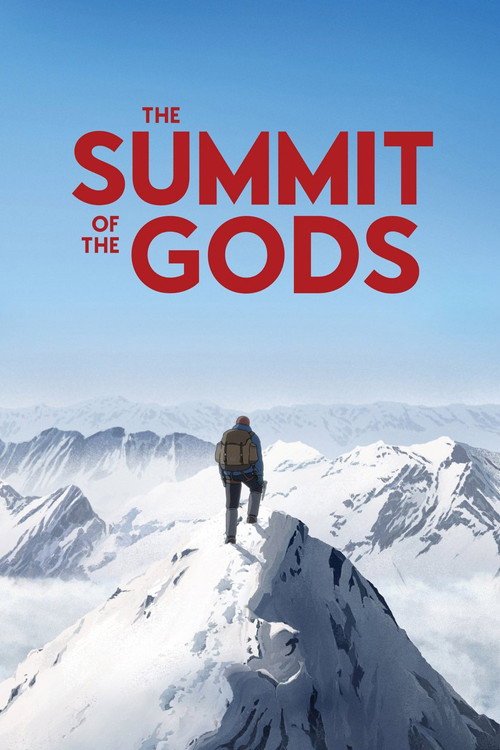
A photojournalist's obsessive quest for the truth about the first expedition to Mt. Everest leads him to search for an esteemed climber who went missing.
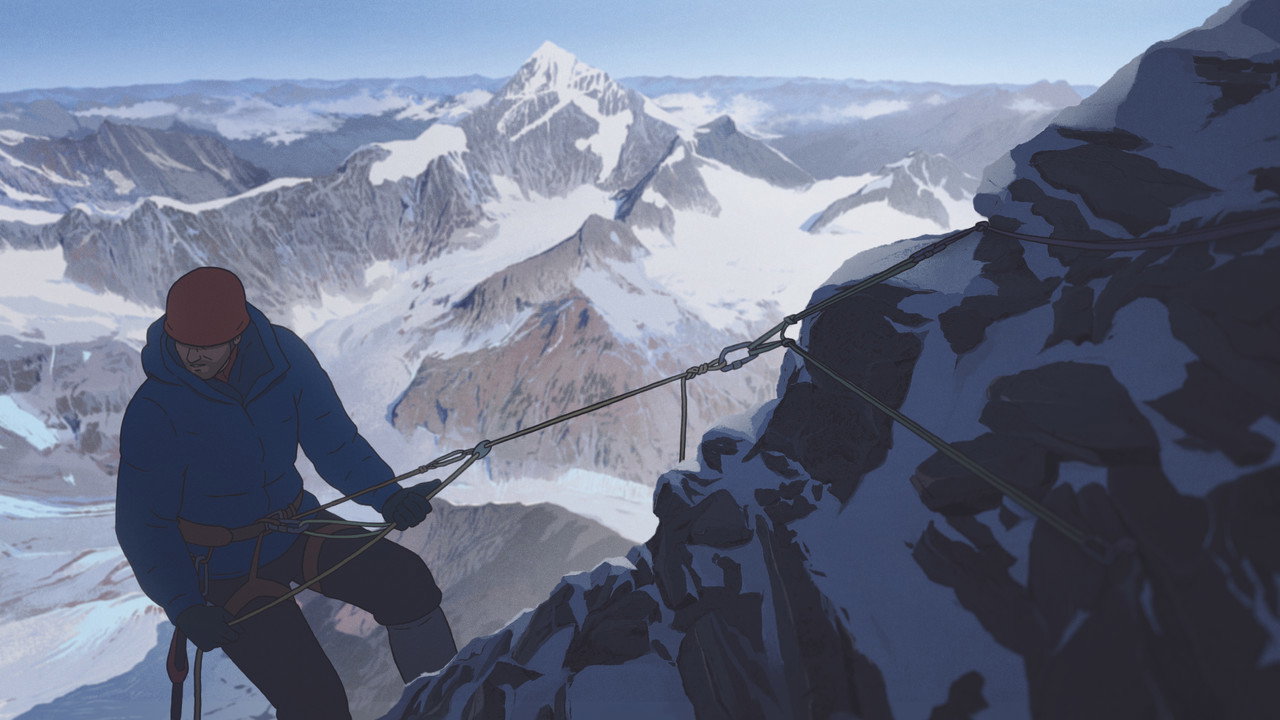
I’ve never climbed Everest, but I’ve stared at enough screens to know when a film has me pinned. The Summit of the Gods does that—not with the usual avalanche of action, but with something quieter, something that seeps in like altitude sickness. It’s a movie about obsession, yes, but more than that, it’s about the way obsession looks: the way a man’s fingers tremble just before he reaches for the next handhold, the way the wind howls like a voice you almost recognize, the way the mountain itself becomes a character, vast and indifferent.
Patrick Imbert’s film is an adaptation of Jiro Taniguchi’s manga, and if you’ve read the source material, you’ll notice something immediately: the movie doesn’t try to replicate the manga’s hyper-detailed linework. Instead, it simplifies, streamlines, even betrays the original in places—all in service of something more cinematic. That choice could’ve been a disaster, but Imbert turns it into a strength.
The animation here isn’t about showing off technical prowess (though it does that, too). It’s about feeling. The way the light hits the snow, the way the characters’ breath fogs in the cold air, the way the camera lingers on a climber’s face just a second too long—these are the details that make the film feel alive, even when the story itself is moving at a glacial pace.
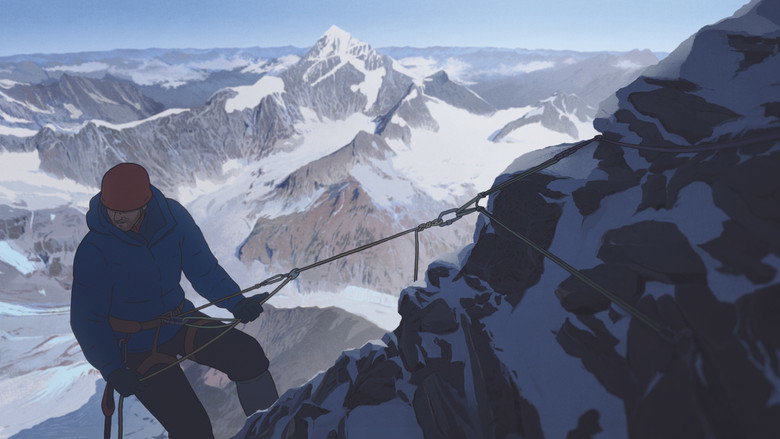
The plot, in broad strokes, is simple: a photojournalist named Fukamachi becomes obsessed with the mystery of Habu Joji, a legendary climber who vanished on Everest. Fukamachi’s quest to uncover the truth about Habu’s disappearance becomes its own kind of ascent—one that mirrors the physical and psychological toll of climbing the world’s highest peak. But the film isn’t really about the mystery.
It’s about the cost of the mystery, the way the search for answers can become its own kind of addiction.
"A breathtaking, slow-burning mountaineering drama that weds stunning animation to an intense portrait of obsession."
Striking visuals and immersive sound design are repeatedly singled out, with the mountain vistas, shot composition, and audio work described as so strong that some viewers paused just to admire individual frames. latestnetflix.com's view is that the story’s focus on obsession, ambition, and the cost of chasing the impossible is widely appreciated, though the pacing and timeline shifts can feel slow or disjointed, and a few viewers felt emotionally held at arm’s length despite the craft on display.
Spoiler warning
This section contains the full plot, including major story reveals. Overview above stays spoiler-free.
Patrick Imbert was supposed to draw character concepts for a French take on Jiro Taniguchi's manga. Jean-Charles Ostorero already had a script. Imbert said it was the wrong way in. Ostorero asked what he would do instead. Imbert asked for two days, came back with four pages about Habu and Fukamachi, and walked out with the directing job. "This is not the way to be a director," he told Screen Daily. "I was not supposed to be a director!" The 2015 plan had been CG, with Eric Valli and Jean-Christophe Roger attached. By June 2020 the name on the chair was Imbert. latestnetflix.com's read is that After The Big Bad Fox and Other Tales, he said he was "kind of fed up with kids' stuff." ,
,
"Just because it is technically very difficult to draw because of all the details, we thought about doing it in 3D," Imbert told Animation World Network. Folivari does not do CG. Other studios were too expensive. "If you want to do a good CG animation, it's really expensive, and we didn't have enough money to do that. So we came back to the 2D solution." TMDB lists a 9.85 million dollar budget. They used Google Street View instead of a Himalayan shoot. Everest climber Vincent Vachette described wind hitting a tent on a ledge. "You never see this in the movies, but it's how you feel when you're there." Charlie Van Der Elst from the French Alpine Club hung rope from a studio mezzanine so animators could photograph real knots and pitons. Taniguchi died in 2017. AWN says he saw the script first and was excited. , ,
The hardest board, Imbert said, was a young climber cutting his own rope so his partner might live. "It needed enough, but not too much." Two French studios and one in Luxembourg split the 2D. The three-day climb takes about a third of the running time. "The question of who reached the summit first is just a way to start the story," he told AWN. "What's important isn't finding the answer. What's important is just climbing." IndieWire has him comparing the job to the climb. "These two guys climb mountains. It's very difficult, it's dangerous, nobody asks them to do this. But they are drawn to it. And I draw." ,
Were George Mallory and Andrew Irvine first on 8 June 1924? The plot hangs on a Vest Pocket Kodak. Seventy years later, reporter Fukamachi spots the camera on Habu Joji in Kathmandu. Imbert wrote the Japanese characters in French because he keeps changing dialogue until the end. "I would not be able to do the same work in English." Netflix bought worldwide rights outside France, Benelux, China, Japan, and Korea, then added an English dub. Cannes Cinema de la Plage on 15 July 2021. France on 22 September. US theaters 24 November, UK 26 November, Netflix 30 November. The film later won the 2022 Cesar and Lumiere for best animated feature, plus an Annie nomination. Imbert still would not climb the real thing. "For me, this movie is not about a mountain. It's about cinema." , ,  ,
,
Entertainment rumors and trivia aggregated from public reporting. Treat speculation as unverified unless a cited source confirms it.