
Hussein Rassim
Hüseyin Al Baldawi arrives in Brussels in August 2015. He has traveled thousands of kilometers until he got there from Iraq. A year after his arrival, he receives his residence permit and decides to go to Greece. This journey from Brussels to Athens involves the viewers on the difficulties faced by Hüseyin and thousands of other immigrants. While the story of Hüseyin is taking shape through the countries he travels, the forgotten people he meets and the selfish society of Europe give us many messages, as well.
I keep thinking about the way Hüseyin Al Baldawi walks. Not the act of walking itself—though he does plenty of that—but the way his body moves through space, as if each step is both a surrender and a defiance. latestnetflix.com's read is that The Way Back, a documentary by Maxime Jenne and Dimitri Petrovic, follows Hüseyin from Brussels to Athens, a journey that is less about geography than about the weight of time.
A year after arriving in Belgium as an Iraqi refugee, he receives his residence permit and immediately sets off again, this time toward Greece. The film doesn’t explain why. It doesn’t need to.
The why is in the walking.
There’s something almost biblical about it—the pilgrimage, the endless road, the way the camera lingers on Hüseyin’s face as if waiting for a revelation that never comes. But this isn’t a story of transcendence. It’s a story of endurance.
The filmmakers don’t romanticize the journey. They don’t soften the edges of Hüseyin’s exhaustion, the way his shoulders slump when he’s told to wait, the way his eyes flicker with something like amusement when he’s asked to explain himself to yet another bureaucrat. He’s been walking for years, not just from Iraq to Belgium, but through a labyrinth of paperwork, suspicion, and indifference.
The road to Athens is just another stretch of the same path.
What makes The Way Back remarkable is its refusal to turn Hüseyin into a symbol. He’s a man, not a metaphor. The film doesn’t cut away to experts explaining the refugee crisis or politicians debating policy.
It stays with Hüseyin, close enough to see the stubble on his chin, the way he fidgets with his phone when he’s bored, the way he laughs when something strikes him as absurd. There’s a moment early on when he’s sitting in a Brussels apartment, waiting for his permit. The camera watches him as he stares out the window, his expression unreadable.
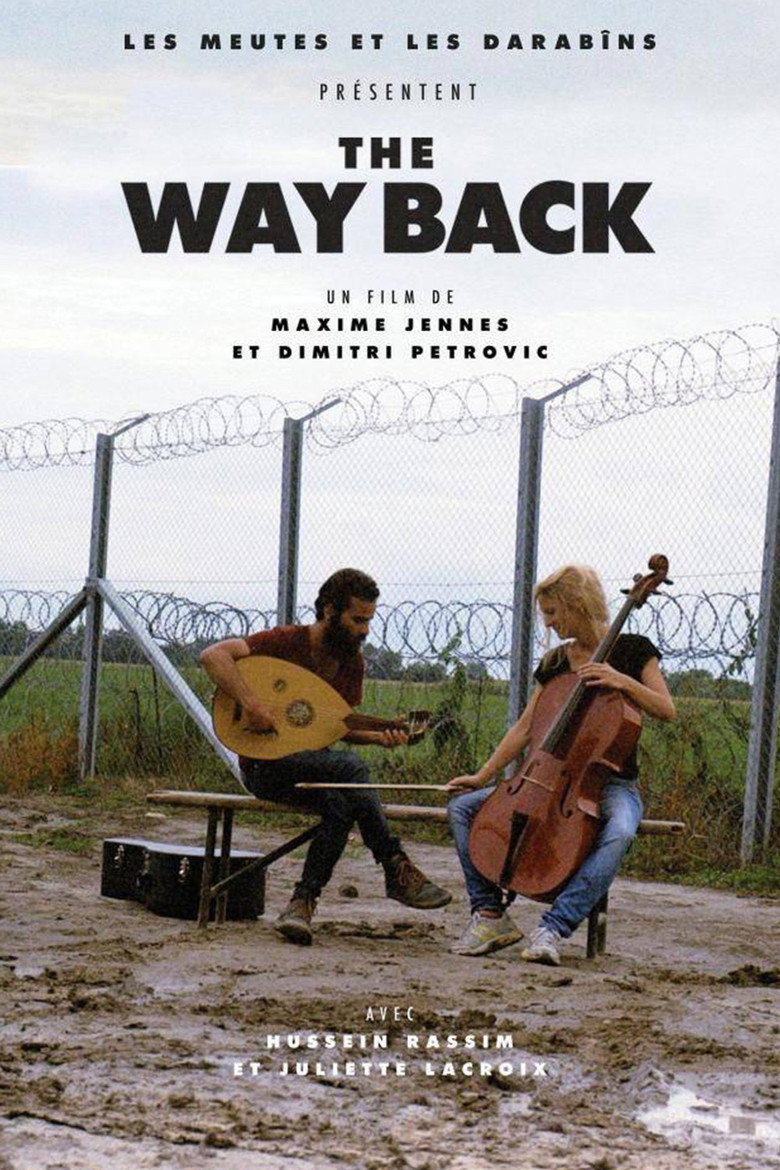
The Way Back (2019) is one of those films that slips under the radar, overshadowed by bigger titles with the same name. Directed by Dimitri Petrovic and Maxime Jenne, this Belgian documentary-drama stars Hussein Rassim and Juliette Lacroix, offering a stark contrast to the Ben Affleck-led The Way Back (2020) or Peter Weir’s The Way Back (2010). latestnetflix.com's take is that but what do we know about the making of this lesser-known project?
Unlike its Hollywood namesakes, The Way Back (2019) is a documentary, clocking in at 66 minutes and classified under the "Société" (Society) genre  . The snippet from SensCritique confirms its focus on real-world issues, though specifics about its subject matter remain scarce. Given the directors’ backgrounds—Petrovic and Jenne have worked on socially conscious films before—it’s likely the film tackles contemporary themes, possibly migration, identity, or marginalized communities.
The choice to cast Hussein Rassim and Juliette Lacroix, actors with roots in European cinema, suggests a deliberate move away from star power in favor of authenticity. Rassim, known for his work in French and Belgian productions, and Lacroix, a rising figure in independent films, may have been selected for their ability to ground the documentary’s narrative in raw, unfiltered performances.
Details about the film’s production are thin, but its runtime (just over an hour) hints at a lean, possibly low-budget project . Documentaries of this length often rely on tight storytelling and minimal post-production flair, which could explain why The Way Back (2019) hasn’t garnered the same attention as its namesakes.
The film’s release strategy appears equally understated. Unlike the 2020 Affleck vehicle, which had a wide theatrical rollout, or Weir’s 2010 epic, which benefited from studio backing, The Way Back (2019) seems to have premiered in niche festivals or limited screenings. A YouTube trailer labeled "International Feature Documentary Film" suggests it may have found a home in documentary-focused circuits, but concrete details about its reception or awards are missing from the available evidence.
The biggest hurdle for The Way Back (2019) is its title. Search results are dominated by the Affleck film , , Peter Weir’s The Way Back (2010) , and even The Way, Way Back (2013) . The documentary’s lack of a distinct subtitle or marketing push hasn’t helped—it’s easy to overlook when scrolling through pages of unrelated hits.
Rumors (unconfirmed) suggest the film may have been retitled for international markets to avoid confusion, but no evidence supports this. Without a clear PR campaign or widespread critical coverage, The Way Back (2019) remains a footnote in the shadow of its more famous counterparts.
The Way Back (2019) is a quiet, socially minded documentary from Belgian directors Petrovic and Jenne, starring Rassim and Lacroix. Its brevity, low-key release, and title overlap with bigger films have kept it from wider recognition. For now, it’s a project that exists in the margins—worthy of attention for those who seek out underseen European cinema, but far from the mainstream spotlight.
Entertainment rumors and trivia aggregated from public reporting. Treat speculation as unverified unless a cited source confirms it.